Diaphragmatic Belly Breathing with Wind-Relieving Hug
A calming, flat-on-your-back sequence: slow, deep belly breathing first, to move the diaphragm through your abdomen, then a knees-to-chest hug that gently compresses the gut and helps trapped gas go find an exit.
Why it works
Every slow diaphragmatic breath sends your diaphragm down into your abdominal organs, then lets them go again as it rises, a rhythmic pressure change that works like a built-in massage for your gut, which is exactly why it shows up in pelvic-floor and constipation care to encourage motility. Slow, deep breathing also leans hard on the vagus nerve and shifts your whole system into rest-and-digest mode, the state your gut needs to function normally. That part has real physiological backing. The effect on any one specific digestive symptom, though, is smaller and varies person to person, so don't expect a miracle from breath alone. Follow it with a knees-to-chest hug, the yoga pose apanasana, and you flex the hips and lumbar spine while pressing your thighs into your belly. That gentle compression on the colon has been used for generations to move trapped gas and ease bloating, though the evidence for it is mostly experience passed down rather than clinical trials. Put both halves together and you get a real mechanical nudge to the gut plus a genuine calm-down of the nervous system, which is exactly why the whole thing leaves you feeling settled.
How to do it
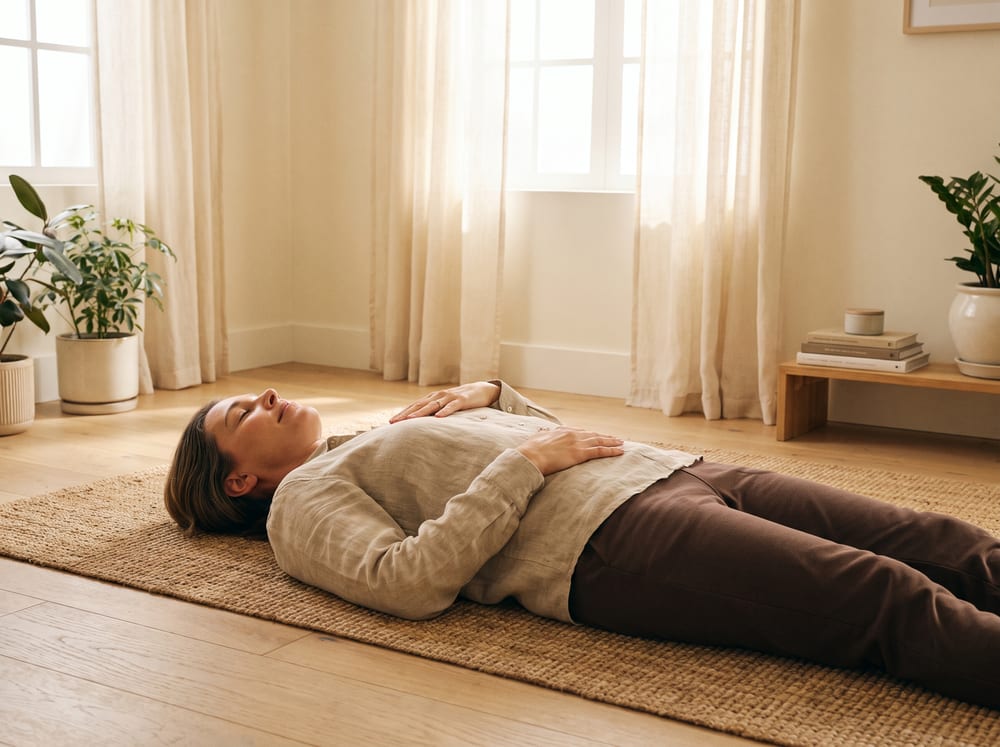
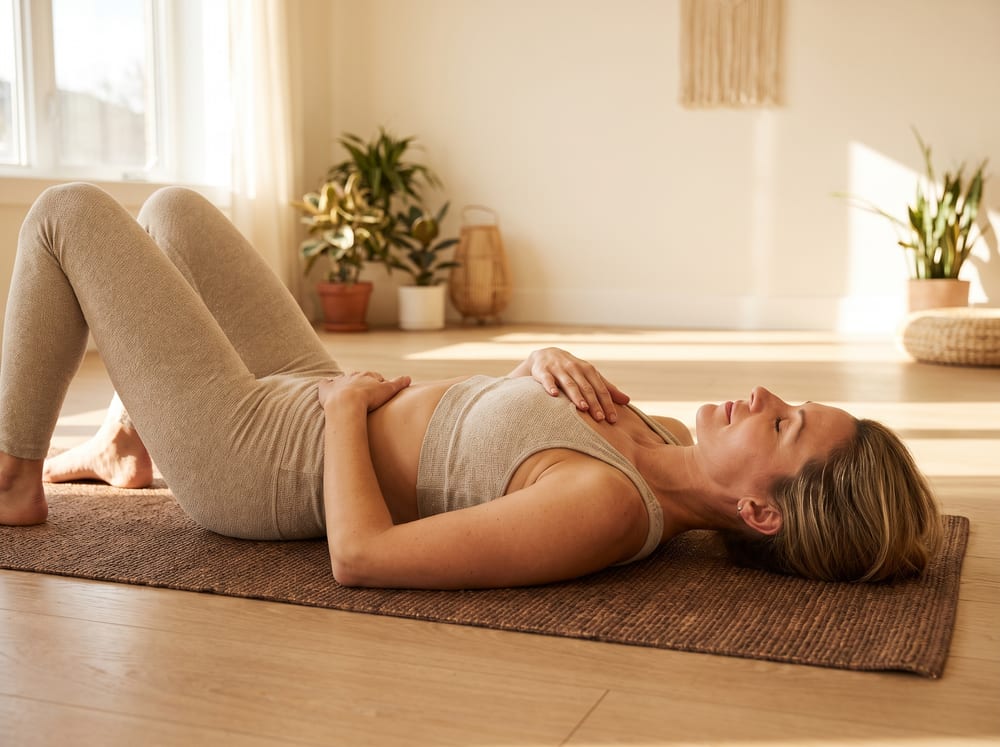
- Lie on your back with knees bent and feet flat, one hand resting on the chest and one on the belly.
- Breathe in slowly through the nose so the belly rises under your lower hand while the chest stays quiet, then exhale slowly and fully, letting the belly fall; repeat for 6 to 10 unhurried breaths.
- Keeping the breath slow, draw both knees up and wrap the arms around the shins or the backs of the thighs, shoulders and neck relaxed on the floor.
- On each exhale, hug the knees a little closer to the chest to a mild, comfortable compression across the belly and low back, holding for 5 to 8 slow breaths.
- Optionally rock a few inches side to side to massage the low back, then release the feet to the floor and rest for a breath or two before rising.
Dose: 1-2 rounds: 6-10 diaphragmatic breaths, then a 5-8 breath knees-to-chest hug. Use it as needed for bloating, or nightly as your wind-down.
⚠ Educational content for discussion with your clinician, not medical advice, a prescription, or treatment for any digestive condition. Hold behind the thighs rather than over the shinbones if you have knee pain, and keep the hug gentle with any acute low-back or disc flare-up. In pregnancy, take the knees wide around the belly rather than pressing into the abdomen, and check the position with your clinician. Skip the deep hug soon after abdominal surgery or with a hernia. Stop if you feel pinching in the hips, low back, or reflux symptoms.