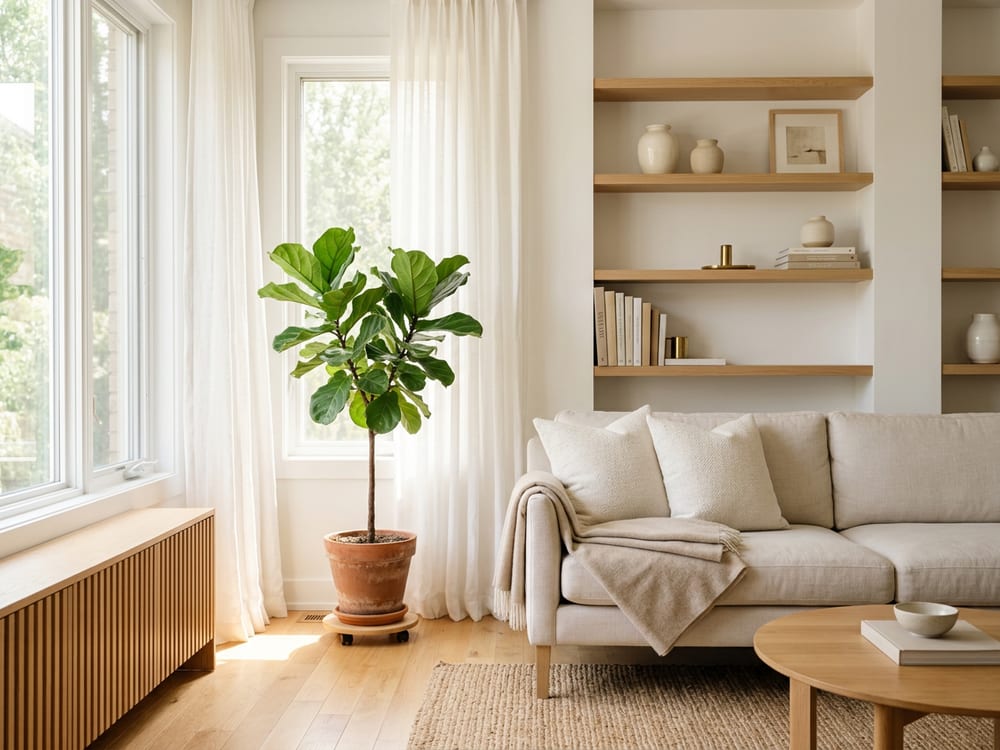
The rooms you live in
The home is the biggest dose you take: the air you sleep in, the light you wake to, the order or the noise that meets you at the door. Some of what follows is measured, some is plausible, and some is tradition that costs nothing and makes a room feel right.
Housewares
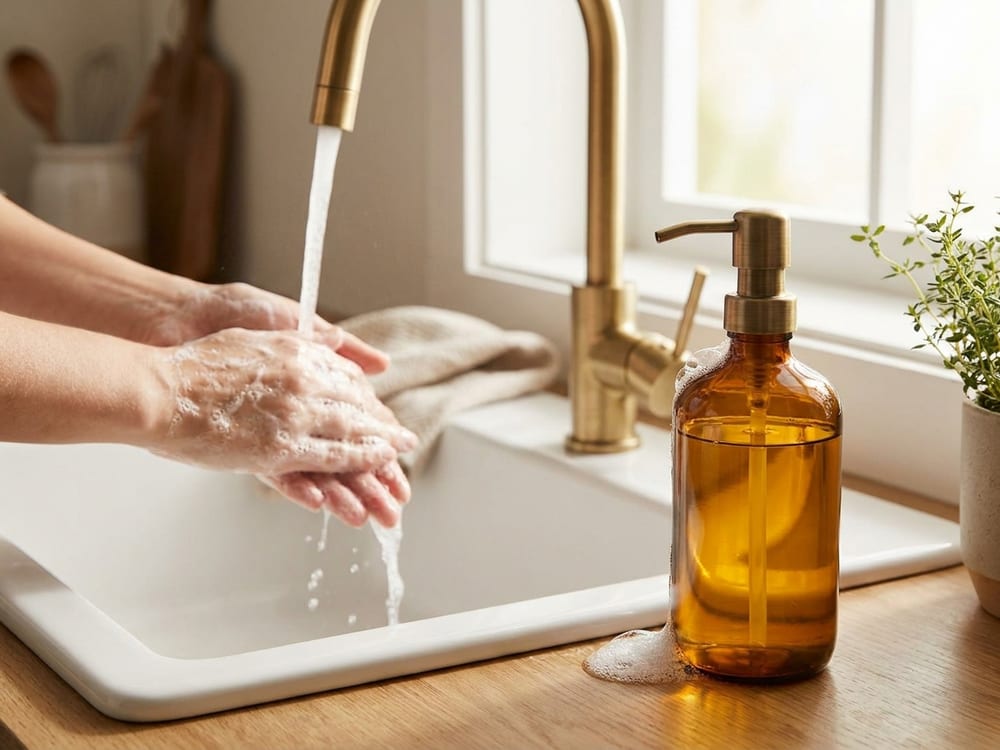
The soap under the sink
Most household cleaning is one surfactant wearing different perfumes, and fragrance sits near the top of the contact allergens dermatology tracks. A castile concentrate covers the sink, the floors, the dog and you, unscented if your skin has opinions.
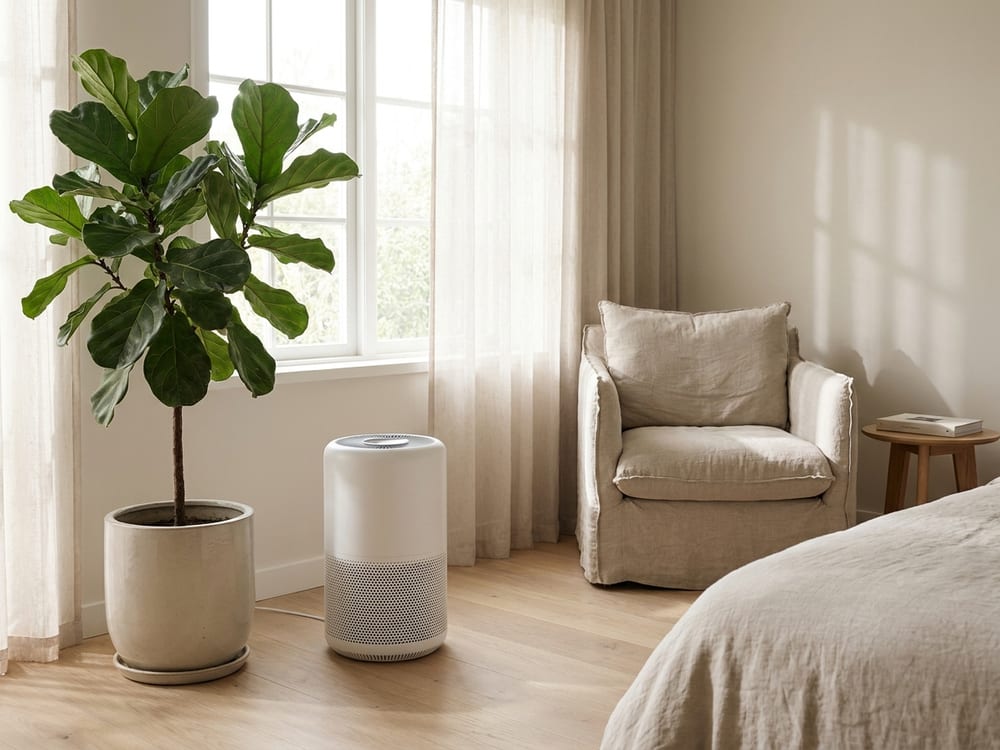
The air you sleep in
A closed bedroom drifts toward carbon dioxide levels that measurably cost sleep quality and next-morning focus. A cracked door or window fixes most of it, and a HEPA filter earns its keep in allergy season: the trials on allergen reduction are real.
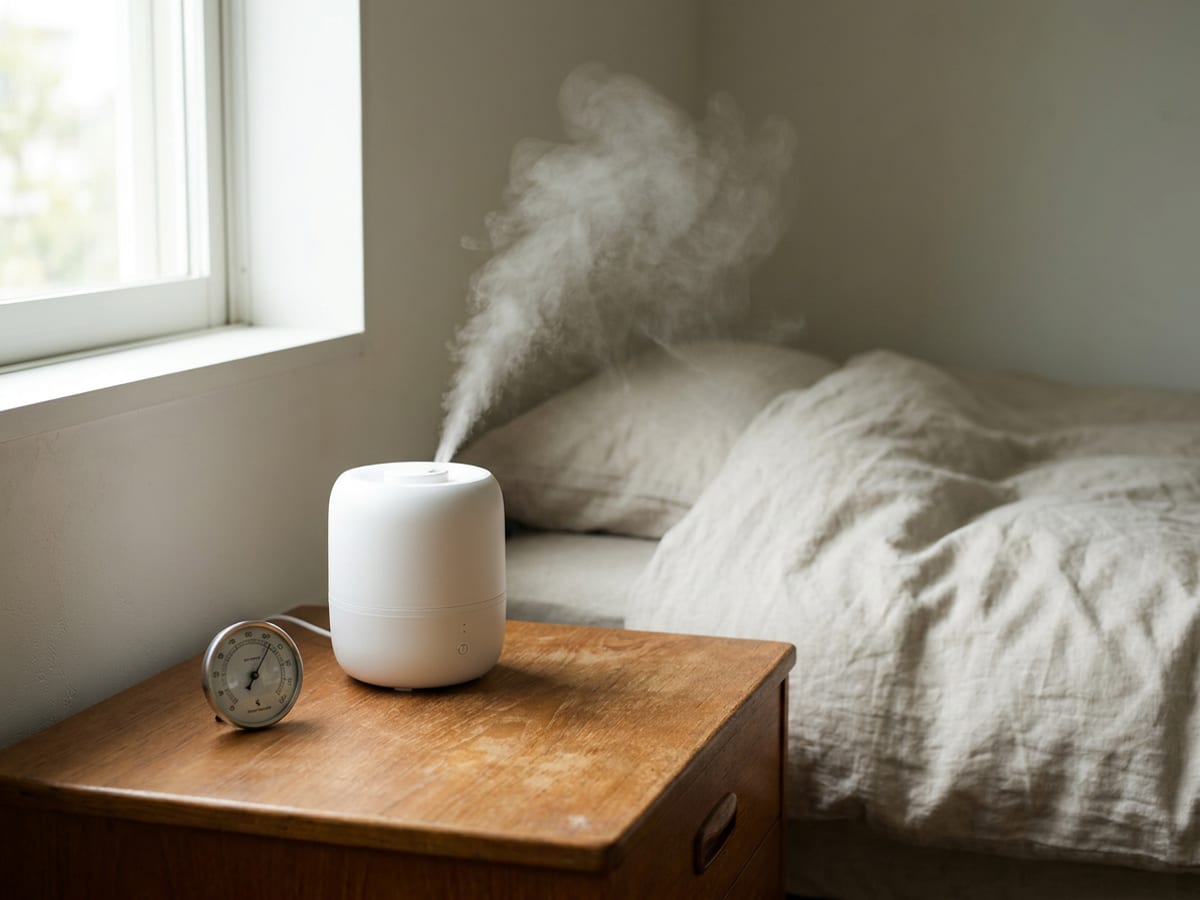
The humidity you live in
Between forty and sixty percent suits both airways and the building. Below it, dry throats, static and cracked wood. Above it, dust mites and mould do very well. A five-pound hygrometer tells you which problem you have, which is worth knowing before you buy a machine to fix the wrong one.
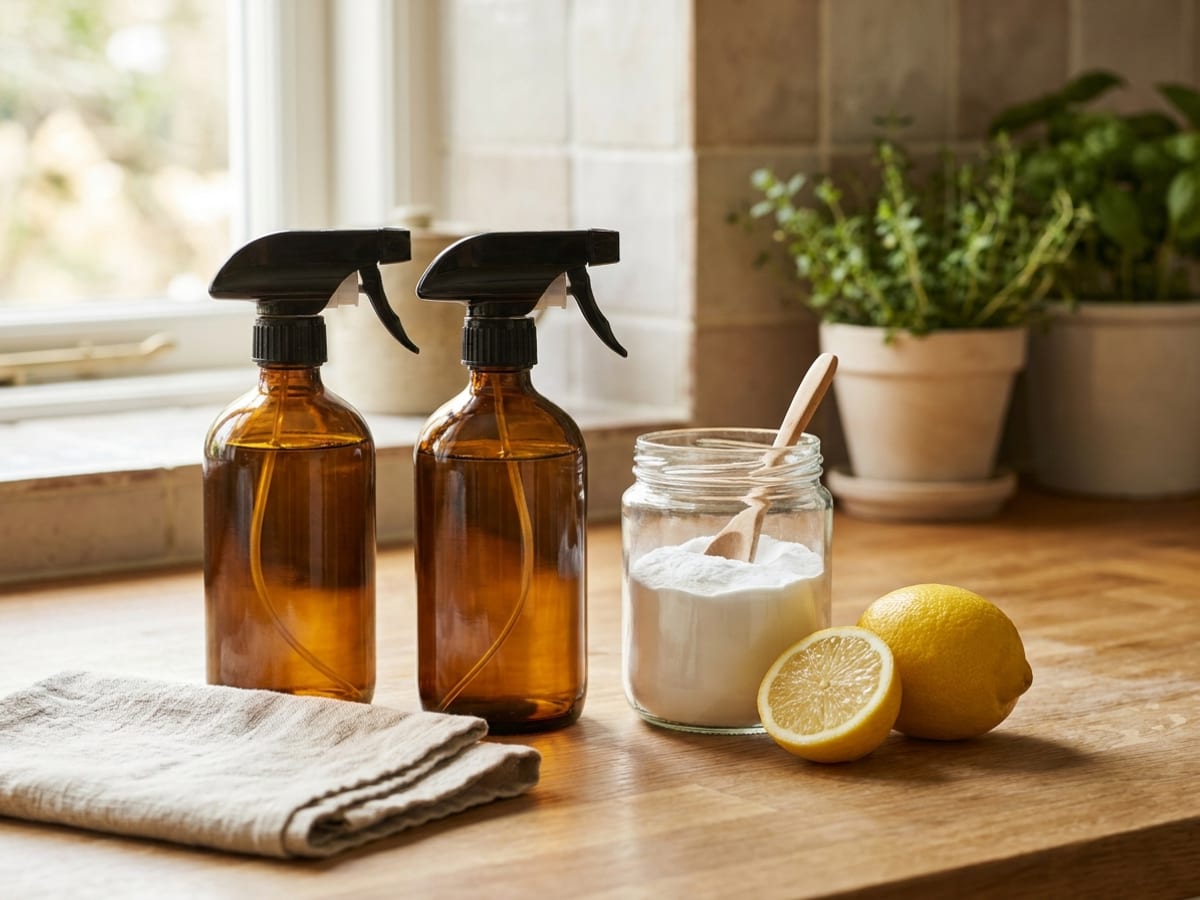
What is under the sink
Most of a cleaning cupboard is one surfactant, one acid and one mild abrasive, wearing eleven different labels and eleven different perfumes. Buying the three directly is cheaper, gentler on skin, and it is the version where you know what you are holding.
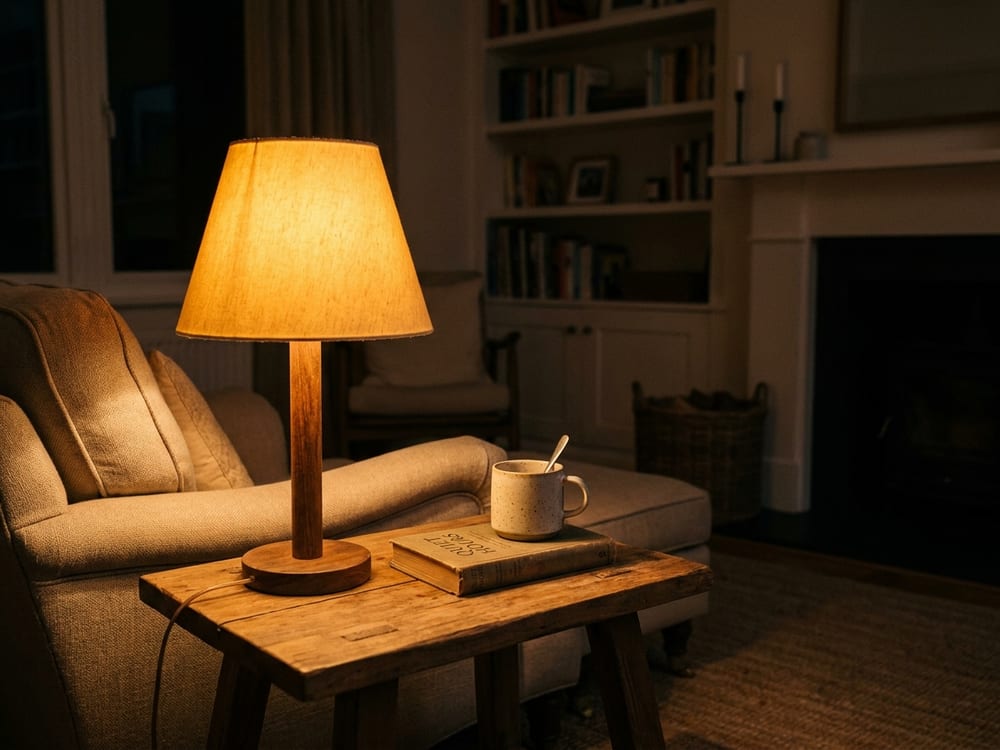
Light that follows the sun
Bright light in the morning and dim, warm light at night is circadian housekeeping with decades of evidence behind it. The free version is opening the curtains early and switching on a lamp at dusk instead of the ceiling fixture.
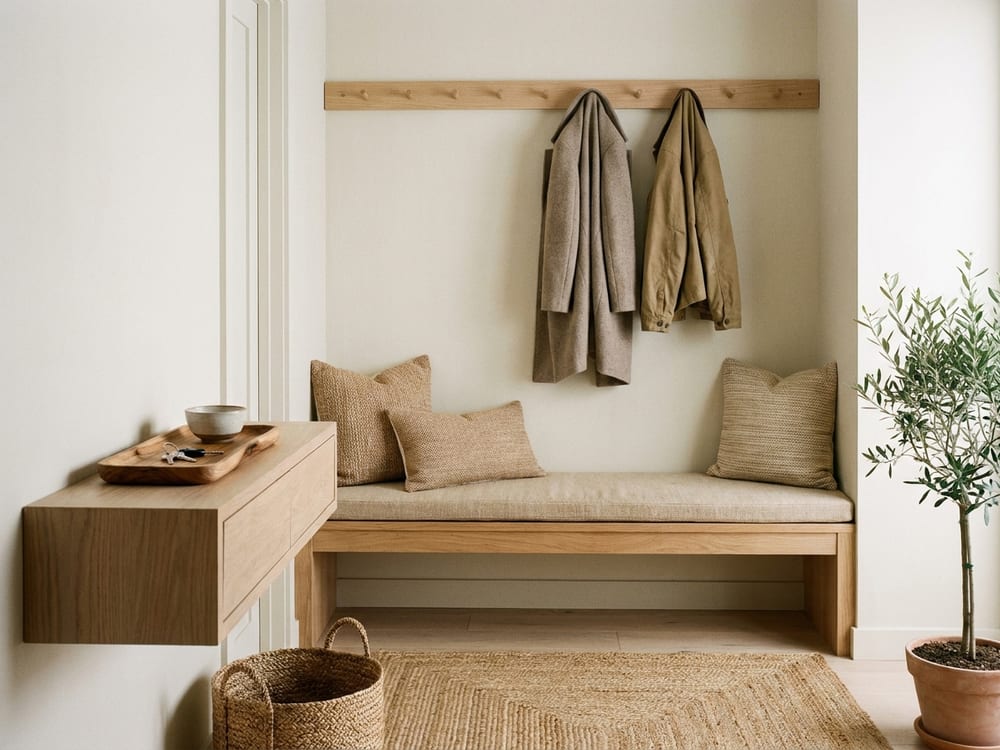
A landing spot
In the day-level research, homes their owners rated as cluttered tracked with flatter, more stressful cortisol rhythms. A tray for the keys and a hook for the coat is not decor. It is the off-ramp from the day.
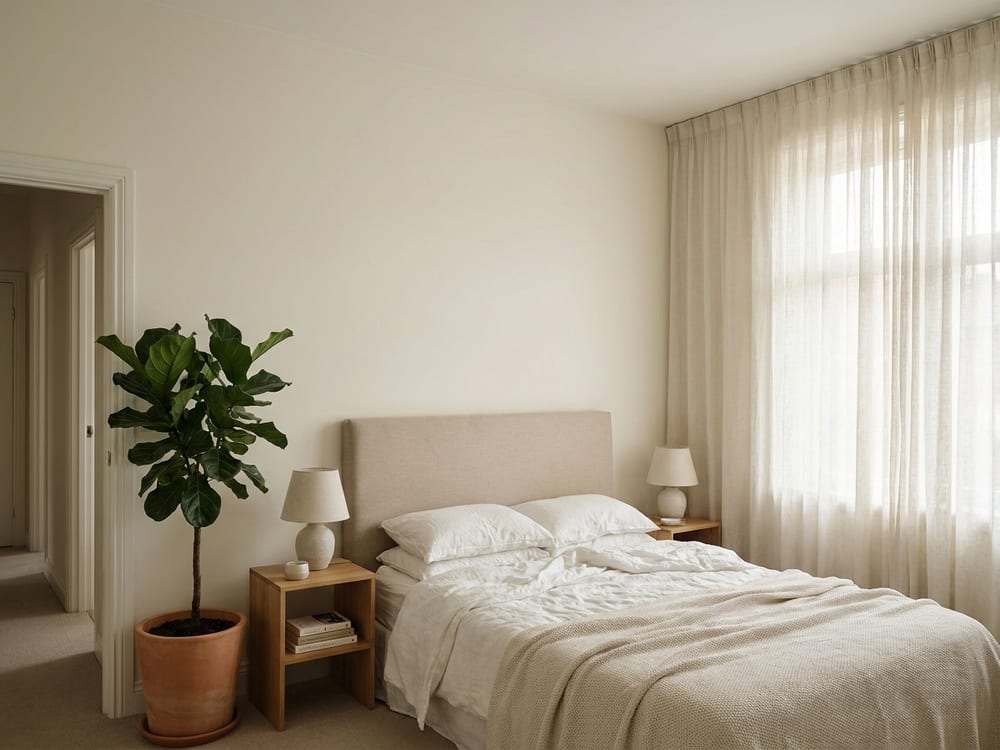
Feng shui
Feng shui is a long tradition of noticing how rooms feel and arranging them on purpose. We grade it the way we grade everything. Where its advice overlaps with things you can put a number on, like light, air, and clutter, the evidence is real. Where it speaks the older language of qi and elements, we call it tradition, and tradition doesn't need a citation to work.
The commanding position
Bed and desk placed where you can see the door without sitting in its path. The tradition calls it command. Prospect and refuge, in environmental psychology, describes the same preference: a wide view from a protected back. Either way the room asks less of you, and calm comes more easily.
Where the bed goes
Headboard against a solid wall, not under a window, and out of the straight line from the door. The tradition is emphatic about the last one, and the rest is the same instinct: a protected back and a clear view. What the sleep literature can speak to is quieter and more specific, and it mostly concerns temperature, noise and light.
The cleared threshold
The entry sets the arrival. Tradition treats it as where energy enters the home; the clutter research treats it as where the stress response starts. Both agree it should be clear.
Pairs in the resting room
Two nightstands, two lamps, symmetry around the bed. Tradition reads it as balance for a partnership; a designer reads it as symmetry the eye can rest on. It costs one extra lamp.
The five elements as a palette
Wood, fire, earth, metal and water are five moods rather than five substances, and they are the vocabulary feng shui uses for balancing a room. Nine palettes below take them, and the Western stone tradition alongside them, and put them in gemstones.
Plants where your eyes rest
The measured effects of indoor plants on attention and stress are small, and they keep replicating. The tradition never waited for the studies: a living thing in the sightline reads as ease.
Tend one corner
The wealth corner is a story. The habit it builds is not: one corner of the home kept deliberately well is proof the whole place is keepable, and proof is motivating.
Nine palettes
Not sure which is yours? Seven questions settle it.
Five of these are the wu xing, the phases feng shui arranges a room by, which in Chinese astronomy are also the five visible planets. Four come from the Western stone tradition, where the ties run to planets and signs instead. All of it is tradition, and it is a good deal more useful than it is provable. Find the one that sounds like your house.
The Gardener
Wood · Jupiter 木星Greens, from new leaf to deep moss.
- Jade
- Malachite
- Serpentine
- Peridot
There is a cutting rooting in a jar on the sill and a project on the table that is neither finished nor abandoned. She is easy to start things with. Wood is the east in the tradition, where the day begins.
See the roomsThe Host
Fire · Mars 火星Warm reds and amber, lit from low down.
- Carnelian
- Garnet
- Amber
- Sunstone
More chairs than she strictly needs, the good lamp on, and nobody leaves when they said they would. Fire is the south and the top of summer. In small amounts it warms a room; everywhere at once it is a great deal to live inside.
See the roomsThe Anchor
Earth · Saturn 土星Ochre, clay and sand.
- Tiger's eye
- Jasper
- Citrine
- Travertine
Heavy mugs, a table that has taken some abuse, nothing precious enough to be anxious about. She is the one people ring first. Earth sits at the centre of the compass rather than on it, which is a fair description of the role.
See the roomsThe Editor
Metal · Venus 金星Bone and pale grey, with a little brass.
- Clear quartz
- Moonstone
- Pyrite
- Hematite
Clear surfaces, one good object instead of nine, a drawer that closes properly. You notice what she took out rather than what she added. Metal is the west and autumn, the season for keeping only what is worth keeping.
See the roomsThe Deep Well
Water · Mercury 水星Deep blues down to near-black.
- Lapis lazuli
- Sodalite
- Labradorite
- Black tourmaline
She waits a beat before answering. Low light, books read twice, a bath that runs long. Water is the north and deep winter, and the wall the tradition puts a desk against when the work wants depth rather than noise.
See the roomsThe Romantic
VenusBlush, shell and one deeper rose.
- Rose quartz
- Morganite
- Rhodochrosite
- Pearl
Linen that has been washed enough times to go soft, flowers bought for no occasion, a bed made properly every morning. Venus rules both her signs, one for the senses and one for balance, and the room usually shows both.
See the roomsThe Mystic
NeptuneViolets, from pale to near-indigo.
- Amethyst
- Charoite
- Fluorite
- Selenite
Candles that have been burned, a stack of books on things that cannot be measured, and no interest in defending any of it. Amethyst is the crown stone, and Neptune is the planet of the things that arrive sideways.
See the roomsThe Wanderer
JupiterSea and sky against warm sand.
- Turquoise
- Chrysocolla
- Aquamarine
- Sandstone
Things brought back from places, arranged without ceremony. Turquoise was the stone put on travellers for safe return long before it was decorative, and Jupiter has always been the planet of going further than sensible.
See the roomsThe Dreamer
The MoonPale, luminous, and one grounding brown.
- Moonstone
- Blue lace agate
- Mother of pearl
- Smoky quartz
She sleeps with the curtains open. Everything in the room is soft-edged and slightly reflective, and the whole place changes character between morning and evening, which is the point. The Moon rules Cancer, and rooms like this are built around the going and coming of light.
See the roomsProduct links are Amazon affiliate links: as an Amazon Associate we earn from qualifying purchases, at no extra cost to you. Prices are rough references, not live quotes.
Laundry
Enzymes stop working above a temperature almost nobody is told, more detergent makes clothes dirtier, sunlight brightens white cotton and quietly eats a dyed shirt, and a jumper on a hanger grows shoulders. Most of this is settled and almost none of it is taught.
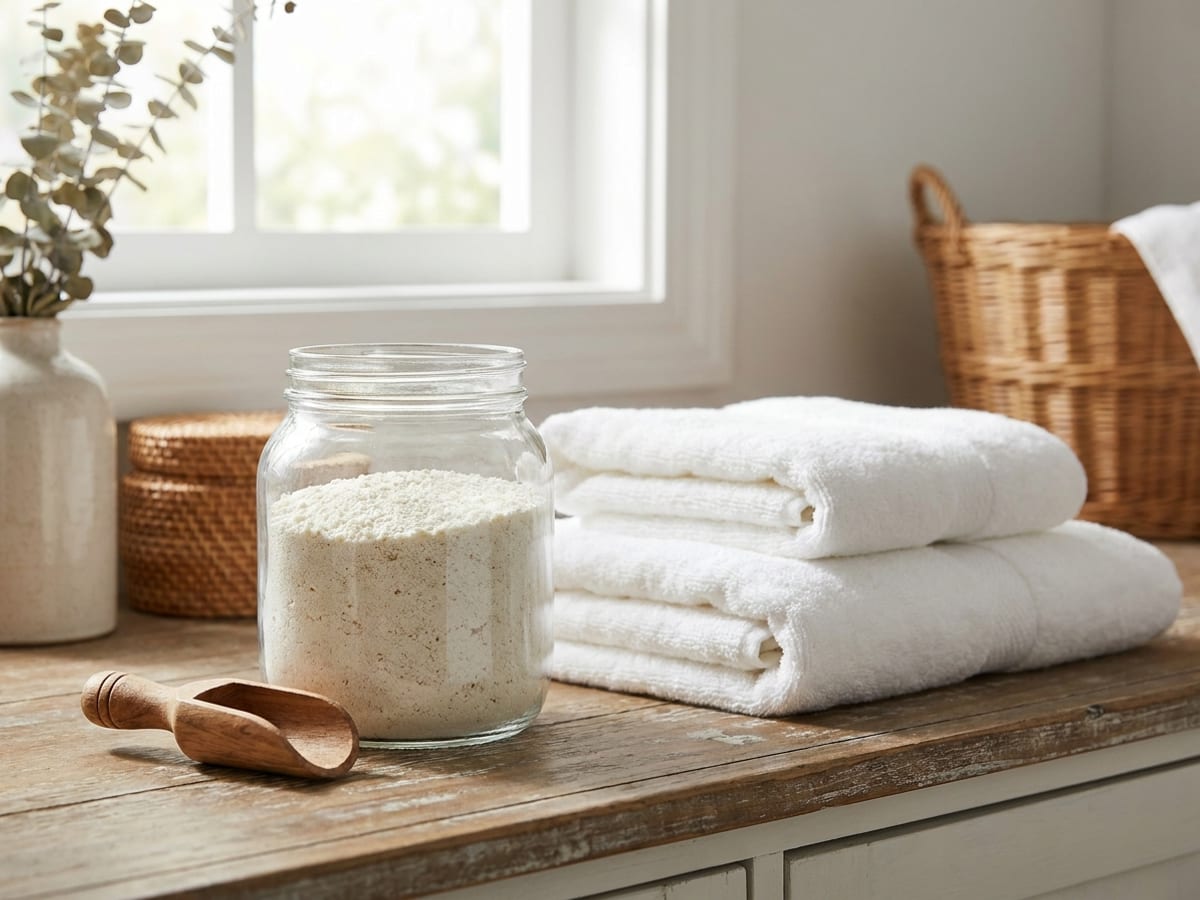
The soap, and how little of it
Modern detergent is mostly enzymes, and enzymes are fussy about heat and generous about time. The commonest laundry mistake is using two or three times as much as the machine needs, which leaves residue that holds odour and stiffens cloth.
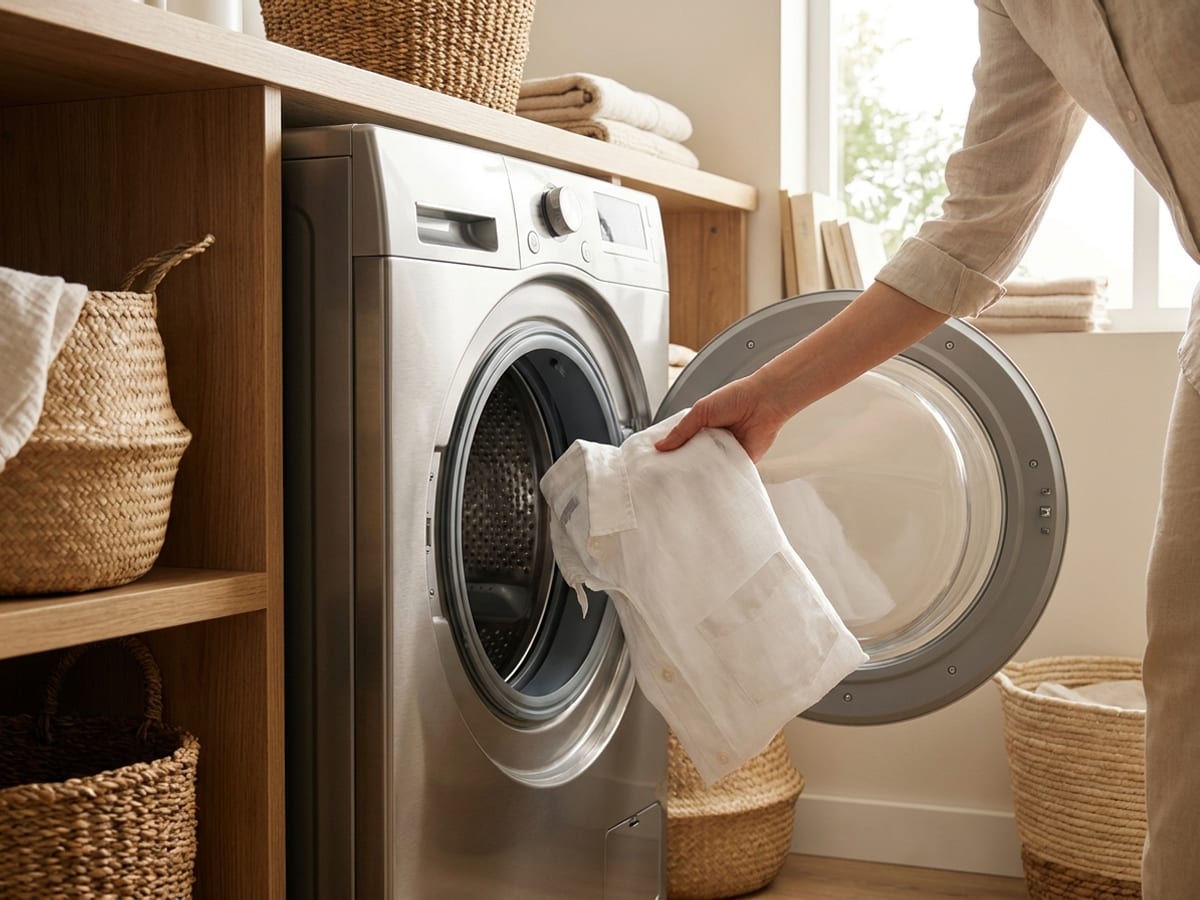
Water temperature
Cold washes almost everything, and about ninety percent of a wash cycle’s energy goes into heating water. Hot is not a better clean, it is a different job: sanitising, and heavy grease.
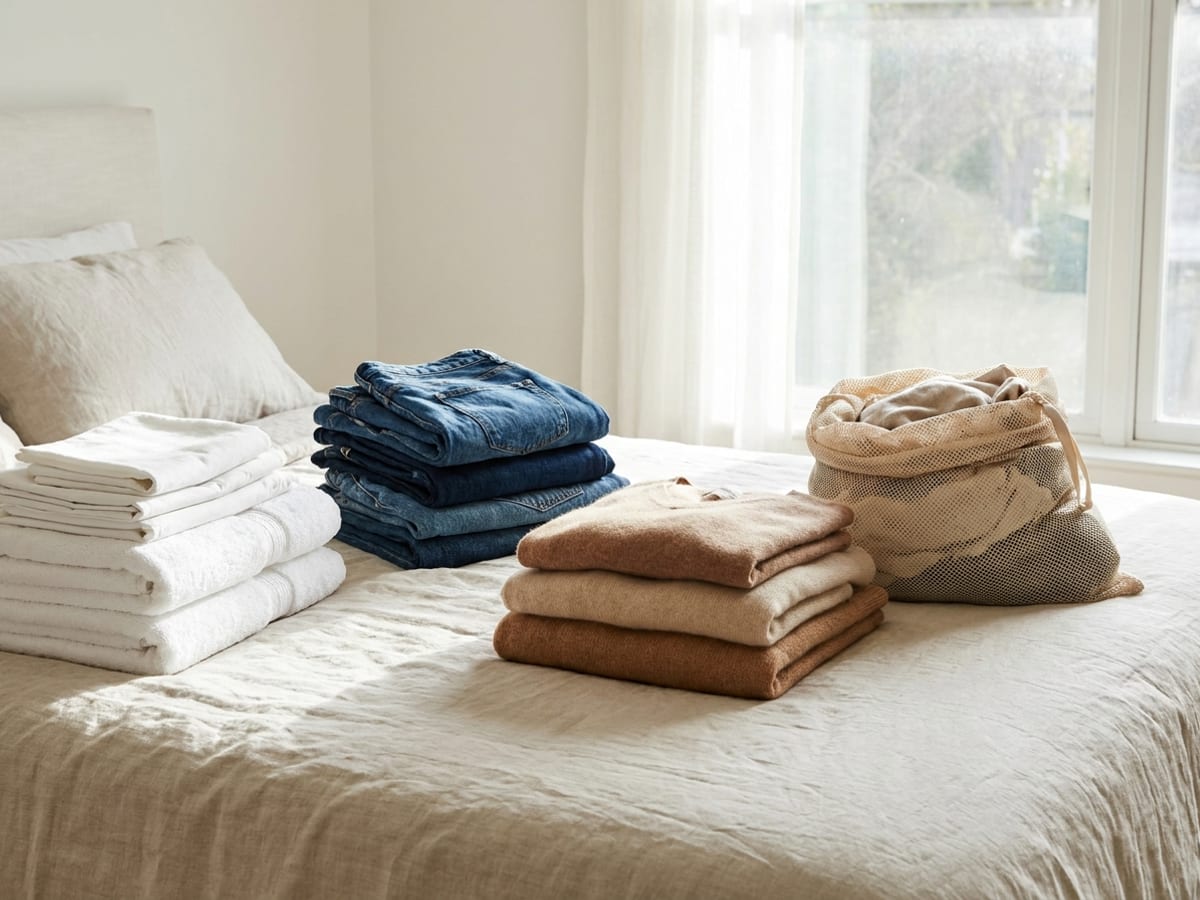
Sorting, by fibre before colour
Everyone sorts lights from darks. Sorting by fabric weight matters more: a towel in with a blouse is an abrasive in with a delicate, and the blouse loses.
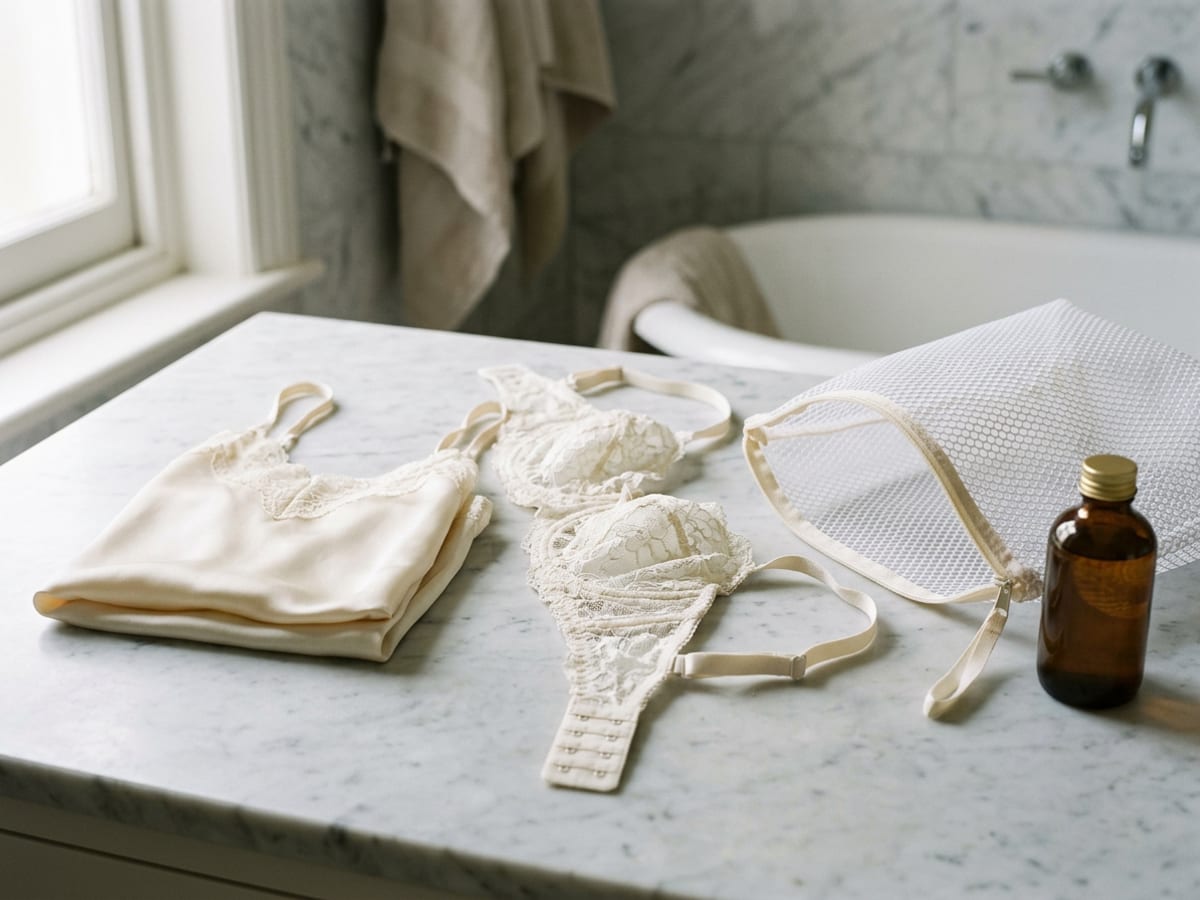
Lingerie, and why it fails early
A bra is elastane, hooks and moulded foam, and every one of those hates the same three things: heat, agitation and being wrung. Handled properly a good bra lasts years; handled like a towel it is finished in months.
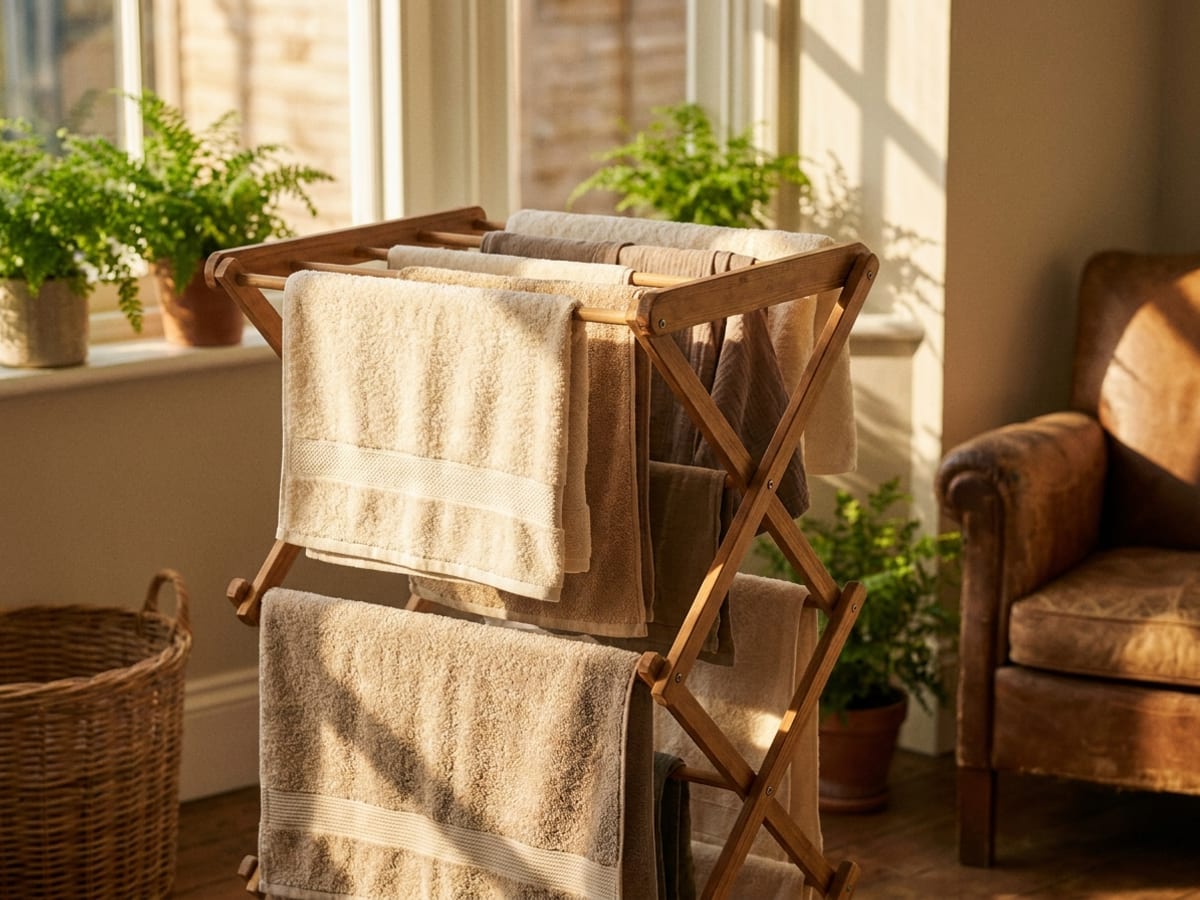
Drying, and the heat that costs you
A tumble dryer is the harshest thing most clothes go through. The lint trap is the garment: those fibres came off the cloth. Lower heat, shorter time, and out while barely damp.
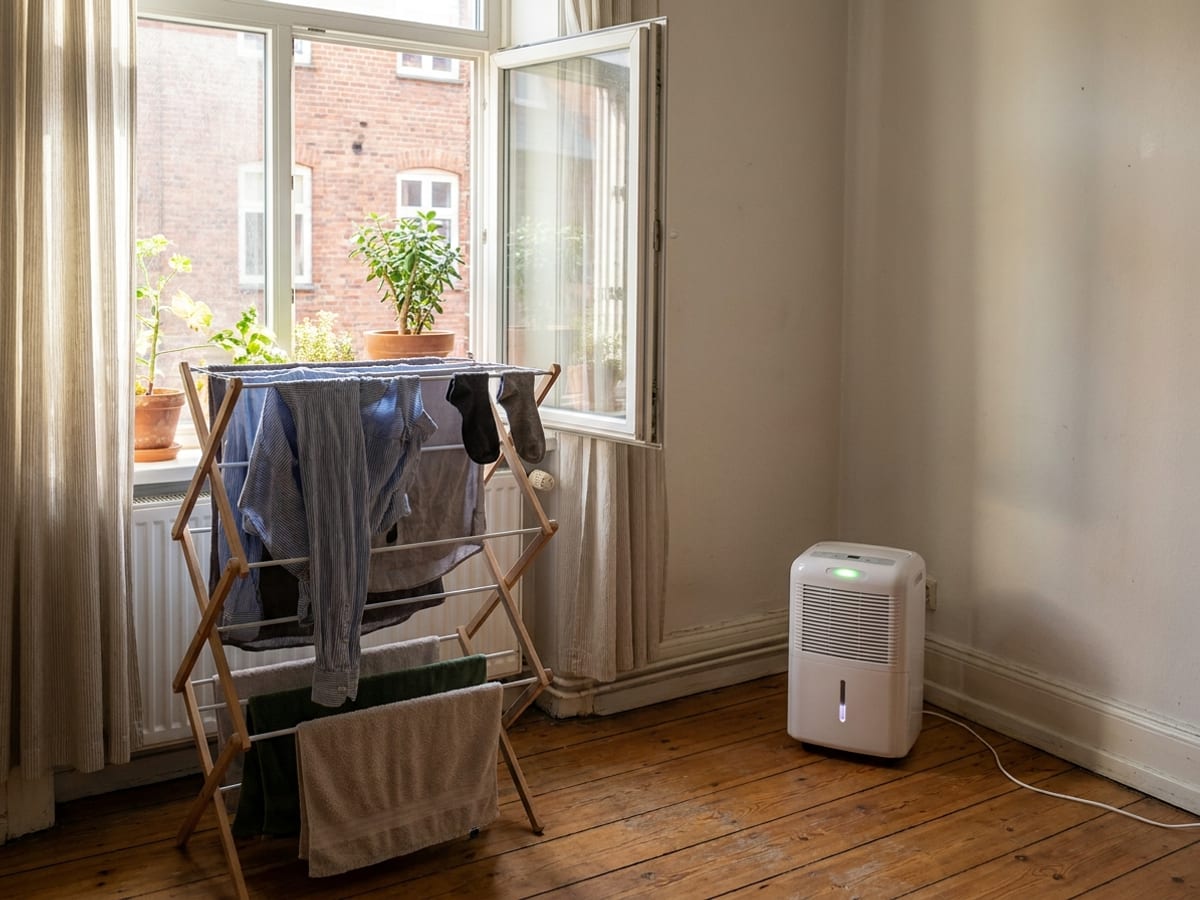
The line, and what to do without one
Outdoor drying is free, gentler than any machine, and the sun is a mild bleach. That last part is a gift for white cotton and a slow theft from everything dyed.
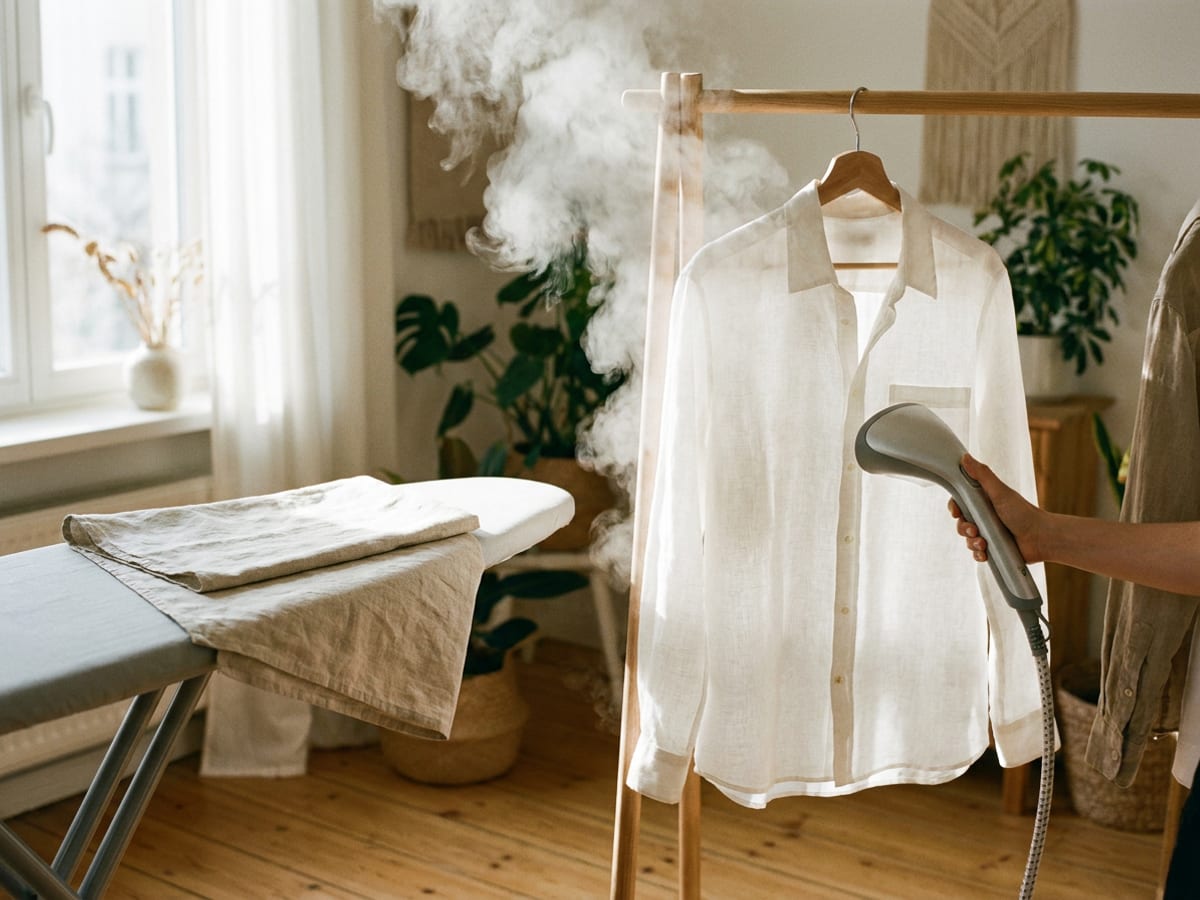
Ironing and steaming
An iron presses, a steamer relaxes. Linen and crisp cotton want the plate; wool, silk and anything on a hanger want the steam. Using the wrong one is most of what people dislike about both.
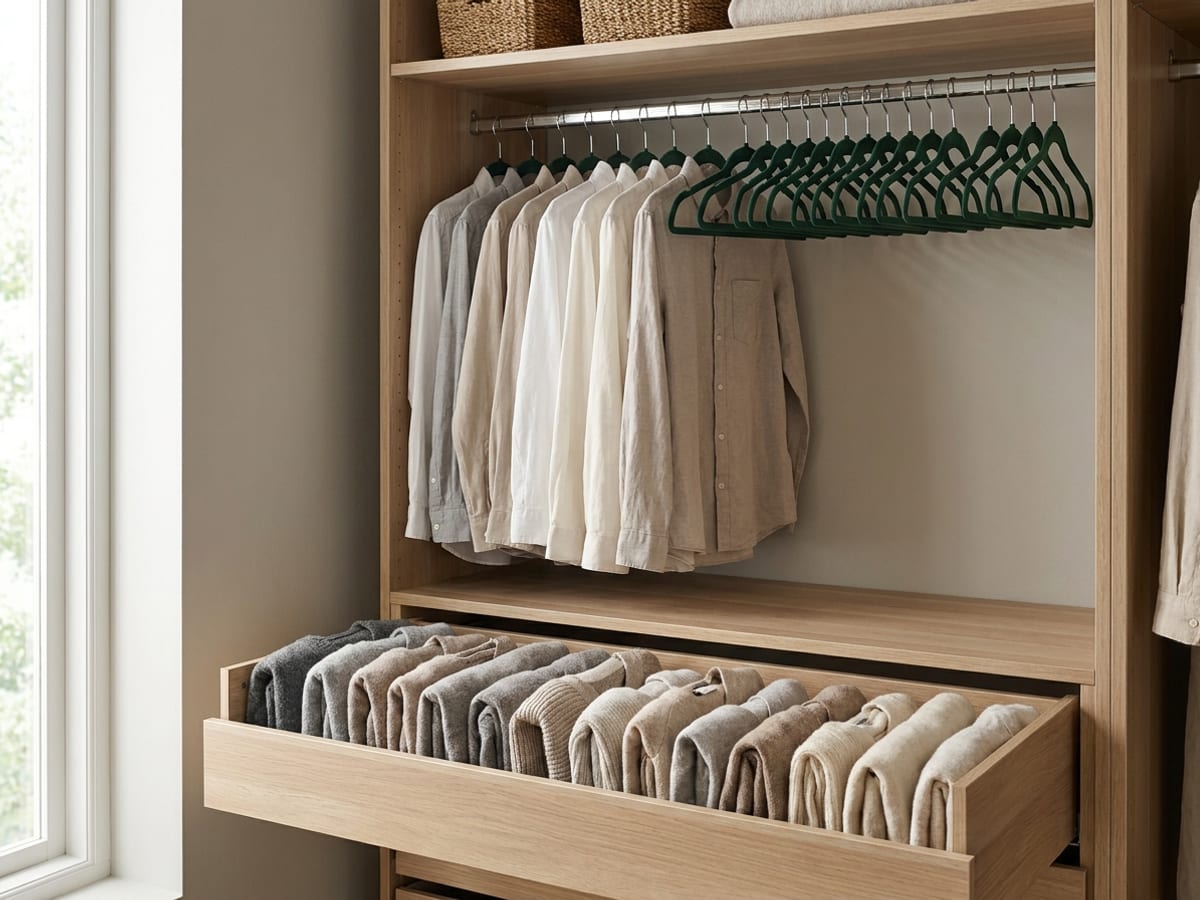
Folding, hanging and the wardrobe
The rule is one line long: knits are folded, wovens are hung. A jumper on a hanger grows shoulders, and a linen shirt in a drawer arrives creased.