The humidity you live in
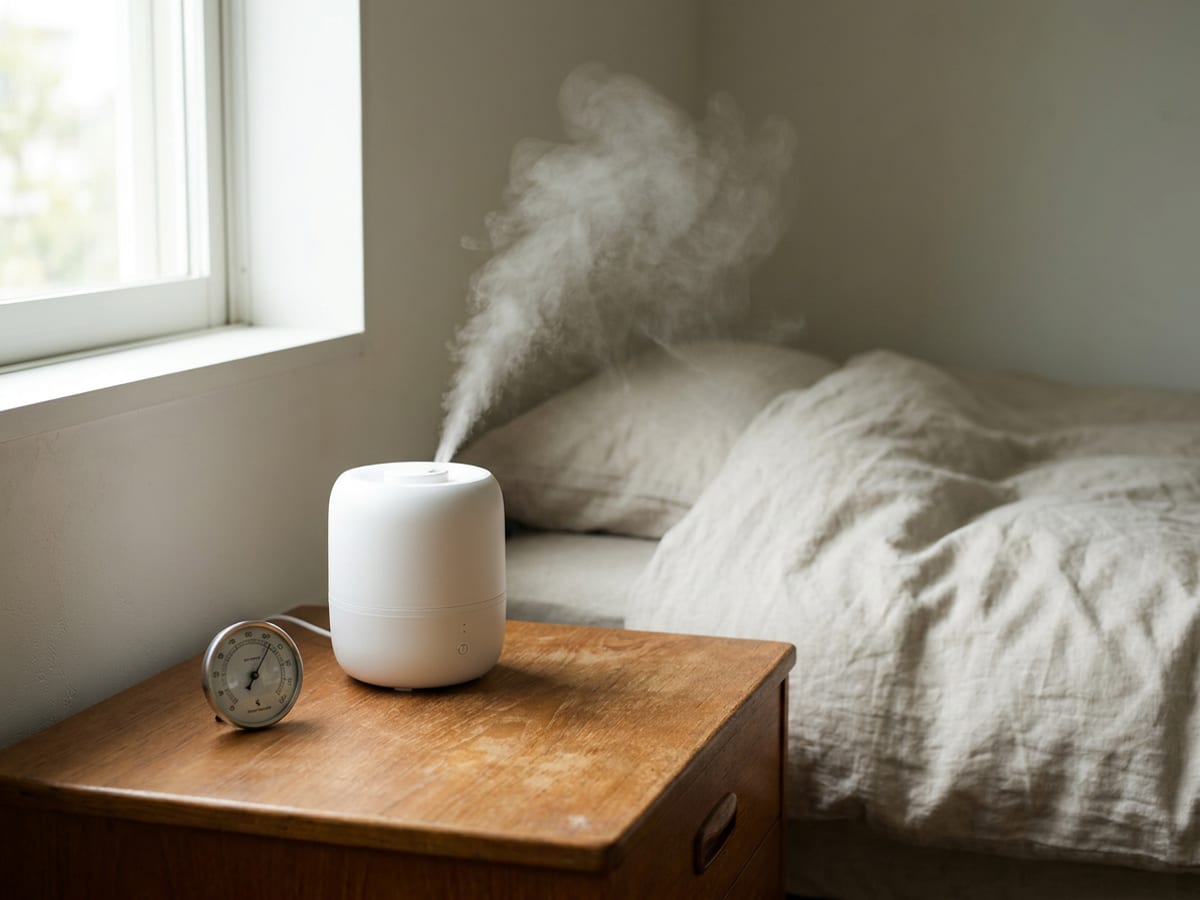
Between forty and sixty percent suits both airways and the building. Below it, dry throats, static and cracked wood. Above it, dust mites and mould do very well. A five-pound hygrometer tells you which problem you have, which is worth knowing before you buy a machine to fix the wrong one.
Buy the meter before the machine
Almost every humidifier bought in a dry-throat panic goes into a room that was already at fifty percent, and the room ends up too damp. A hygrometer costs a fraction of the appliance and settles the question in a day.
Which type
Evaporative units use a wick and a fan, and they self-limit: as the air gets damper, less evaporates, so they are hard to overdo. Ultrasonic units are quieter and cheaper but push out whatever is in the water, including minerals, which is the white dust on the furniture. In a hard-water house, ultrasonic means distilled water or nothing.
The part nobody does
A humidifier is a warm reservoir with a fan on it. Empty and dry it daily, and clean it properly every few days. Dirty units aerosolise what is growing in them, and humidifier lung is a real, documented hypersensitivity pneumonitis rather than a scare story.
Where the dryness comes from
Cold outside air holds little moisture, so heating it indoors drops the relative humidity. That is why winter is dry and why the answer is often to heat less aggressively rather than to add water.
Too damp is the worse failure
Dust mites need about fifty percent to thrive, and mould starts on cold surfaces well before the room feels wet. If you are running a humidifier and seeing condensation on the windows in the morning, turn it down.