What is under the sink
Most of a cleaning cupboard is one surfactant, one acid and one mild abrasive, wearing eleven different labels and eleven different perfumes. Buying the three directly is cheaper, gentler on skin, and it is the version where you know what you are holding.
The three that do the work
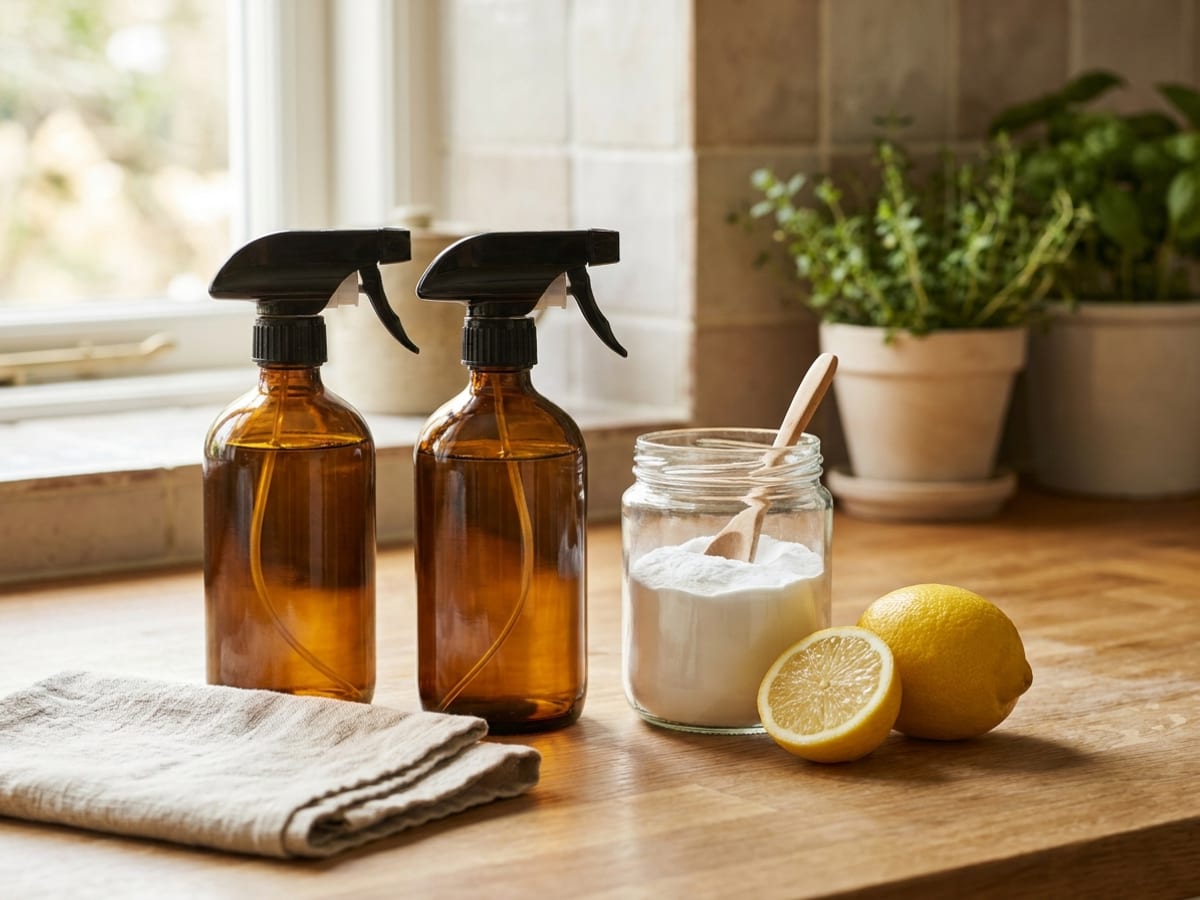
A surfactant for grease and general cleaning, which is castile or Sal Suds. An acid for limescale, soap scum and glass, which is white vinegar or citric acid. A mild abrasive for scouring, which is bicarbonate of soda. Between them they cover almost every surface in a house.
The combination to avoid
Vinegar and castile soap in the same bottle cancel each other. Acid breaks a true soap back into its fatty acids, and the white curd is the reaction rather than lifted dirt. Use one, rinse, then the other.
Where acid must not go
Never on marble, travertine, limestone or unsealed grout. Vinegar and citric acid etch calcium carbonate, and the dull patch is dissolved stone that no polish brings back. Use a pH-neutral soap on stone.
What non-toxic does and does not mean
The term is not regulated and can be printed on anything. What is worth looking for is a full ingredient list rather than the words "fragrance" or "parfum", which can stand in for dozens of undisclosed compounds. A short, readable list is the real signal.
Natural is not the same as safe
Essential oils are among the more common contact allergens, citrus oils included, and undiluted vinegar will ruin a stone worktop. Plant-derived says where a compound came from, not what it does to your skin or your surfaces.
A good cloth beats most products
Microfibre plus water lifts a surprising amount, and cuts how much of anything else you need. Most residue problems come from too much product rather than from the wrong one.