The air you sleep in
A closed bedroom drifts toward carbon dioxide levels that measurably cost sleep quality and next-morning focus. A cracked door or window fixes most of it, and a HEPA filter earns its keep in allergy season: the trials on allergen reduction are real.
The numbers
Outdoor air runs about 420 ppm of carbon dioxide. A closed, occupied bedroom overnight can pass 2000 ppm and keep climbing. Bedroom trials that lowered it, by opening a window or a door, found better self-reported sleep and better next-day concentration.
The cheapest fix
An open door is usually enough, and it costs nothing. A window cracked an inch beats any appliance for carbon dioxide, because no filter removes it.
What a purifier does and does not do
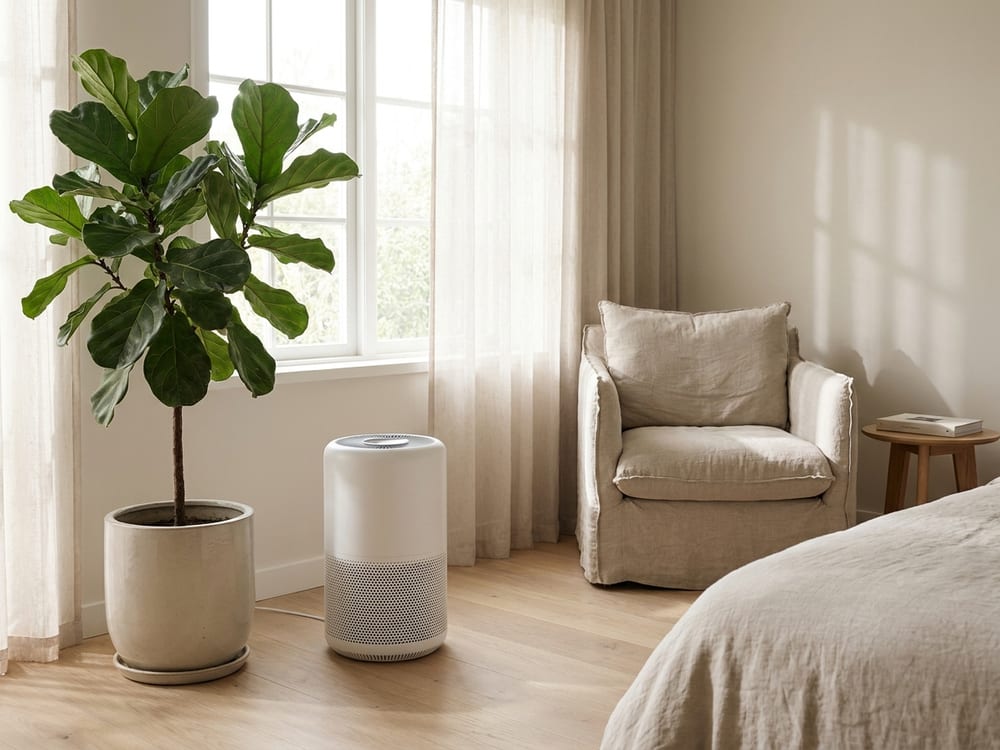
A HEPA unit takes out particles: dust mite debris, pollen, dander, smoke. It does nothing for carbon dioxide. Match the unit to the room size by its clean air delivery rate and run it on low continuously rather than high in bursts.
Humidity
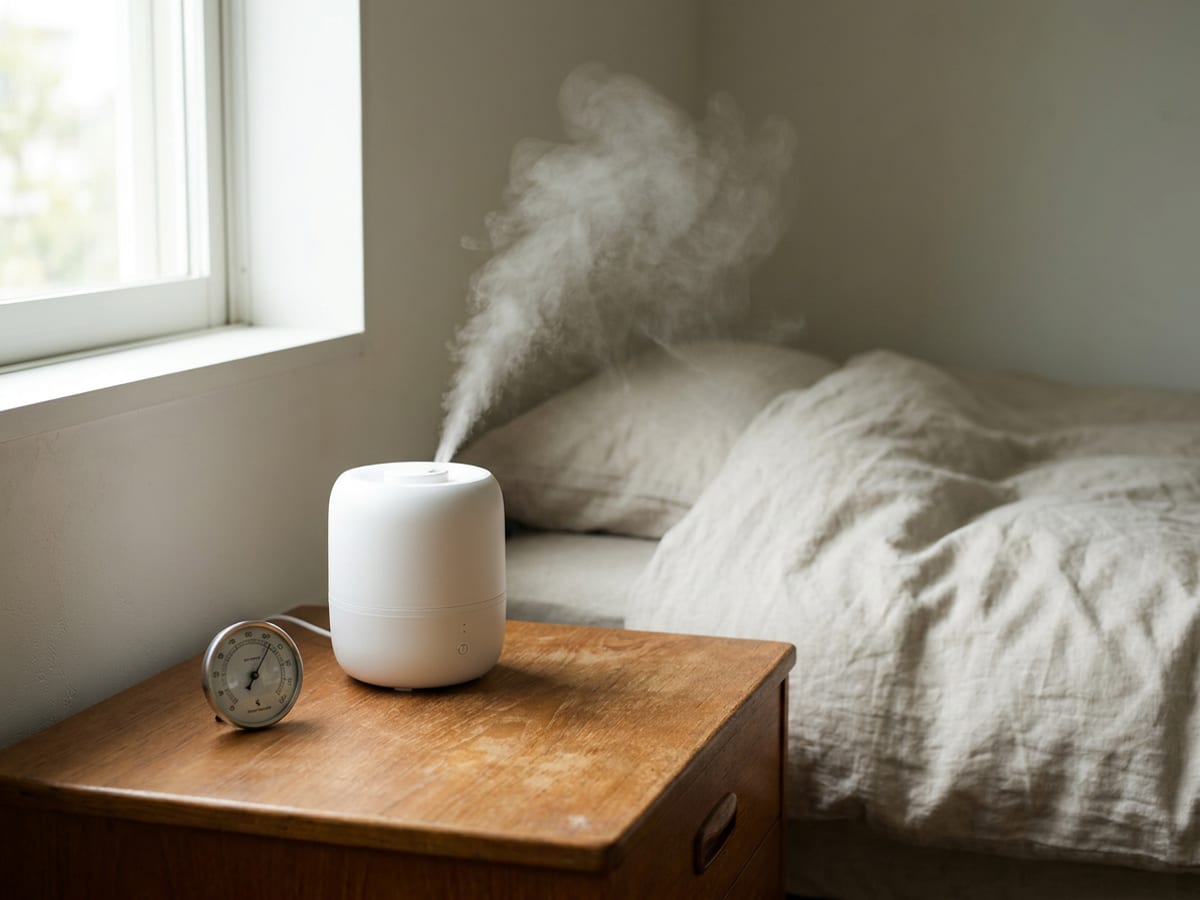
Between 40 and 60 percent suits both airways and the house. Below that, dry throats; above it, dust mites and mould do well. A five-pound hygrometer tells you which problem you have.