The line, and what to do without one
Outdoor drying is free, gentler than any machine, and the sun is a mild bleach. That last part is a gift for white cotton and a slow theft from everything dyed.
Sun for whites, shade for colour
Ultraviolet breaks down the compounds that yellow white cotton and linen, which is why line-dried sheets look brighter. The same photodegradation fades dyes. Whites in full sun, colours inside out in shade or indoors.
How to peg it
Shirts by the hem, not the shoulders, so the pegs do not leave dimples where they show. Trousers by the waistband. Knits flat on a rack or over a rail, never pegged, because wet wool stretches under its own weight and does not come back.
Drying indoors in a flat
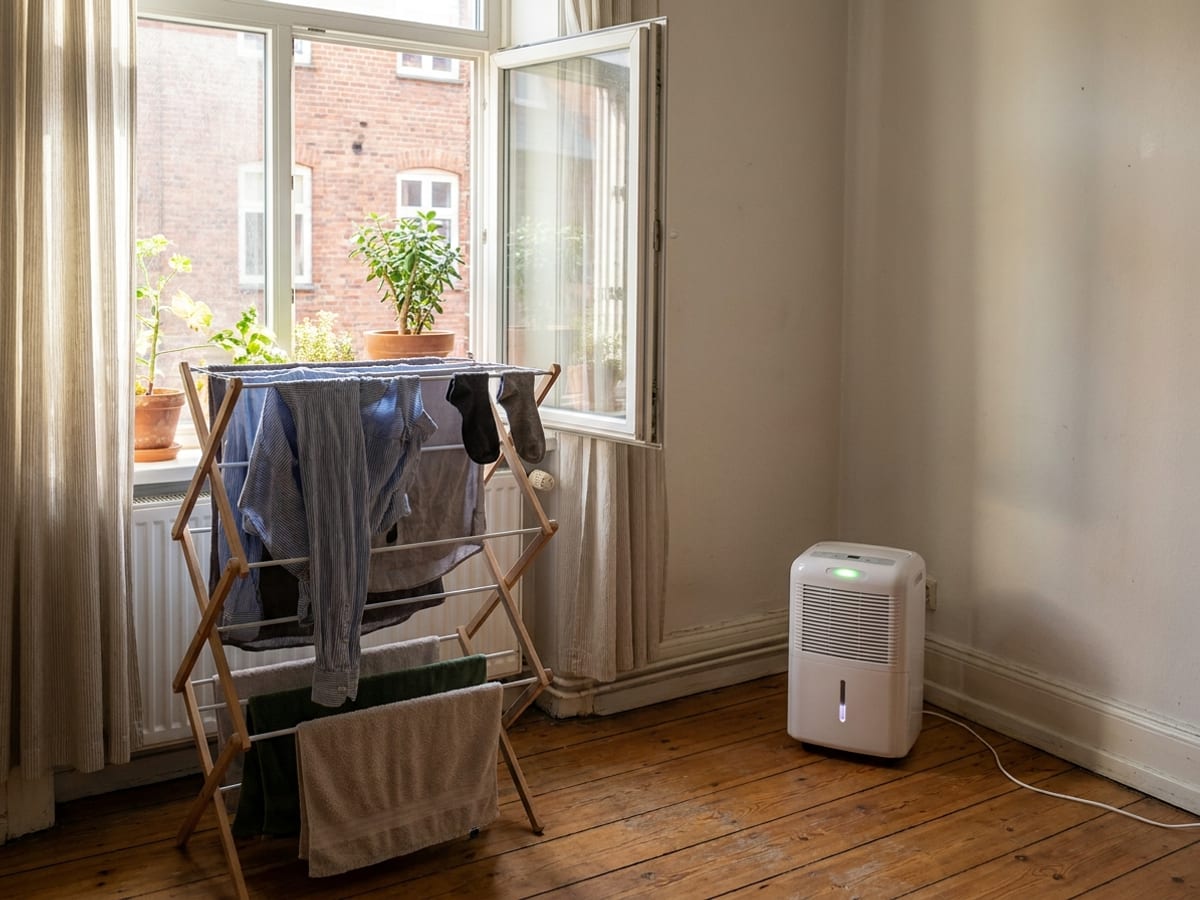
A load of washing puts roughly two litres of water into the air. Dry it in one room with the door shut and a window open, or with a dehumidifier running, rather than spread through the flat. Damp air plus a cold outside wall is how mould starts on the wall behind the wardrobe.
Where to put the airer
Near the window, not near the radiator. A radiator sends the moisture straight into the room and costs heat. An open window, even an inch, gives it somewhere to go.
Stiff line-dried towels
Stiffness is minerals and residue, not the line. Cut the detergent dose, add a rinse, and give them thirty seconds in the dryer at the end if you want the pile lifted.