Ironing and steaming
An iron presses, a steamer relaxes. Linen and crisp cotton want the plate; wool, silk and anything on a hanger want the steam. Using the wrong one is most of what people dislike about both.
Which tool for which cloth
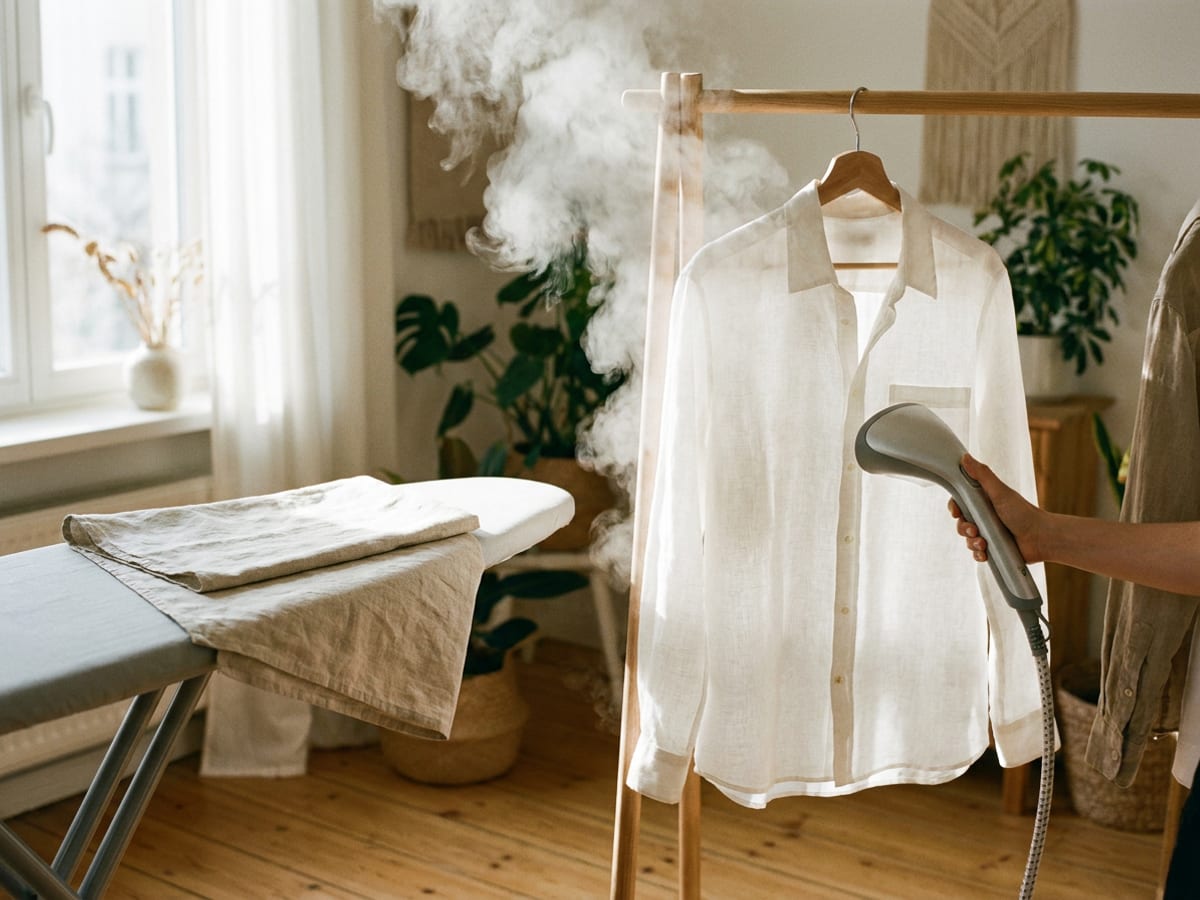
Iron: cotton shirts, linen, anything that should look crisp and hold a fold. Steam: wool, silk, viscose, velvet, knitwear, and anything already hanging. Steam relaxes the fibre and lets gravity drop the crease, which is why it works on a garment you never take off the hanger.
Temperature, from the bottom up
Start at the lowest setting and work up, because you cannot undo scorch. Roughly: synthetics and silk low, wool medium with steam, cotton high, linen highest and damp. If the fabric is a blend, use the setting for the most delicate fibre in it.
Iron damp, or with steam
Water is what lets fibres be reshaped. Bone-dry cotton fights the iron and needs far more heat to do the same job. A spray bottle costs nothing and does most of what an expensive iron promises.
Press cloth and the wrong side
Anything that can shine, which is wool, dark cotton and silk, gets ironed on the wrong side or under a press cloth. That sheen is fibre flattened and slightly melted, and it does not come back.
Order of operations
Collar, then cuffs, then sleeves, then yoke, then the body last. Working from the small, double-layered parts outward means you are not crushing what you already did.