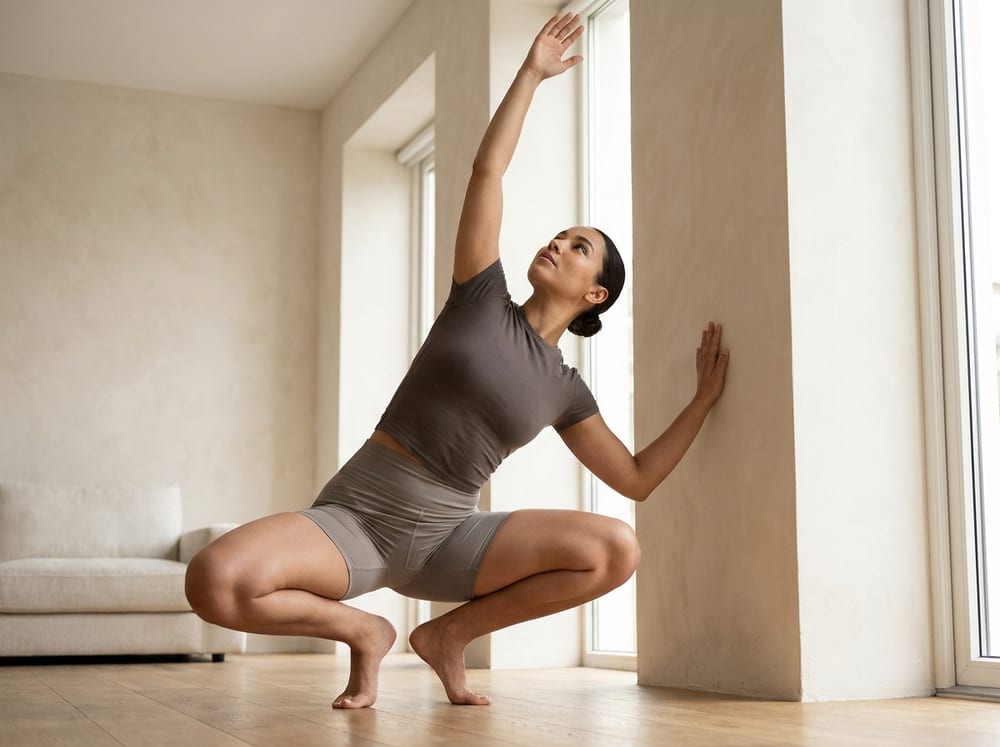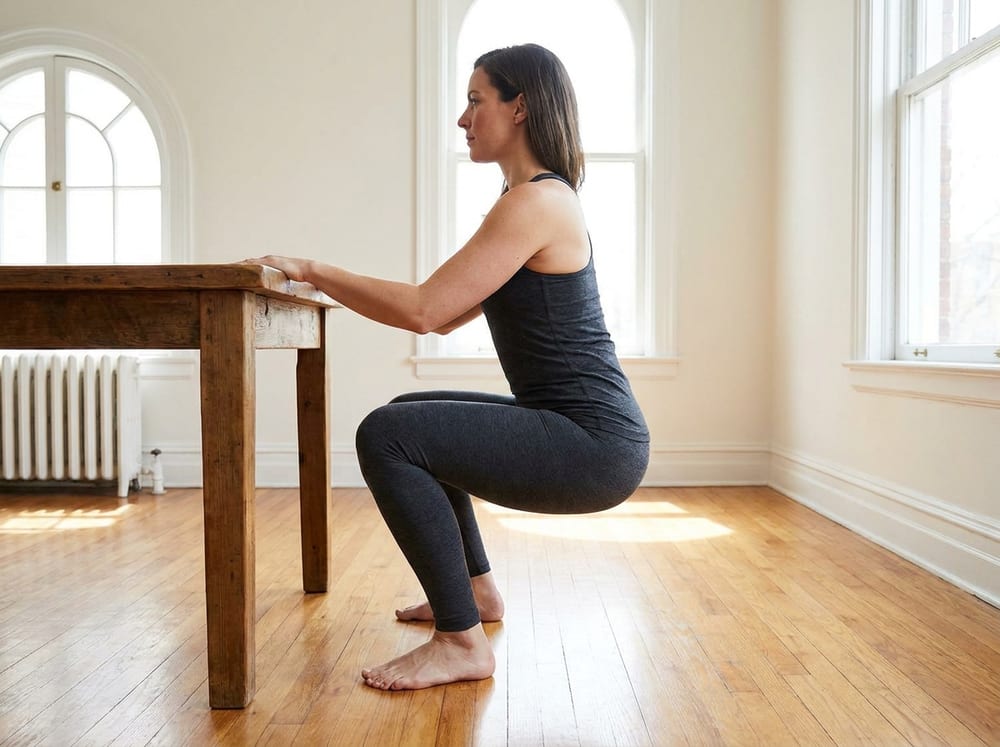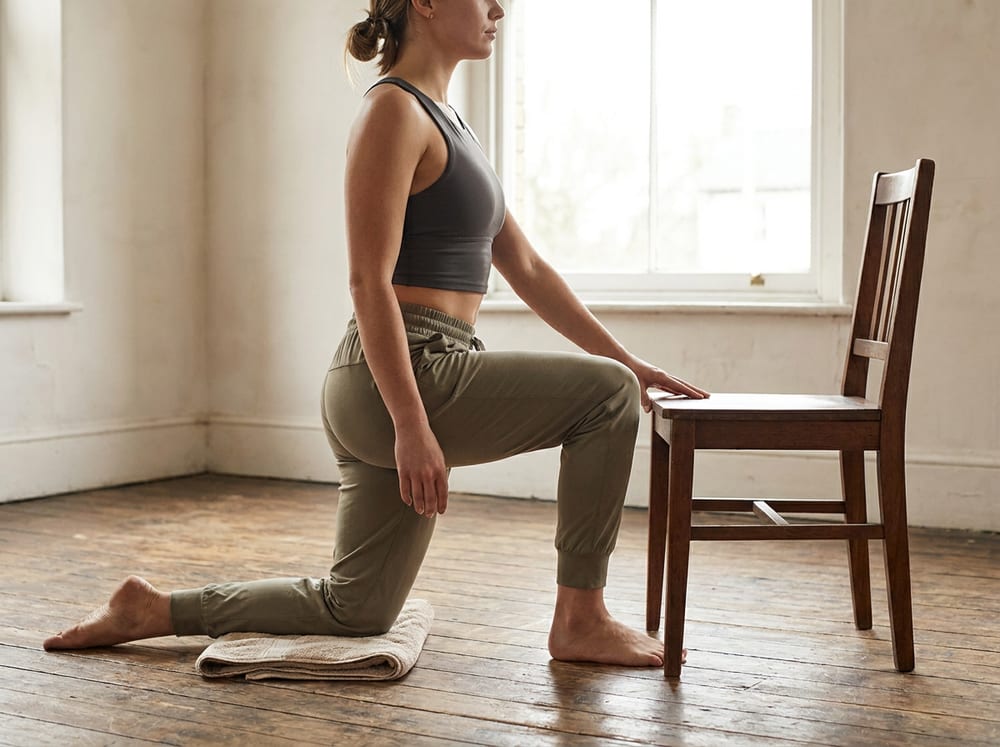
Half-Kneeling Hip Flexor Stretch
A kneeling lunge with your back foot kicked up against a wall or chair, reaching your hip flexors at a length a regular lunge never gets close to.
Why it works
Your hip flexors run from the front of your thigh all the way up to your lumbar spine, and sitting keeps them shortened for most of your waking day. Shortened hip flexors pull your pelvis into a forward tilt, which cranks up the arch in your low back and gets blamed, constantly, on a weak core when that's not the problem. A standard kneeling lunge reaches part of the group. Kick your back foot up behind you and you add knee flexion, which finally brings the rectus femoris, the one hip flexor greedy enough to cross both the hip and the knee, properly into the stretch. Here's the step everyone skips: tuck your pelvis first. Skip that, and you'll feel this in your low back instead of your hip, because your pelvis is just tipping instead of your hip extending.
How to do it
- Kneel on a cushion about two feet from a wall, facing away from it, and place the top of your back foot up against the wall.
- Bring your front foot forward and flat so that knee is over your ankle.
- Before anything else, tuck your pelvis under by squeezing the glute on the kneeling side. You should feel the stretch change immediately.
- Keeping that tuck, shift your weight gently forward until you feel a strong but tolerable stretch at the front of the kneeling hip and thigh.
- Hold for thirty to sixty seconds, breathing slowly. Raise the same-side arm overhead and lean gently away to reach more of it.
Dose: 2 to 3 holds of 30 to 60 seconds per side, daily or after sitting for long periods. Tuck first, every single time, or you're stretching the wrong thing.
⚠ This is educational content for discussion with a clinician, not medical advice or a prescription. Take the back foot off the wall and use a flat kneeling lunge instead with knee pain. Stop if you feel this in your low back, which means the pelvic tuck has been lost.