Legs-Up-the-Wall Pelvic Circulation Reset
A restorative inversion: hips near the wall, legs resting straight up it, using plain gravity and slow, parasympathetic breathing to flush out your pelvis and talk your nervous system down.
Why it works
Resting your legs up a wall reverses the entire day's worth of venous blood and lymph pooling downward into your legs and pelvis. Gravity does the work, helping that fluid drain back up while fresh arterial blood moves into the pelvic organs, relieving the vascular congestion that hours of sitting causes in the exact tissues responsible for arousal and genital blood flow. Just as important: the gentle inversion, paired with slow breathing where each exhale runs longer than the inhale, shifts you toward the parasympathetic side of your nervous system, the 'rest and arouse' state. Arousal itself runs on parasympathetic, blood-flow-dependent machinery, and a stressed, sympathetically wound-up nervous system shuts that machinery down. Ten quiet minutes here drops your heart rate, quiets your head, and lines up both the vascular and neural conditions desire needs. That same down-regulation is exactly why it also works as a reliable way to wind down before bed.
How to do it
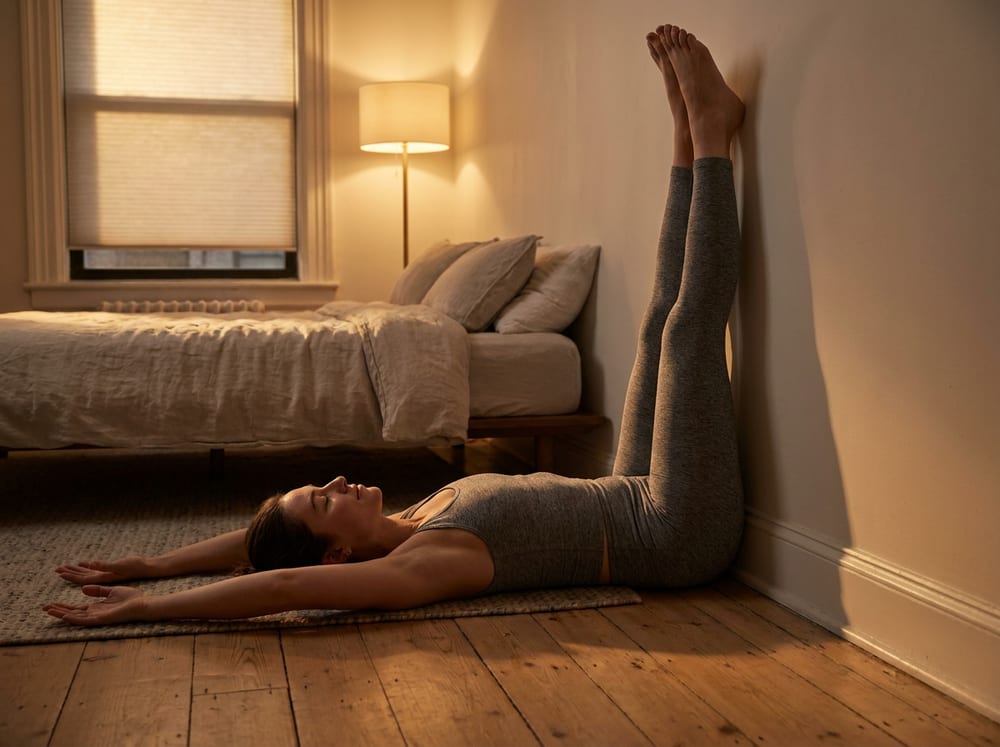
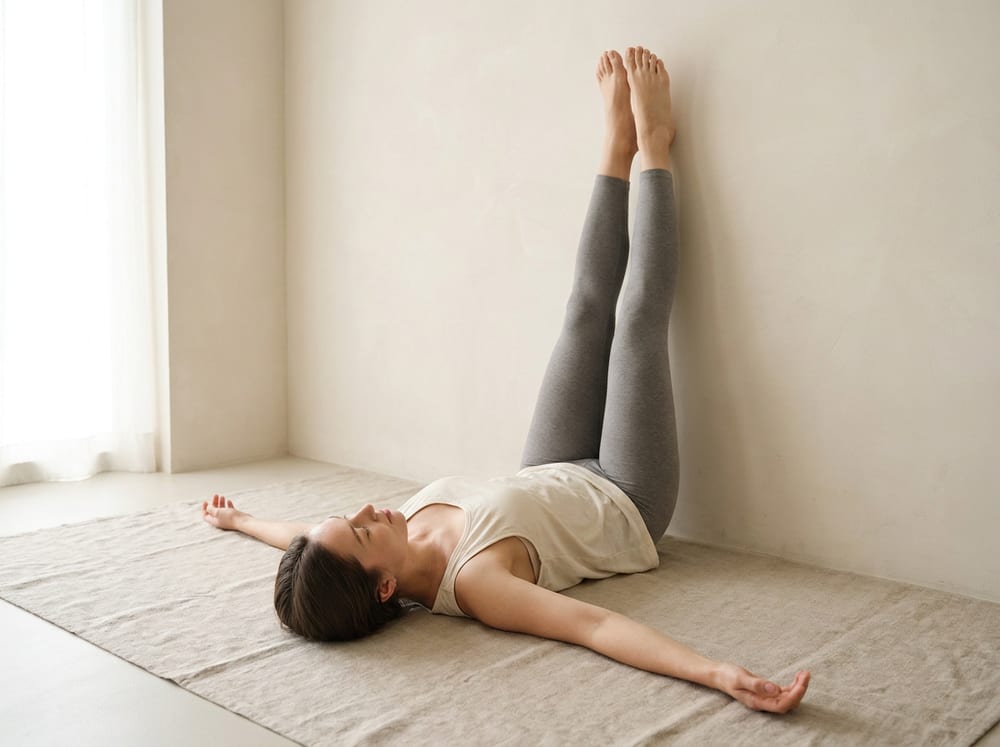
- Sit sideways with one hip close to the wall, then lie back and swing your legs up the wall as you turn to face it, so your sit bones rest at or near the baseboard.
- Let the legs rest vertically up the wall, knees soft, feet relaxed, arms open at your sides with palms up.
- Slide a folded towel or thin cushion under the hips only if it feels comfortable, keeping the low back at ease.
- Close your eyes and breathe slowly through the nose, making each exhale a little longer than the inhale.
- Stay 5-10 minutes, letting the legs, belly, and pelvic floor go completely heavy and relaxed.
- To come out, bend the knees, roll gently to one side, and rest there for a few breaths before sitting up slowly.
Dose: 5-10 minutes, once daily or as an evening wind-down, most days. Ten quiet minutes, no phone, is the whole ask.
⚠ Come out slowly to avoid a head rush, and skip this if you experience dizziness, uncontrolled high blood pressure, glaucoma or other eye-pressure conditions, or acute reflux. Avoid lying flat on the back for extended periods after the first trimester of pregnancy; a supported side-lying rest is a safer alternative then.