Post-Meal Walking Protocol
A short, unhurried walk started soon after you eat, paced on purpose to help your stomach empty and blunt the sugar spike that follows a meal. This isn't about fitness. It's about digestion.
Why it works
Light walking after a meal puts your big leg muscles to work, and a contracting muscle pulls glucose straight out of your bloodstream through a pathway that doesn't even need insulin to do it, which is exactly why controlled trials keep finding a lower, flatter blood-sugar curve after a meal when people walk instead of sitting there. The rhythmic movement and the gentle jostling in your belly are also thought to help your stomach empty and keep normal intestinal motility going, and small studies back that up with modestly faster gastric emptying and less bloating after a short walk. Be clear-eyed about the evidence tiers here: the glucose effect is the strongest finding, the motility and comfort effects are more suggestive than proven. Keeping the pace conversational is not optional. The goal is moving blood to working muscle while keeping your gut settled, not stealing circulation away from digestion by going hard.
How to do it
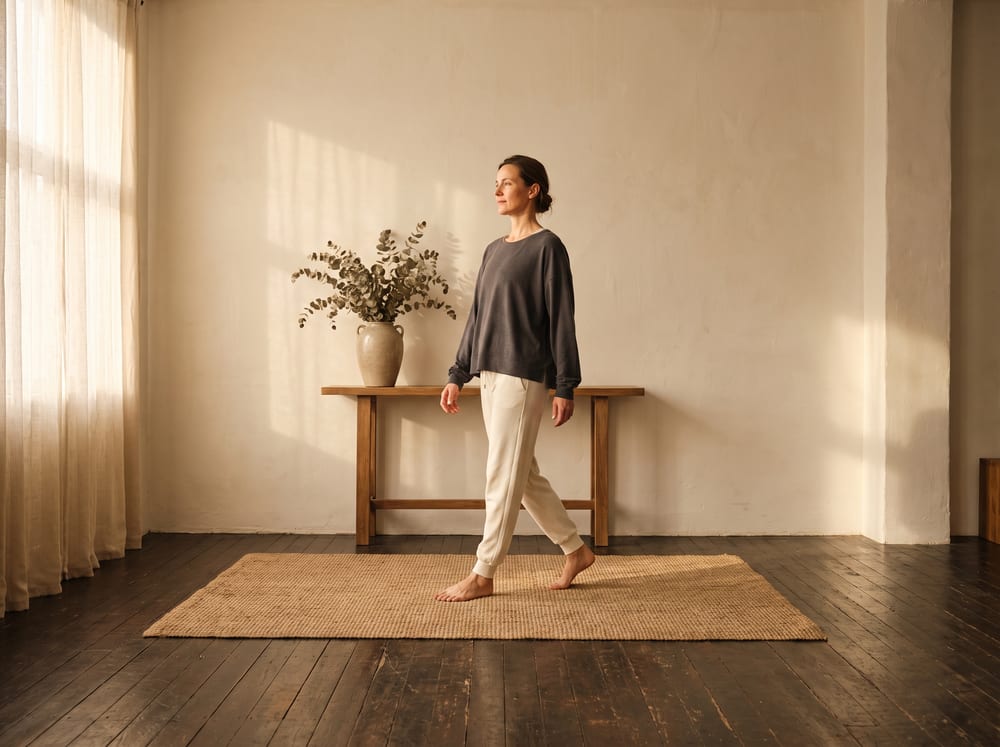
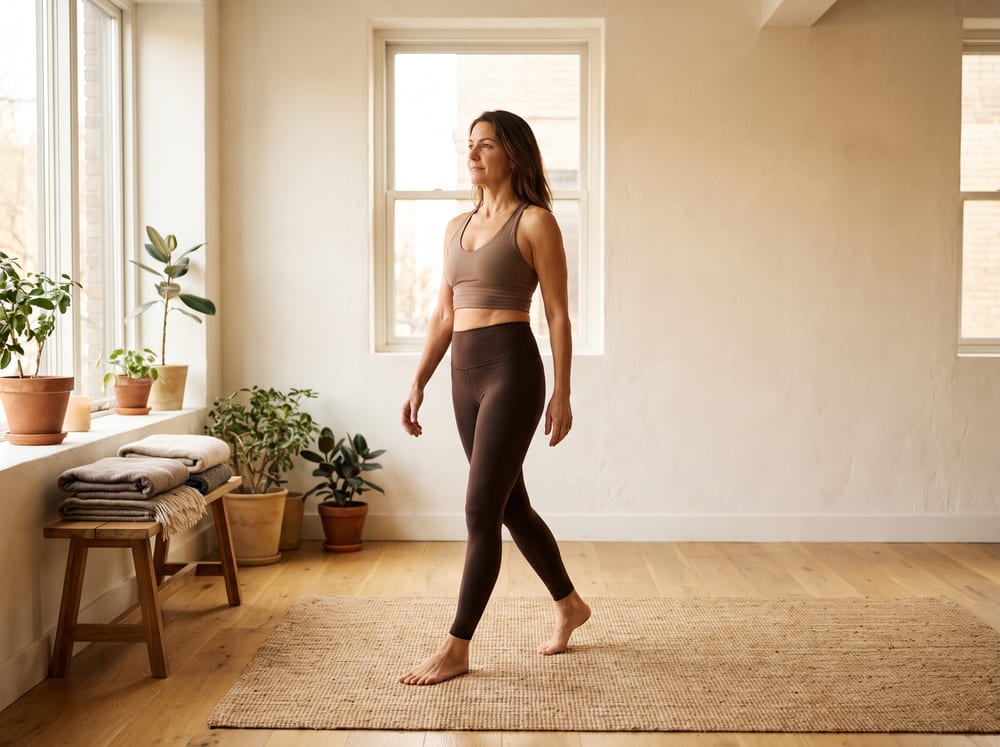
- Within about 15 to 30 minutes of finishing a meal, stand up and begin walking at an easy, conversational pace on level ground, indoors or out.
- Let the arms swing naturally and keep the torso tall so the belly has room to move; breathe through the nose in a relaxed rhythm.
- Hold the effort where you could still talk in full sentences, roughly a 2 to 3 out of 10 exertion, never pushing into breathlessness.
- Continue for 10 to 15 minutes, or as little as 5 if that is what the day allows, then slow to a stop and stand or sit upright.
- Avoid vigorous pace, hills, or any bending and twisting during the walk, which can feel uncomfortable on a full stomach.
Dose: One 10-15 minute easy walk after your largest one or two meals, most days of the week. Easy means easy. Save the effort for a different session.
⚠ This is general wellness movement for discussion with your clinician, not treatment for reflux, gastroparesis, or any diagnosed condition. If you have reflux, an easy flat walk is usually well tolerated, but stop and stay upright if you feel worse. Those with cardiovascular disease, blood-sugar-lowering medication, dizziness, or balance concerns should clear a post-meal walking habit with their clinician first and keep the pace gentle. Stop for any chest pain, unusual breathlessness, or lightheadedness.