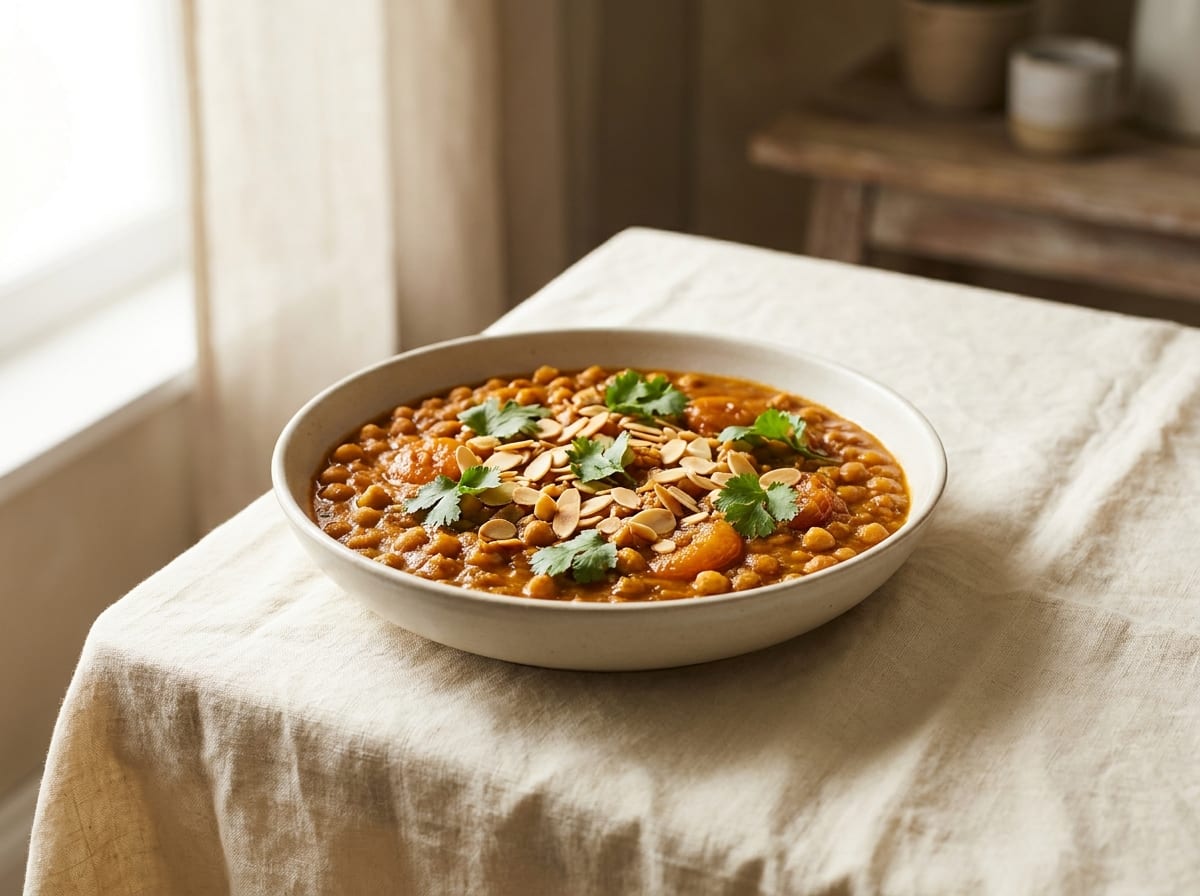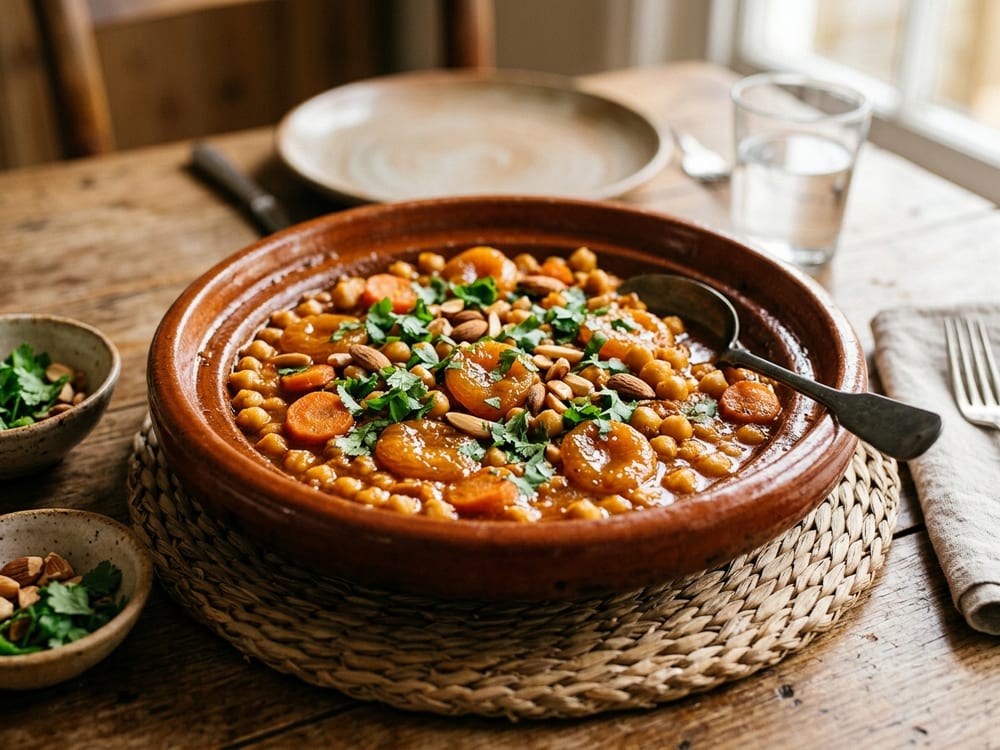
Moroccan Chickpea, Apricot and Carrot Tagine
Chickpeas, dried apricots and carrots simmer for hours in a spiced tomato sauce until everything turns soft and deeply flavored, a big batch that tastes even better on day two.
Why it works
Chickpeas carry the cardiovascular case for this dish: their soluble fiber binds bile acids in the gut, and the liver draws LDL cholesterol out of the blood to make replacements, which is the main mechanism behind legumes' consistent link to lower LDL in cohort studies. That same fiber, plus the resistant starch in chickpeas that survives digestion until it reaches the colon, feeds the bacteria that produce short-chain fatty acids, which is the digestive argument for eating beans often rather than occasionally. Dried apricots concentrate potassium as the water leaves them during drying, and potassium works against sodium's effect on blood pressure, which matters more here because the dish is built without added salt. Carrots add more soluble fiber along with carotenoids that become easier to absorb after a long, oil-touched simmer breaks down their cell walls. Chickpeas and other legumes also turn up more often than almost any single food across the long-lived populations researchers study as blue zones, a weaker, population-level kind of evidence but a consistent one.
The legume-cholesterol and potassium-blood pressure mechanisms have solid trial and cohort support. The blue-zone legume pattern is observational, drawn from population studies of a handful of regions rather than randomized trials. It is suggestive, not settled.
Ingredients
- 2 tbsp olive oil
- 1 large onion, chopped
- 2 carrots, sliced into rounds
- 4 garlic cloves, minced
- 2 tsp ras el hanout
- 1 tbsp harissa paste
- 2 tbsp tomato paste
- 2 × 400 g tins chickpeas, drained and rinsed
- 130 g dried apricots, quartered
- 400 g tin chopped tomatoes
- 500 ml low-sodium vegetable stock
- 1 preserved lemon, flesh discarded and rind finely chopped (or the zest of 1 lemon)
- 60 g pumpkin seeds (pepitas), toasted, to serve
- A small bunch cilantro or parsley, chopped, to serve
Method
- Put the olive oil, onion, carrots, garlic, ras el hanout, harissa, and tomato paste into the slow cooker and stir to coat the vegetables.
- Add the chickpeas, dried apricots, chopped tomatoes, and stock, and stir well.
- Cook on low for six to seven hours, or on high for three to four, until the carrots are tender and the sauce has thickened around the chickpeas.
- Stir in the preserved lemon during the last 30 minutes of cooking, so its flavor doesn't dull over a long simmer.
- Taste before serving. A tagine wants more acid than feels right at first; add extra lemon or a splash of vinegar if the sweetness sits too far forward.
- Divide among bowls or storage containers and top with toasted pumpkin seeds and chopped cilantro just before eating, so the seeds stay crisp.