Breathing Against a Spring
Five minutes a day pulling thirty hard breaths through a handheld trainer that fights you the whole way. Strength training, except the muscle is your diaphragm and the number that moved in the trial was blood pressure.
Why it works
Every other breathing practice in this library works by slowing you down. This one works by making the breath heavy. A handheld trainer puts a spring-loaded valve in front of your inhale, so the diaphragm and the muscles between your ribs have to pull hard against a load to open it. Thirty breaths and you are done, which is why it fits into a morning that has no room in it. Here is the part that surprises people: the route to the blood pressure number is probably not the diaphragm getting stronger. The proposed route is your vessel lining. Plasma taken from people doing this loaded breathing pushed cultured endothelial cells to make more nitric oxide and sit under less oxidative stress, and nitric oxide is what tells an artery to relax and widen. Reduced sympathetic outflow is a second candidate and it has less behind it. Say the honest version out loud: the drop in blood pressure was measured and the endothelial improvement was measured, and which one caused the other, or whether something else drove both, is a working hypothesis rather than a settled fact.
Craighead and colleagues (Journal of the American Heart Association, 2021) randomised 36 adults aged 50 to 79 whose systolic blood pressure sat at or above 120 to six weeks of high-resistance inspiratory training at 75 percent of their measured maximal inspiratory pressure, or to a low-resistance sham at 15 percent. Thirty breaths a day, six days a week. Casual systolic blood pressure fell about 9 mmHg in the loaded group and barely moved in the sham group, and brachial artery flow-mediated dilation, an ultrasound read on how well an artery relaxes, improved substantially alongside it. The nitric oxide and oxidative stress readouts come from that same trial, which is where the vessel-lining explanation started. Now the ceiling on all of that. Thirty-six people, one site, six weeks, largely one research group. The low-resistance arm was a genuine sham and participants were not told which arm they were in, but a person can feel how hard their own device pulls, so the blinding is imperfect and expectation gets a vote. The outcomes were a blood pressure cuff and an ultrasound, not heart attacks and not strokes: no trial has tested whether this prevents a single cardiovascular event, and none is close to answering it. Everyone studied was midlife or older with above-normal untreated blood pressure, so what this does for a healthy thirty-year-old, or for someone already on two blood pressure medications, is unmeasured. The wider inspiratory muscle training literature is real but it grew up in lung disease and heart failure rehab, where it reliably builds inspiratory strength and eases breathlessness. Those trials were not built to answer a blood pressure question. And it needs a device you have to buy, which no amount of enthusiasm gets around.
How to practice
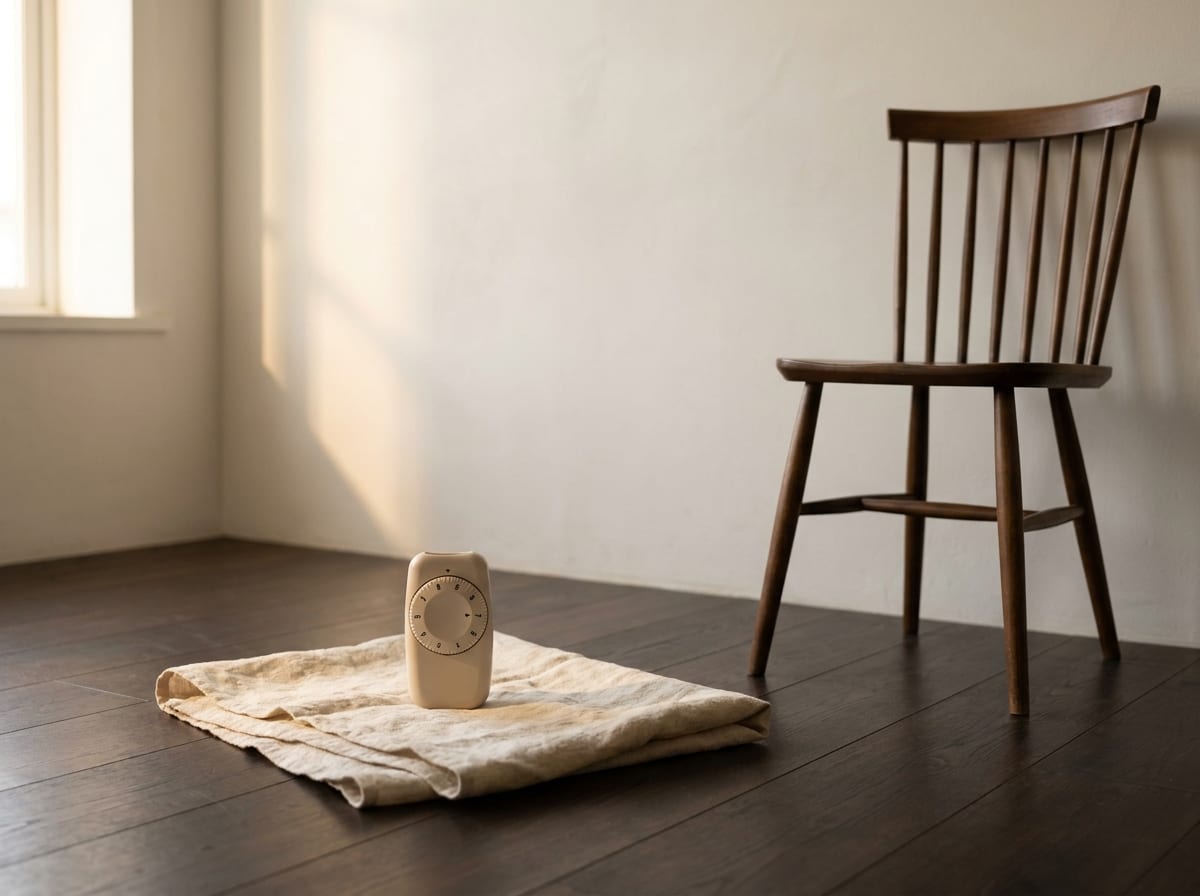
- Get a handheld inspiratory muscle trainer, the kind sold for respiratory rehab with a numbered resistance dial on the end. A device with no adjustable load cannot do this.
- Set the resistance. The trial measured each person's maximal inspiratory pressure on lab equipment and set the dial to 75 percent of it. Without that equipment, turn it up until thirty breaths is genuinely hard work and the last handful are a fight, then leave it there for a week or two before you touch it again.
- Sit upright in a chair, feet flat, shoulders down. Standing works too. Slouching does not.
- Seal your lips around the mouthpiece and pinch your nose or wear the nose clip, so every bit of the inhale comes through the device.
- Pull one fast forceful breath in, all the way full, over about two to three seconds. Then let the exhale fall out on its own. No pushing it out.
- Six breaths, then rest for thirty seconds or so. Repeat until you have done five sets, which is thirty breaths and takes about five minutes.
- Six days a week. Rinse the mouthpiece afterward and let it dry, because that thing lives in your mouth.
- Hard and short beats slow and comfortable here. If you can chat through it, the dial is set too low.
- Lightheaded on the first few sessions is common. Sit for a minute before you stand, and turn the dial down if it keeps happening.
- This is a strength session, not a calming one. It will not settle you down and it was never built to.
⚠ This is not a replacement for blood pressure medication and it is not a reason to change a dose or stop one. Blood pressure is a number to measure and to manage with a clinician, and this sits alongside that, never instead of it. Talk to a doctor before starting if your blood pressure is uncontrolled, if you are pregnant, or if you have asthma that is flaring, a collapsed lung or any history of pneumothorax, a perforated eardrum or recent ear surgery, or recent chest or abdominal surgery. Forceful inhalation against resistance raises pressure inside the chest and can carry through to the ears and sinuses, so stop if you get ear pain. Do not share a mouthpiece with anyone.