4-7-8 Relaxing Breath
Inhale, hold, long exhale, on a fixed count, easing your body into the settled, drowsy state sleep needs before it shows up.
Why it works
Stretching the exhale past the inhale pulls your whole breathing cycle toward the resonance range, which switches on the parasympathetic nervous system through the vagus nerve. That longer out-breath slows your heart rate on every exhale, the pattern is called respiratory sinus arrhythmia, and drops sympathetic arousal, which shortens how long it takes you to fall asleep. The brief hold does its own small job too: it nudges your carbon dioxide tolerance up a notch, which dampens the urge to over-breathe when your mind is still running laps.
Breathing patterns with a longer exhale than inhale reliably increase parasympathetic, vagal tone and bring down heart rate and sympathetic arousal. That's the whole mechanism behind faster sleep onset, and it holds up.
- Rhythm
- 4 · 7 · 8 seconds, at 3.2 breaths a minute
- Tone
- 174 Hz. The lowest of the solfeggio tones, kept for rest, which is lineage rather than physiology.
How to practice
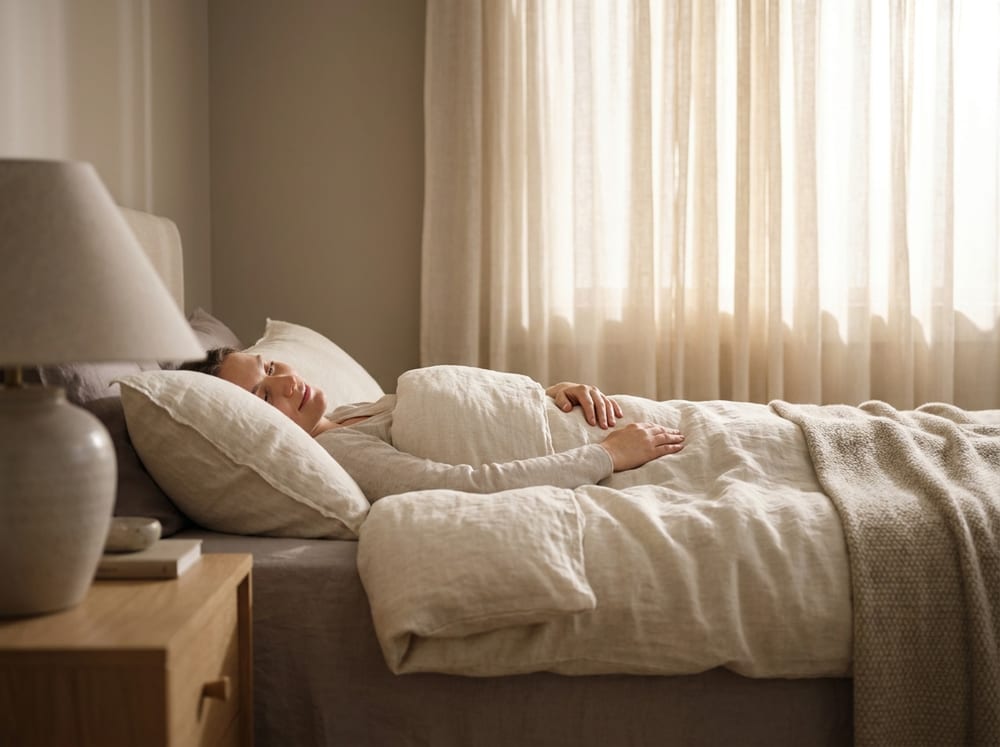
- Lie down or sit comfortably and rest the tip of your tongue behind your upper front teeth.
- Exhale fully through your mouth with a soft whoosh, emptying the lungs.
- Close your lips and inhale quietly through your nose for a count of 4.
- Hold your breath gently for a count of 7 without straining.
- Exhale slowly through your mouth for a count of 8 with the same soft whoosh.
- Repeat the full cycle 4 times, then breathe normally and let sleep come.
- Still awake? Run one more set of 4 cycles and let it work.
- Keep the counts even and unhurried. Slow the pace down before you go chasing longer holds.
- The exhale is the effortless, sighing part of the cycle. Let it be that.
- Lightheaded? Shorten the hold, breathe naturally for a moment, no drama.
⚠ Skip or shorten the breath-hold if you are pregnant or have uncontrolled high blood pressure; never practice while driving. Start with 4 cycles and build slowly to avoid dizziness.