A Sit on What You Are For
Twelve minutes, once a week, spent looking at the week ahead and clocking the parts you'd be sorry to lose. A reflection, not a to-do list in disguise.
Why it works
The finding underneath this isn't about meditation. It's about a questionnaire. People who agree with statements like having a sense of direction in what they're doing go on to die later than people who don't, across separate cohorts, and the association survives adjustment for income, education, health status, and depressive symptoms in the studies that bothered to adjust for those. The plausible routes are ordinary, not mystical. Someone with something they mean to do sleeps a little differently, moves a little differently, eats a little differently, keeps taking the tablet, shows up for the appointment. Purpose in this research means direction, not significance. It doesn't require a calling from the heavens. The cohorts find it in a garden, a grandchild, a choir on a Thursday, nothing more dramatic than that. This practice takes that literally. It doesn't try to manufacture a reason to be alive, because twelve minutes cannot do that for you and it would be insulting to pretend otherwise. It looks at the week that's already coming and waits to see which parts of it you'd genuinely mind losing, because that's where a direction shows itself, if there's one to find. Where nothing turns up, that's worth knowing too. A quiet room is a far better place to find that out than the end of a year you can't get back.
The pooled figure comes from a meta-analysis by Cohen, Bavishi and Rozanski (Psychosomatic Medicine, 2016) covering ten prospective studies and 136,265 people: those scoring high on purpose had about a 17 percent lower risk of dying during follow-up than those scoring low (relative risk 0.83, 95% CI 0.75 to 0.91), with a similar reduction in cardiovascular events. The individual cohorts point the same way. Boyle and colleagues followed 1,238 older adults in the Rush studies and found the risk of dying roughly halved between someone near the bottom of the purpose scale and someone near the top. Hill and Turiano found the association across 6,163 adults in the MIDUS cohort over fourteen years, holding for people in their twenties as well as their seventies. All of it is observational and self-reported, and the direction of cause is genuinely open: illness, cognitive decline and depression all erode a sense of direction, so some of what looks like purpose keeping people alive is really just people being well enough to have some in the first place. Adjustment narrows that. It doesn't close it. What's missing is the trial. Nobody has raised purpose in a group of people and then shown them living longer, because nobody knows how to do that on command. So here's what can be said for a practice like this one, plainly: it works on something that travels alongside a longer life. It has not been shown to lengthen one. Keep that distinction. Don't round it up.
How to practice
- Take the same slot each week, somewhere you won't be interrupted, with the coming week close enough to see the shape of.
- Settle first. Two or three minutes on the breath and the weight of you in the chair, attention coming back each time it goes.
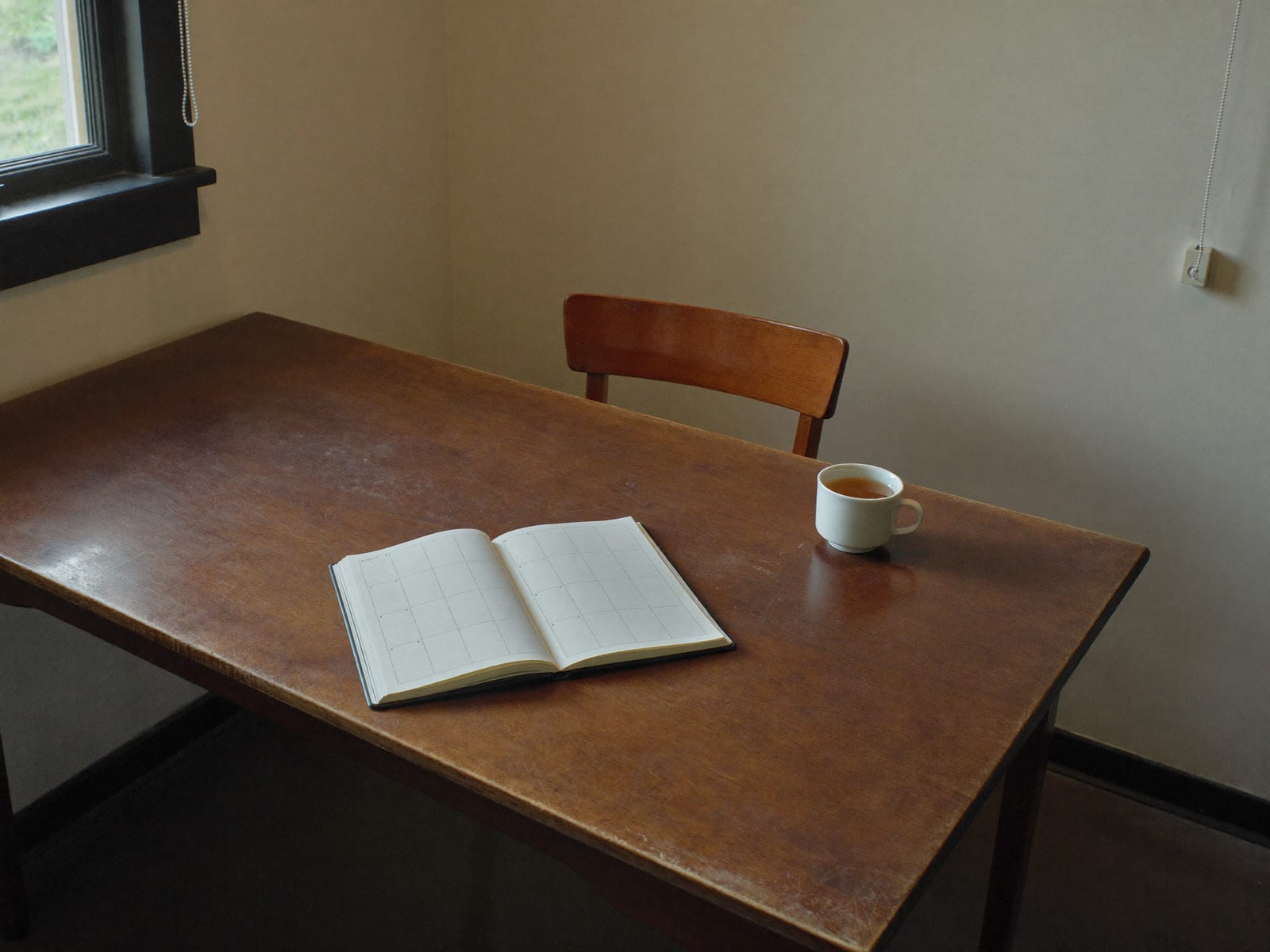
- Bring the week to mind as it stands. The calendar as it is, not the one you meant to have.
- Go through it slowly and wait. Do not decide which parts ought to matter. Notice which ones you lean toward.
- Take one of them and stay there a while. Who it is for. What it asks of you. What would go missing if it quietly fell off the week.
- Then look at the rest of the week holding that one thing in mind. Some of it will look smaller from there, and noticing that does not oblige you to cancel anything.
- Before you get up, name one thing you will protect this week. One, said plainly enough to remember without writing it down.
- If nothing came, spend the last minute with that instead of inventing something. A week with nothing in it you'd miss is common, and it's more useful known than not.
- Direction, not significance. The cohorts found it in gardens, grandchildren, and a choir on Thursdays.
- What you would be sorry to lose is an easier question to answer truthfully than what matters most.
- One thing to protect. A list is a plan, and a plan is a different practice entirely.
- Nothing arriving is an answer too. Sit with that instead of manufacturing one.
⚠ Looking directly at what a week is for can bring up grief, particularly after a bereavement, a retirement, or an illness that took a role away. Sitting with that is reasonable; sitting alone with it week after week is not. A sense of direction that has gone and stayed gone is one of the things depression does, and that belongs with a clinician rather than with a longer sitting.