NSDR / Yoga Nidra for Deep Rest
A guided lie-down practice that walks your attention through the body while you stay perfectly still and let your nervous system drop into deep, restorative rest.
Why it works
Sustained, effortless body-scanning paired with total stillness shifts your autonomic balance toward parasympathetic dominance, lowering heart rate and sympathetic arousal without you needing to fall asleep. This non-sleep deep rest state resembles the theta-rich transition into stage-1 sleep, which shortens sleep-onset latency and helps replenish dopamine and your baseline calm. Because the body is fully supported and not moving a muscle, muscle tone falls and your brain reads the whole environment as safe enough to check out for a while.
Yoga nidra and NSDR protocols have been shown to increase parasympathetic activity and reduce measures of physiological and self-reported stress, with emerging evidence for improved sleep quality. Emerging, not settled. Worth doing, still worth watching.
- Tone
- 174 Hz. The lowest of the solfeggio tones, kept for rest, which is lineage rather than physiology.
How to practice
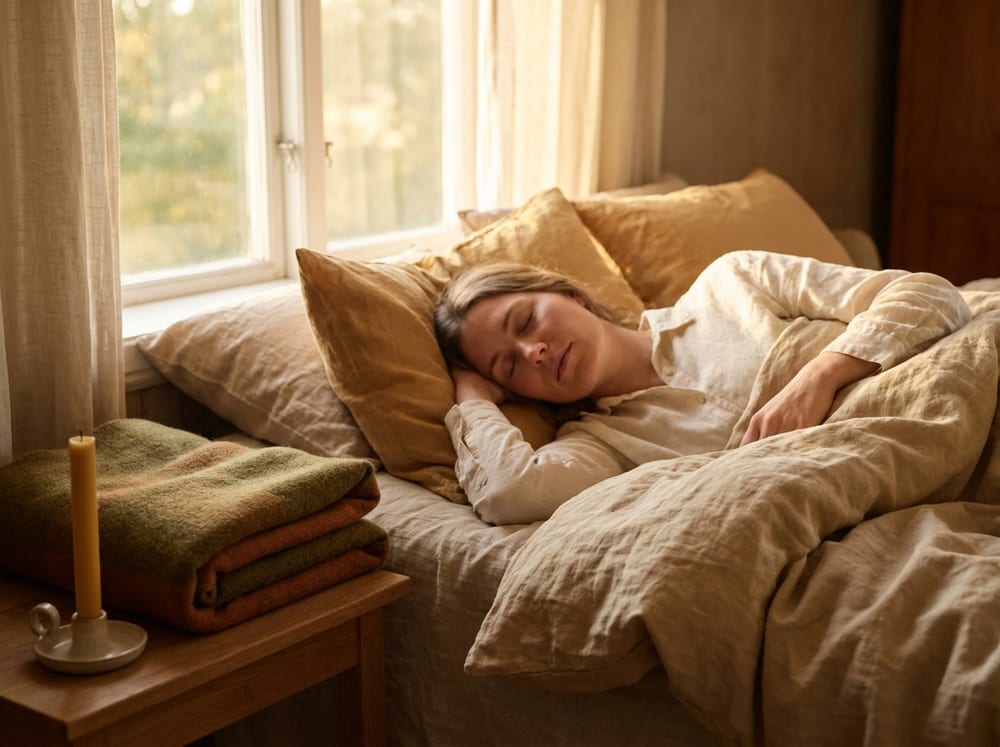
- Lie flat on your back in bed or on a mat, arms slightly away from your sides, palms up, eyes closed.
- Take 5 slow breaths, letting the exhale grow longer than the inhale (roughly 4 in, 6 out).
- Set a quiet intention such as 'I am allowing my body to rest deeply' and repeat it once.
- Move attention slowly through the body: right hand, arm, shoulder, then left side, then face, torso, and both legs, pausing 2-3 breaths at each region.
- At each region, silently note 'releasing' as you soften any holding, and let that area feel heavier.
- Once the whole body is scanned, rest your awareness on the natural rise and fall of the breath for several minutes.
- Either drift into sleep, or if it's daytime, gently wiggle fingers and toes and get up slowly before you head back into your day.
- Nothing to achieve here. Drifting off is a success, not a failure of the exercise.
- Keep the body completely still so muscle tension gets to drain away.
- Let the exhale lead. A long, quiet breath out is the signal your nervous system reads as safe.
⚠ If practicing during the day for rest rather than sleep, transition upright slowly to avoid lightheadedness.