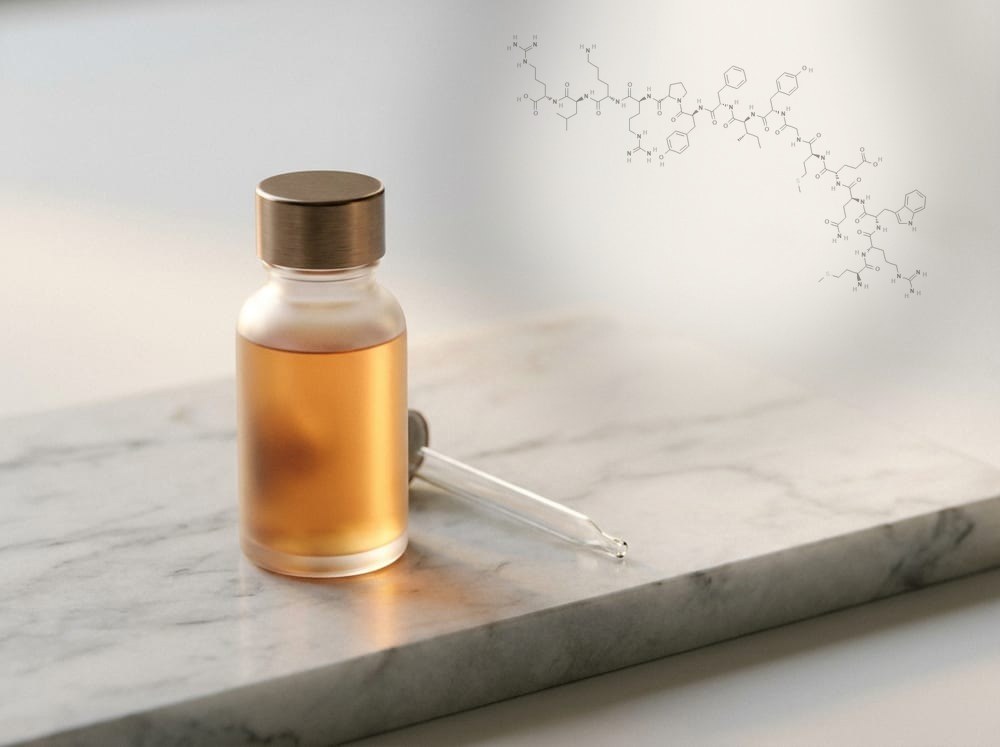
MOTS-c
Mechanism
Sixteen amino acids, encoded right inside your mitochondria's own DNA, in the 12S rRNA region, talking straight to the nucleus. What it says: turn on AMPK, the same master energy switch your body flips when you exercise. It gets there by nudging the folate-methionine cycle and raising AICAR inside the cell. The payoff: fat burned for fuel, glucose uptake that skips insulin, new mitochondria, a body that handles metabolic stress like it trained for it.
Key Benefit
Often described as an "exercise mimetic." Animal studies show improved insulin sensitivity, greater running endurance and exercise capacity, protection against diet-induced obesity, and preserved muscle and metabolic function with age. Circulating MOTS-c falls with aging and insulin resistance in humans.
Evidence Base
Mostly preclinical, rodent and cell studies, but the mechanistic data is solid, and there are human observational links too. No FDA-approved MOTS-c product exists. No official dosing either, because nobody's approved a dose of a product that doesn't exist yet. CohBar took an analog, CB4211, into early-phase human trials for obesity and NASH. It got discontinued, and that was a commercial and efficacy call, not a safety scare.
Route & Rationale
Subcutaneous injection. The peptide is degraded in the GI tract, so systemic exposure requires parenteral delivery. Research protocols use SC injection; oral and intranasal forms are experimental and poorly characterized.
Interactions
AMPK activation lowers blood glucose and may be additive with insulin, sulfonylureas, and metformin. Monitor for hypoglycemia. Watch glucose closely when combined with other metabolic agents.
Regulatory Status
Not FDA-approved. This is an investigational research peptide, sold research-use-only. WADA bans it at all times, filed under AMPK activator in their Metabolic Modulators category. USADA will not grant it a Therapeutic Use Exemption either. No exceptions carved out anywhere.
Cautions
Diabetes
For information and research purposes only. This is not medical advice and not a recommendation to use this substance. Discuss anything here with your healthcare provider.