Controlled Step-Down
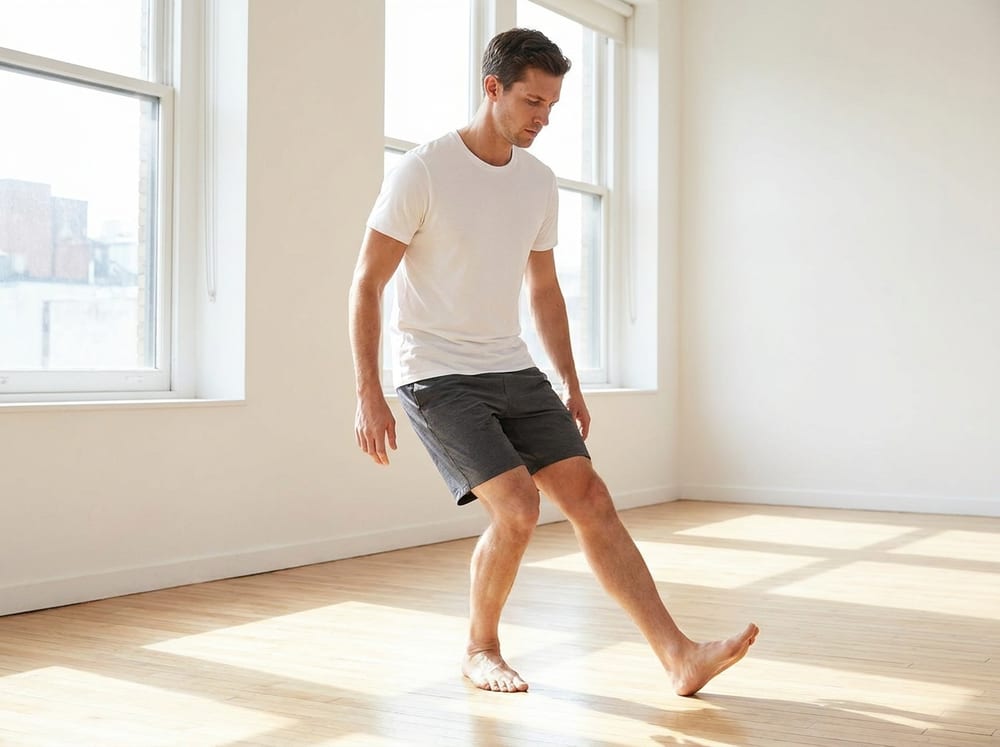
Stand on a step, lower one heel slowly toward the floor without letting it take any weight, then come back up. That's it. That's the whole drill.
Why it works
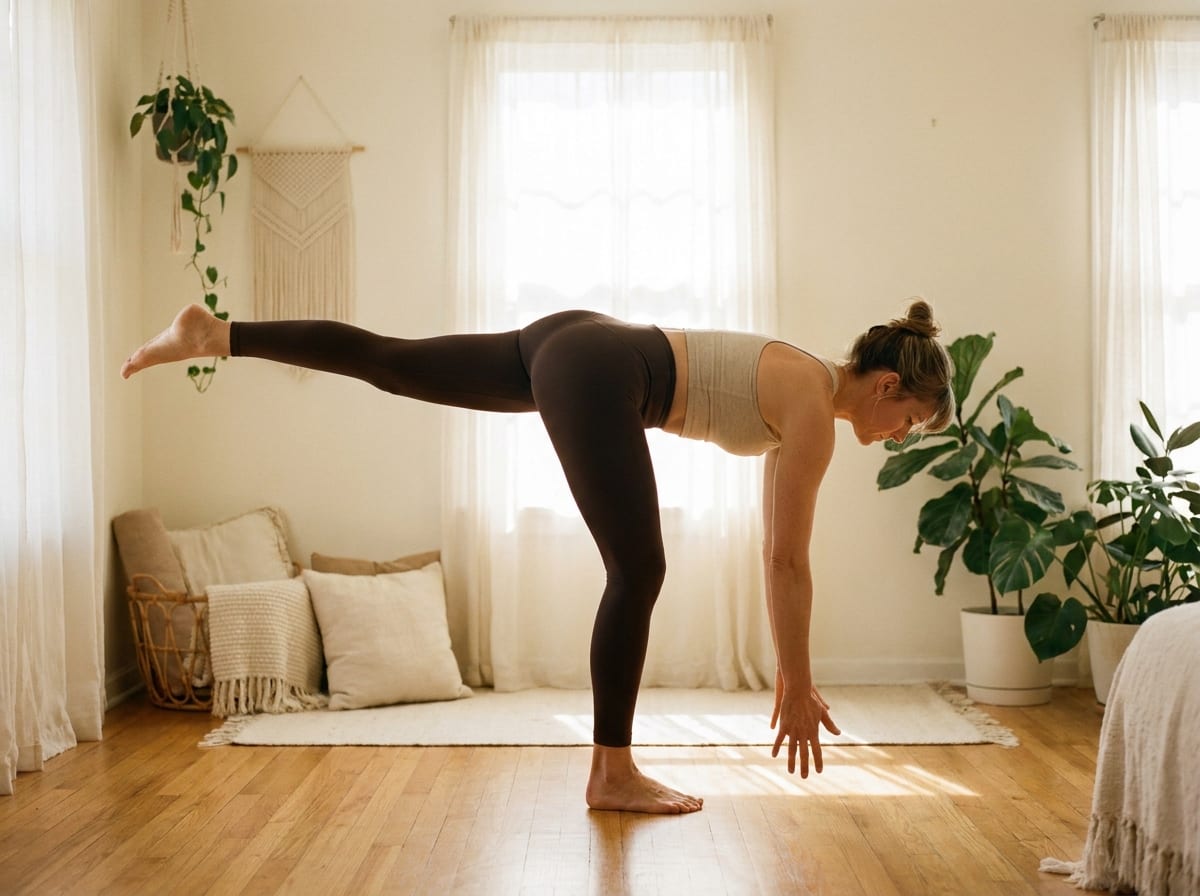
Descending stairs is where most stair falls happen, and it's harder than climbing up them: your working leg has to lower your entire bodyweight under control, which is eccentric work, while your hip holds a pelvis balanced on a single point of support. This drill takes that exact moment and slows it down until you can feel what's happening. Watch the knee on your standing leg. If it drifts inward as you lower, your gluteus medius isn't holding the pelvis the way it should, and that's the same collapse pattern that shows up next to knee pain. Do this in front of a mirror for your first few sessions. It'll teach you more than a stack of extra reps ever will.
How to do it
- Stand on the bottom stair or a sturdy step with one hand near the rail or wall.
- Shift your weight onto one leg and let the other foot hover off the front edge of the step.
- Lower slowly, taking three seconds, until that heel just touches the floor. Do not transfer weight onto it.
- Watch the standing knee. It should track over the middle of your foot rather than drifting inward toward the other leg.
- Press back up through the standing leg. Complete all repetitions on one side before switching.
Dose: 3 sets of 6 to 10 repetitions per leg, 2 to 3 times a week. Watch the knee on every single rep, not just the first few.
⚠ This is educational content for discussion with a clinician, not medical advice or a prescription. Use a low step to begin with and always keep a hand near a rail. Reduce the step height with pain at the front of the knee. Stop if the standing knee collapses inward and you cannot correct it.