Brisk Walking Interval Protocol
A structured walk, indoors or out, that swaps an easy conversational pace for short brisk pushes and back again, building whole-body circulation, steady fitness, and healthier body composition. Intensity stays moderate on purpose.
Why it works
Regular moderate walking is one of the best-supported, lowest-risk moves you can make for the metabolic side of fertility, full stop. It improves insulin sensitivity, supports a healthier body composition, and gets more blood moving systemically and through the pelvis, all plausible pieces of more regular ovulation in women and better sperm parameters in men, where these same brisk, gentle intervals help circulation and body composition too. Here's the part that surprises anyone assuming harder is always better: observational evidence links moderate activity with better fertility outcomes, but very high-volume, high-intensity training has in some studies tracked with reduced fertility, especially in lean women already training hard. That contrast is the whole prescription. The brisk intervals here add a real cardiovascular stimulus and step count without dragging you anywhere near the exhaustive volumes that can suppress the reproductive axis. The general metabolic and cardiovascular case for walking is strong. The fertility link specifically is moderate and mostly observational, not proof. It also lives in the balance and gait section, because upright walking quietly trains your single-leg stance and steadiness with every stride you take.
How to do it
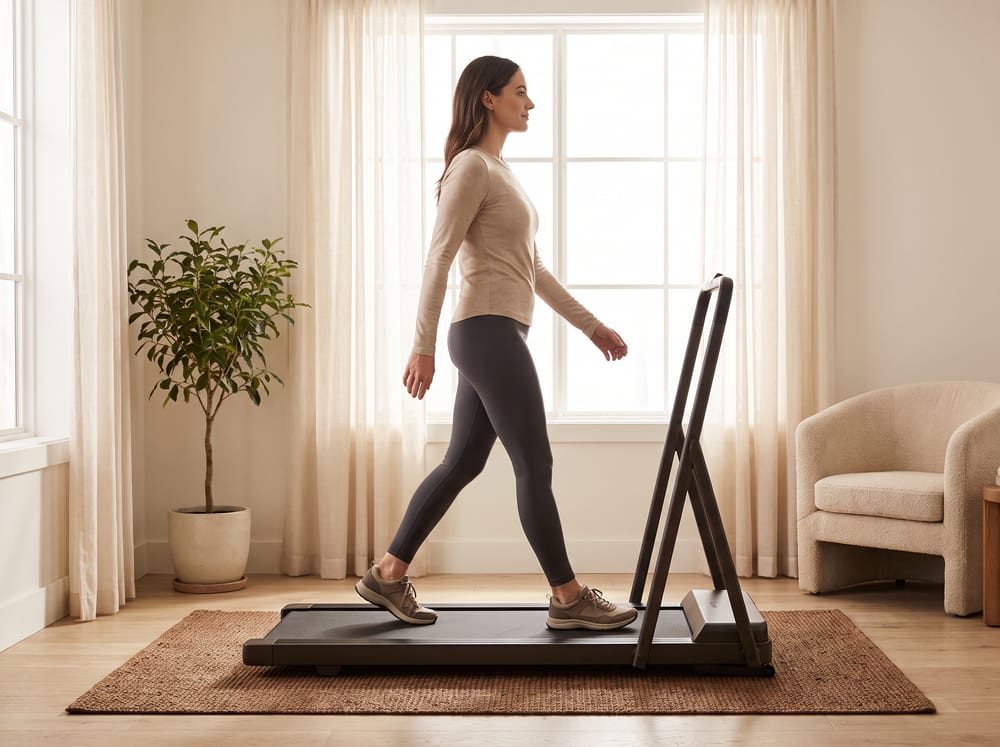
- Stand tall and begin walking at an easy, conversational pace for 5 minutes to warm up.
- Pick up to a brisk pace, where breathing deepens but you can still speak in short sentences, for 1-2 minutes.
- Ease back to the comfortable conversational pace for 2-3 minutes to recover.
- Alternate the brisk and easy segments for a total of about 20-40 minutes, staying at a moderate effort you could sustain and never sprinting to breathlessness.
- Keep your posture upright and vertical with relaxed shoulders and a natural arm swing, letting each stride roll smoothly heel to toe.
- Finish with 5 minutes at an easy pace to cool down.
Dose: One 20-40 minute session, most days of the week, roughly 150 minutes of moderate walking total. Moderate means moderate, not exhausting.
⚠ This is educational information for discussion with your clinician, not medical or fertility advice. Keep intervals moderate: very high-volume or high-intensity training can work against fertility, so this is not the place to push hard. If you are pregnant or trying to conceive, clear your activity level with your care team, walk on even surfaces, stay hydrated, and stop for chest pain, dizziness, unusual shortness of breath, or pelvic pain. Build duration gradually if you are new to regular walking.