Eyes-Closed Balance Progression
A staged climb from standing feet-together with your eyes shut, all the way to balancing on one leg on a cushion. Every stage strips away one more thing your body was leaning on.
Why it works
Close your eyes and you cut out the input doing most of the heavy lifting for most adults: vision. What's left is your vestibular system and proprioception, your sense of where your own joints are without looking at them, and good news, both of those respond to training. Stand on a cushion and you add a second problem: the ground itself goes unreliable, your ankle gets less usable information, and everything else has to compensate harder to keep you upright. Climb through these stages one at a time instead of skipping straight to the hardest one. That's not caution for its own sake, it's what makes this work: each stage should feel manageable for a full week before you move to the next. This is the exact logic clinical balance rehab runs on.
How to do it
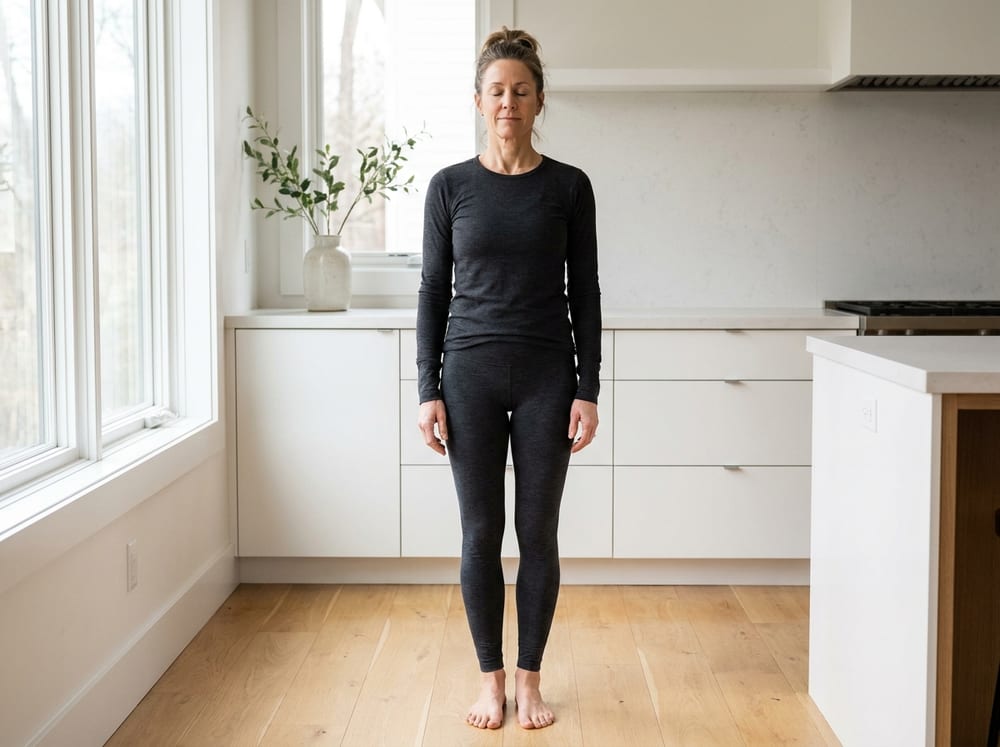
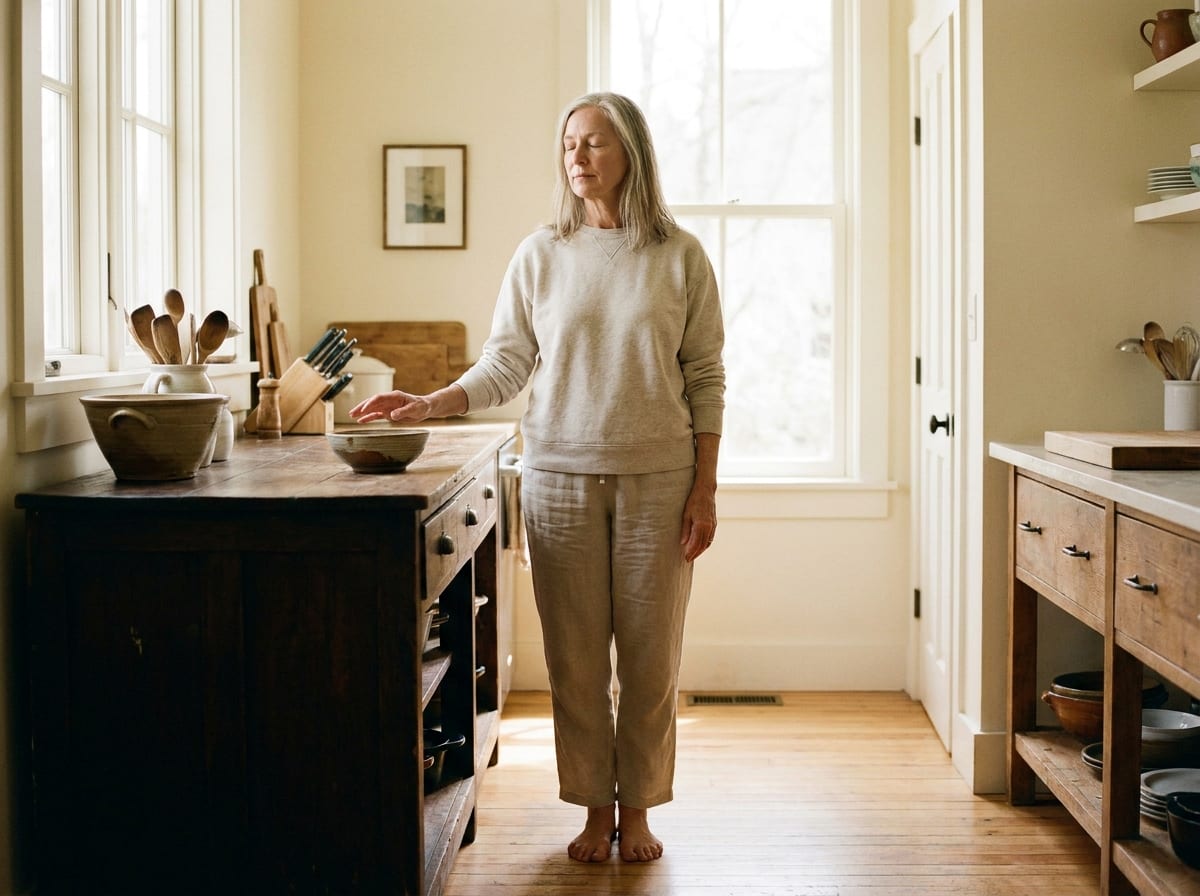
- Stage one: stand with feet together, eyes closed, hands hovering near a counter. Hold thirty seconds.
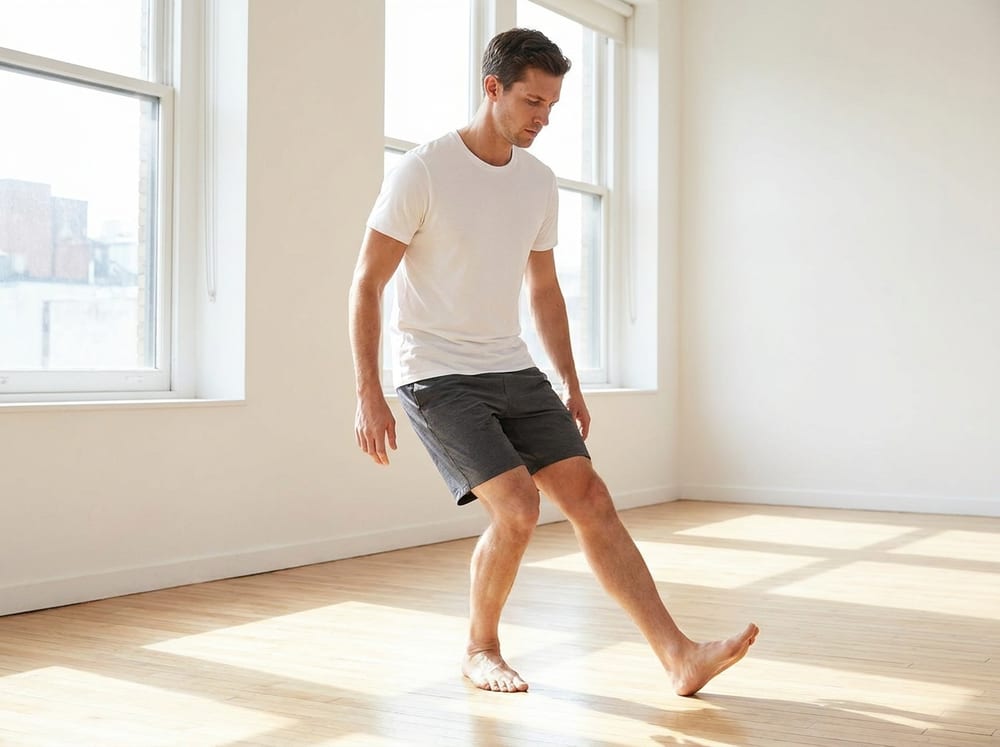
- Stage two: stand heel to toe, eyes closed. Hold thirty seconds each way round.
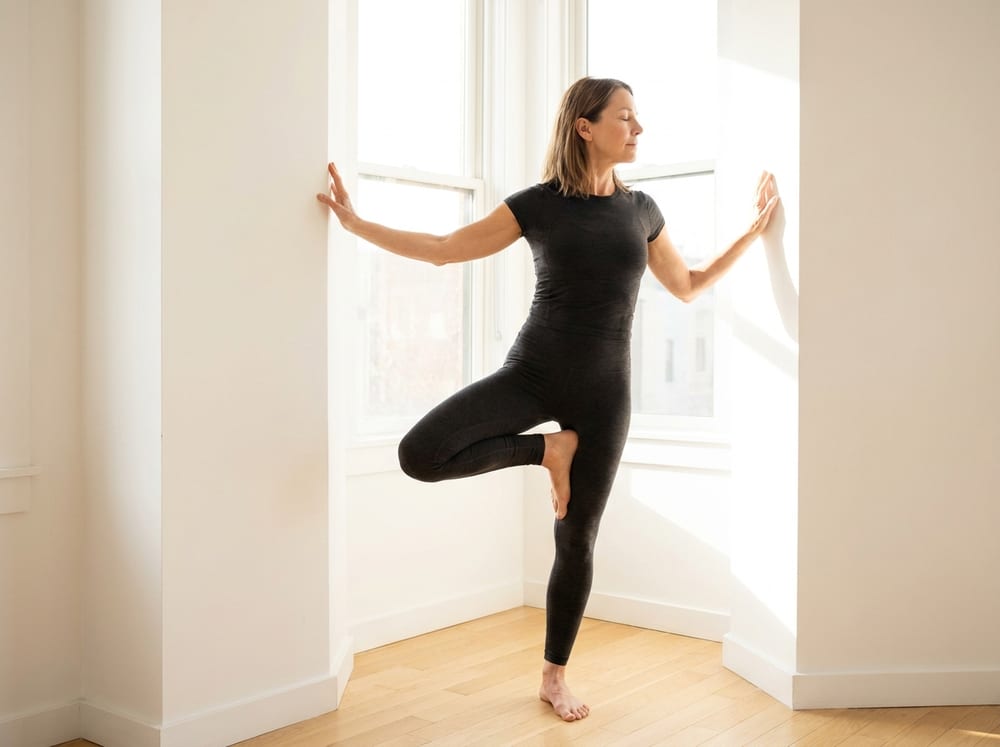
- Stage three: stand on one leg with eyes open on a folded towel or cushion. Hold thirty seconds each side.
- Stage four: stand on one leg with eyes closed on firm ground. Hold as long as you can, up to thirty seconds.
- Move up a stage only when the current one is comfortable for three sessions running. Keep a hand near support at every stage.
Dose: 2 to 3 holds at your current stage, per side where relevant, 3 to 5 times a week. Current stage. Not the stage you wish you were on.
⚠ This is educational content for discussion with a clinician, not medical advice or a prescription. Never do the eyes-closed stages without something solid within arm's reach. Skip this entirely if you have had a fall in the past year, or have a known vestibular or inner ear condition, until a clinician has assessed you.