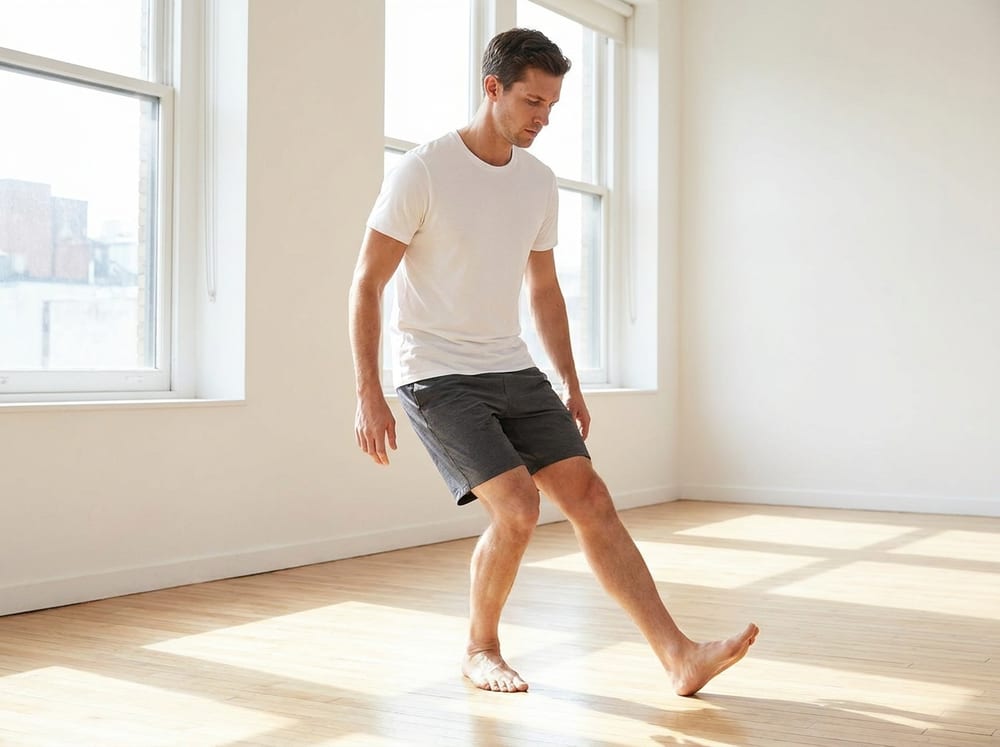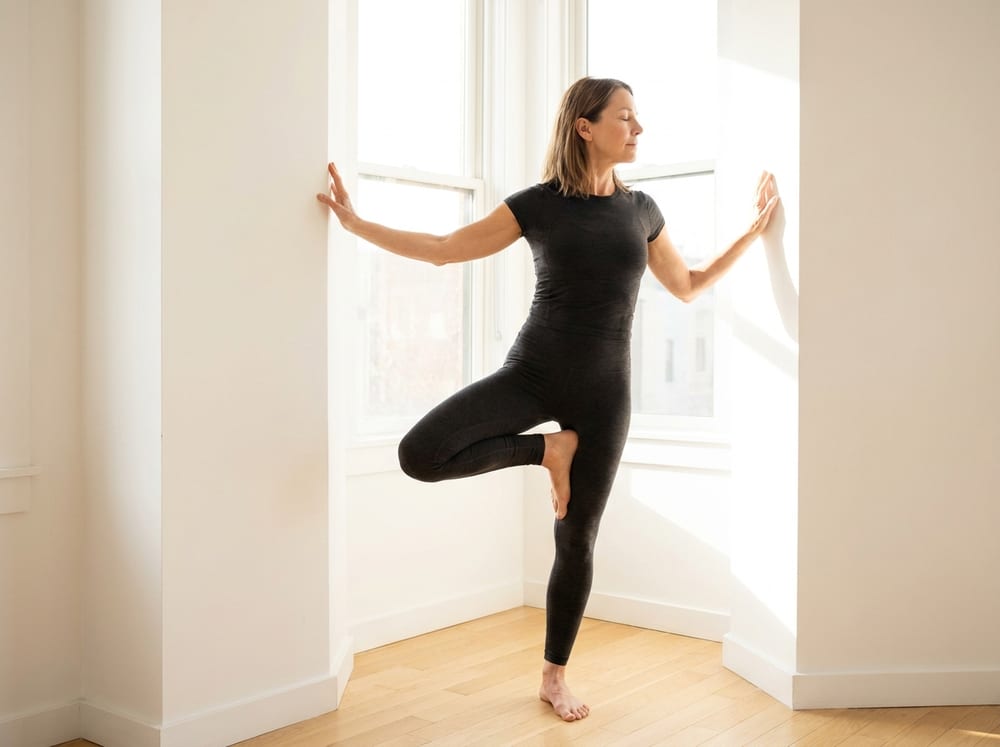
Feet-Together Stand with Eyes Closed
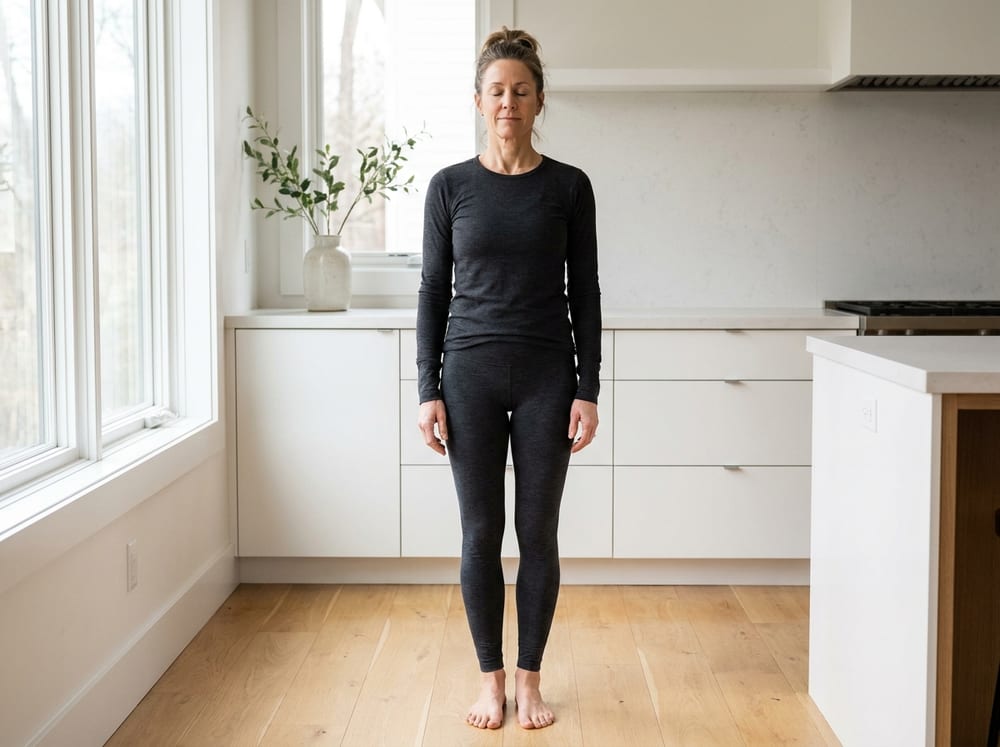
The most basic balance test there is: stand with your feet touching, close your eyes, and make your body figure out how to stay upright without the one sense it usually leans on.
Why it works
Standing still and balanced runs on three inputs: your eyes, the vestibular organs in your inner ear, and proprioceptors, tiny position sensors in your ankle, knee, and hip. Close your eyes and the visual input is gone, full stop, so the vestibular system and the muscle-spindle proprioceptors in your calves and feet have to pick up the slack to keep your center of mass over its base. Age dulls those sensors and weakens the ankle strategy, the small automatic sway corrections that quietly keep you from tipping over, and that decline is a leading reason older adults fall. Keep challenging the eyes-closed condition and you retrain the ankle and foot stabilizers and sharpen the vestibulospinal reflex, buying back the automatic control that catches a stumble before it turns into a real fall.
How to do it
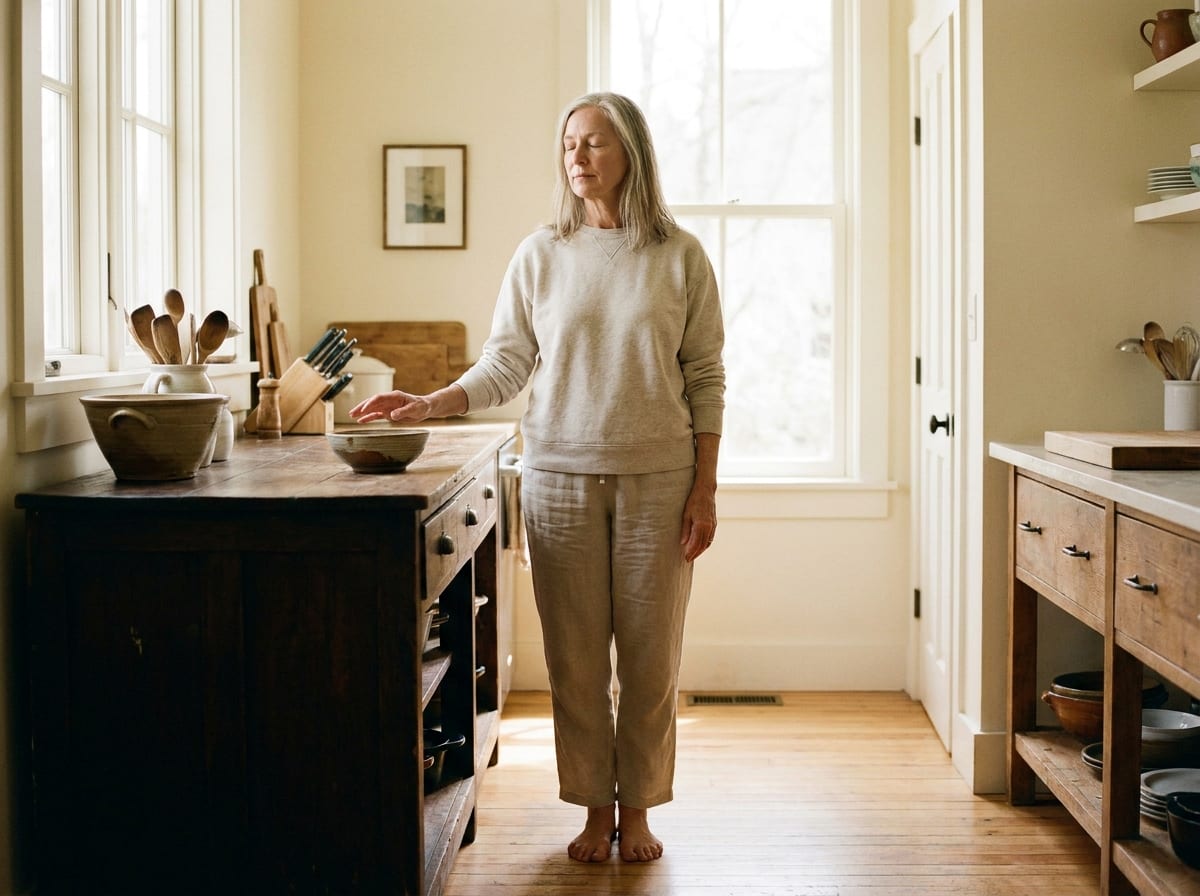
- Stand next to a wall or countertop so you can reach out and touch it instantly if needed, but do not lean on it.
- Place your feet together so the inside edges touch, arms relaxed at your sides.
- Fix your eyes on a spot on the wall, take a steady breath, then softly close your eyes.
- Stay tall through the crown of your head and let your ankles make small, quiet corrections rather than stiffening.
- Hold for the target time, then open your eyes; reach for the wall the instant you feel a real loss of balance.
Dose: 3 holds of 20-30 seconds, 4-5 days per week. Progress the hold time first. Adding difficulty comes later.
⚠ Always perform within arm's reach of a solid surface. Skip the eyes-closed version if you have uncontrolled vertigo, and open your eyes at the first sign of true unsteadiness rather than pushing through.