Full-Body Resistance Round
Ten unglamorous bodyweight movements, run through twice, three days a week. The dose is the whole point: the trials that moved anyone's inflammatory markers were the long, boring, three-times-a-week ones.
Why it works
Resting C-reactive protein is the marker that has held up under resistance training. A 2018 meta-analysis of randomized trials in adults over fifty (Sardeli and colleagues, Experimental Gerontology) pooled every trial measuring CRP, IL-6 or TNF-alpha and found resistance training lowered CRP, a standardized mean difference of -0.61. IL-6 drifted the same way without reaching significance, and across all the trials together TNF-alpha did not move. The dose analysis is the part worth reading twice: the reductions in CRP and TNF-alpha turned up only in the trials running more than eight exercises, three sessions a week, for longer than twelve weeks. Three lifts twice a week is a perfectly good way to get stronger and is not the thing that was studied. Two mechanisms could explain the drop and these trials cannot separate them. Muscle is endocrine tissue, so more of it changes where glucose and fat get handled, and training also shrinks visceral fat, which is itself a source of IL-6 and TNF-alpha. Body composition moved alongside the markers in most of these trials, so neither mechanism has been isolated. One detail that keeps a home CRP test from alarming you: a hard or unfamiliar session pushes CRP and IL-6 up for a day or two afterward while the muscle repairs itself. The resting level is the one that comes down, and it comes down over months rather than sessions. What is not known is whether a CRP drop this size changes any outcome a person can feel, and whether the effect exists at all in younger adults, whose resting CRP is usually too low to have much room to fall.
How to do it
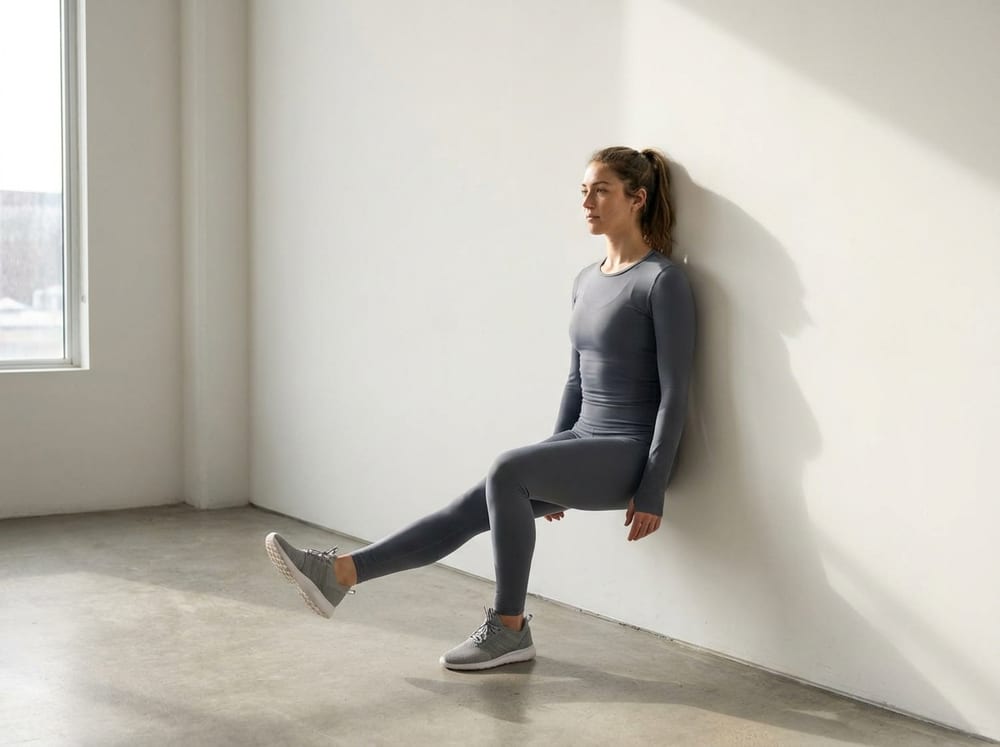
- Warm up for three minutes: march on the spot, roll the shoulders, and do five slow squats to whatever depth you have today.
- Chair sit-to-stand, 8 to 12 reps. Stand up without using your hands if you can, and touch down lightly rather than dropping.
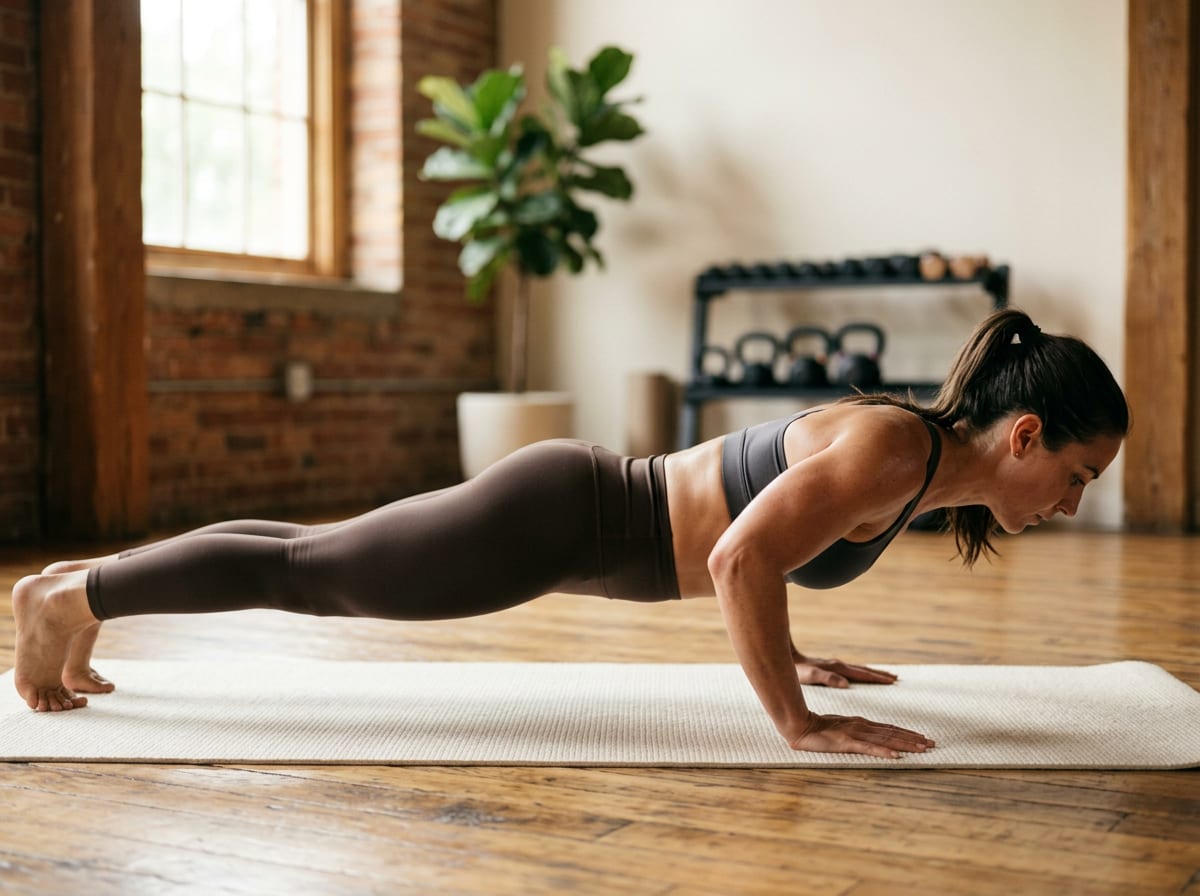
- Push-up against a wall or a kitchen counter, 8 to 12 reps. Lower the surface as you get stronger; the floor is the last stop, not the starting line.
- Towel door row, 8 to 12 reps. Loop a towel around a sturdy door handle, lean back with straight arms, and pull your chest toward your hands.
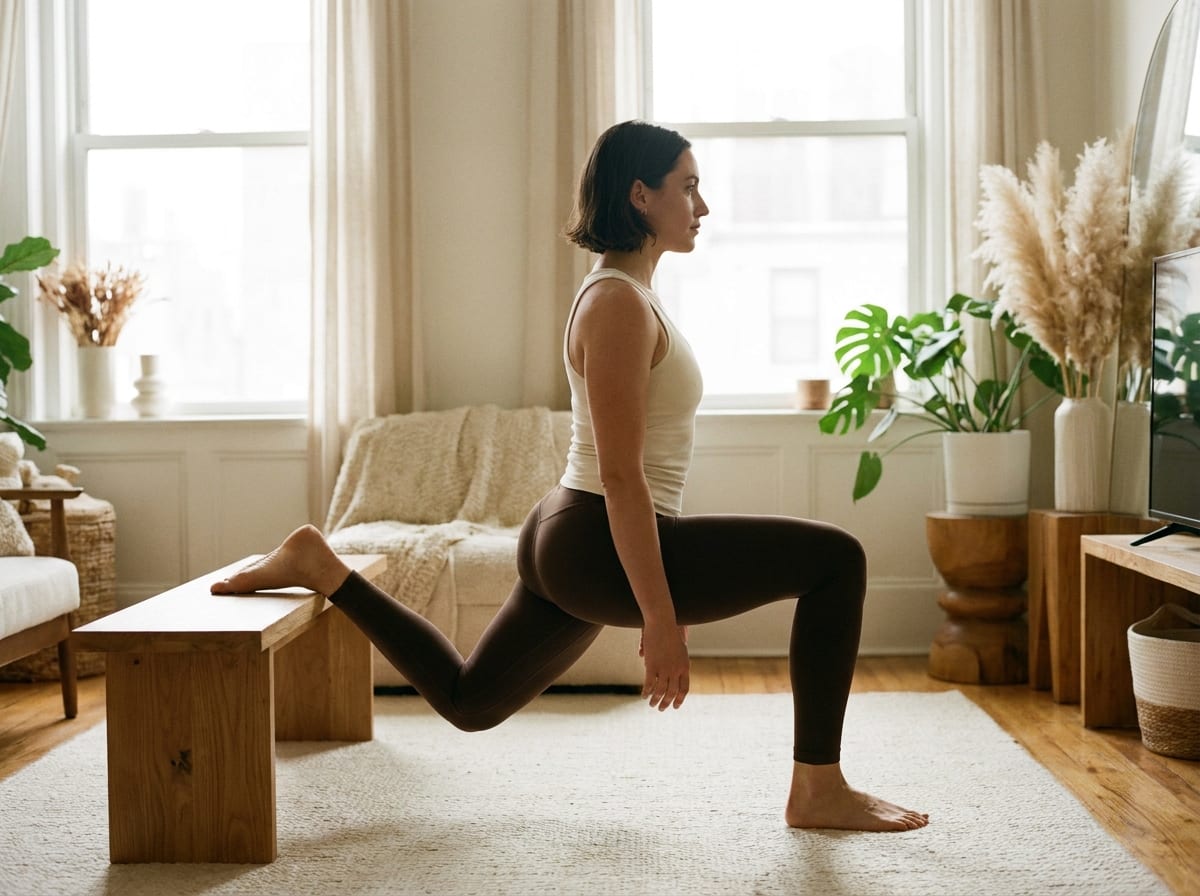
- Split squat, 8 per side. One foot forward, one back, drop the back knee straight down toward the floor.
- Glute bridge, 10 to 12 reps. Press through the heels and squeeze at the top for a full second.
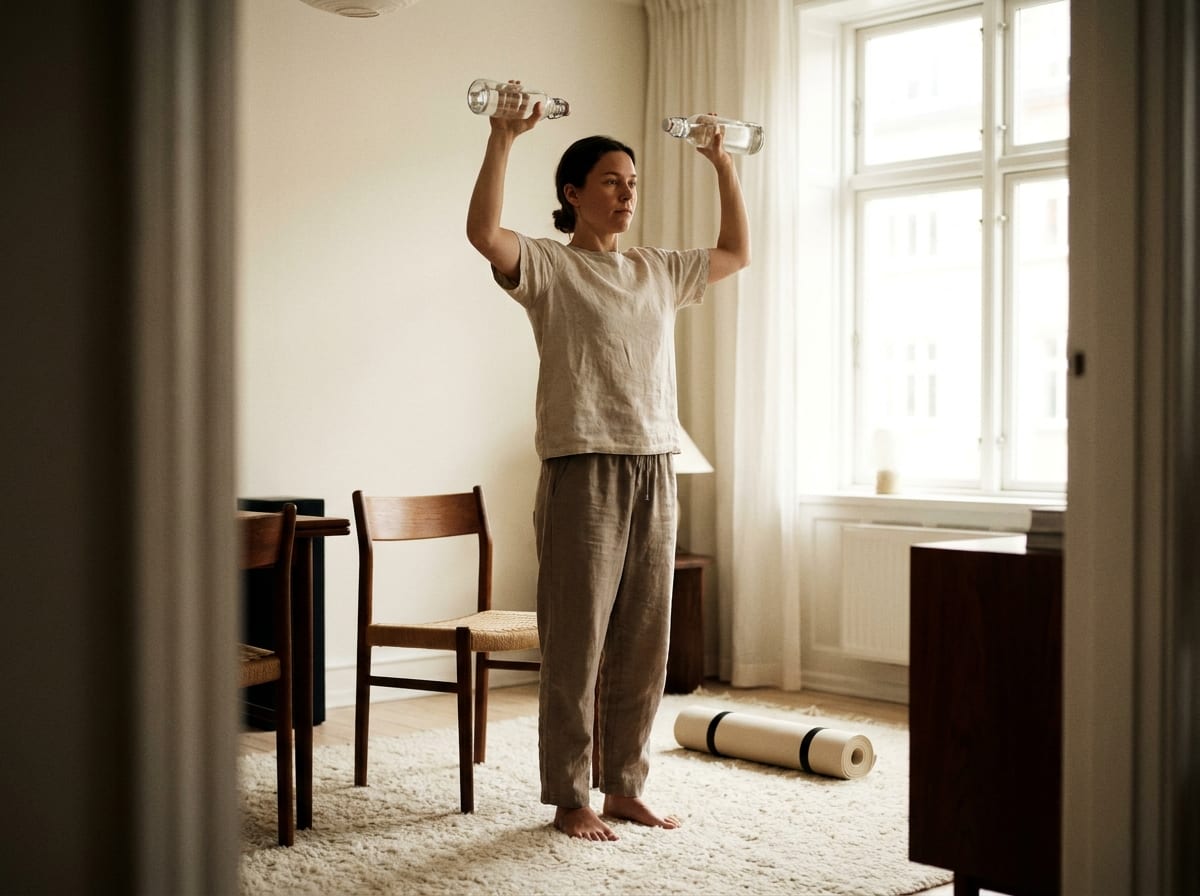
- Overhead press with a bottle in each hand, 8 to 12 reps. Ribs down, press straight up, and stop where the shoulders stay comfortable.
- Calf raise, 12 to 15 reps, holding a wall for balance. Slow on the way down is where the work is.
- Suitcase carry, 30 seconds per side. One loaded bag in one hand, walk normally and refuse to lean.
- Dead bug, 8 per side. On your back, low back flat, lower the opposite arm and leg together and bring them back.
- Side-lying hip abduction, 10 per side, or a slow lateral step in both directions if the floor is not appealing.
- Rest two minutes, then run the whole list a second time. Finish with a minute of easy walking.
Dose: Two rounds of all ten movements, 8 to 12 reps each, three days a week with a rest day between. Give it twelve weeks before you judge it, because the trials that found an effect all ran longer than that.
⚠ Educational content for discussion with a clinician, not medical advice. Start with one round rather than two and add the second when the first stops leaving you sore for days. Get clearance first if you have a cardiac condition, uncontrolled blood pressure, a hernia, or recent surgery. Breathe through every rep instead of holding your breath, which spikes blood pressure. Sharp joint pain means stop that movement, not push through it.