Pike Push-Up
A push-up with your hips folded up high, which quietly moves the load off your chest and hands it straight to your shoulders.
Why it works
Overhead pressing strength is the one piece almost no home routine ever touches, and it's exactly what decides whether putting a heavy pan on a high shelf is routine or a small crisis. Fold at the hips and you change the angle of the press so your shoulders take most of the load instead of your chest, which makes this about as close to an overhead press as you're getting without weights. It also happens to be a natural stepping stone toward handstand work, if that's ever on your radar. Getting the range right matters more here than in a flat push-up, because your shoulder is at its most vulnerable near the bottom of any overhead press. Lower under control, and don't go chasing depth before you've built the strength to own it.
How to do it
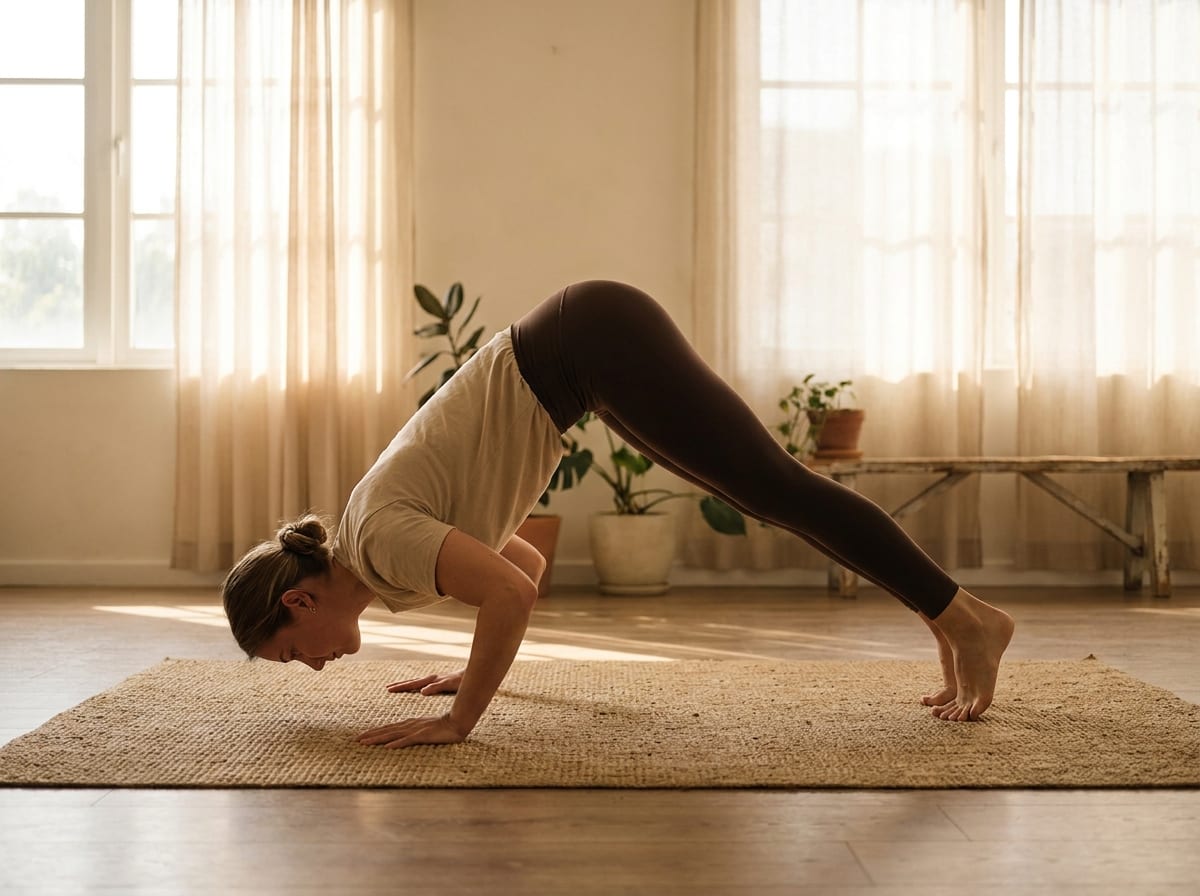
- Start in a push-up position, then walk your feet toward your hands and lift your hips high so your body makes an inverted V.
- Set your hands slightly wider than your shoulders and turn your fingers very slightly outward.
- Look between your hands and lower the crown of your head toward the floor, bending at the elbows and keeping your hips high.
- Stop just short of the floor, then press back up until your arms are straight, pushing the floor away.
- Raise your feet onto a low step to make it harder, or walk them further back to make it easier.
Dose: 3 sets of 5 to 10 repetitions, 2 times a week. Depth comes from strength, not from forcing it.
⚠ This is educational content for discussion with a clinician, not medical advice or a prescription. Skip this with shoulder impingement, a rotator cuff injury, or uncontrolled high blood pressure, since the head-down position raises pressure in the head. Come out of it if you feel pressure behind the eyes.