Shadow Boxing Rounds
Three-minute rounds of continuous punching and footwork, a minute of rest between, training your aerobic capacity and your rotation in the same breath.
Why it works
Shadow boxing earns its spot here for two reasons that have nothing to do with your heart rate. First, rotation: a punch thrown correctly is driven from the hip and transmitted straight through the thoracic spine, and most adults rotate through their mid-back far less than they should, which is exactly where a lot of shoulder and low-back trouble starts. Second, it demands your attention. You have to think about what you're throwing and where your feet are, and that combination, aerobic work plus real cognitive load, shows up in the brain-derived neurotrophic factor research as doing more for cognitive outcomes than either one manages alone. And let's just say it plainly: this is one of the better ways to work off a genuinely bad day, and that alone is a real reason people keep doing it.
How to do it
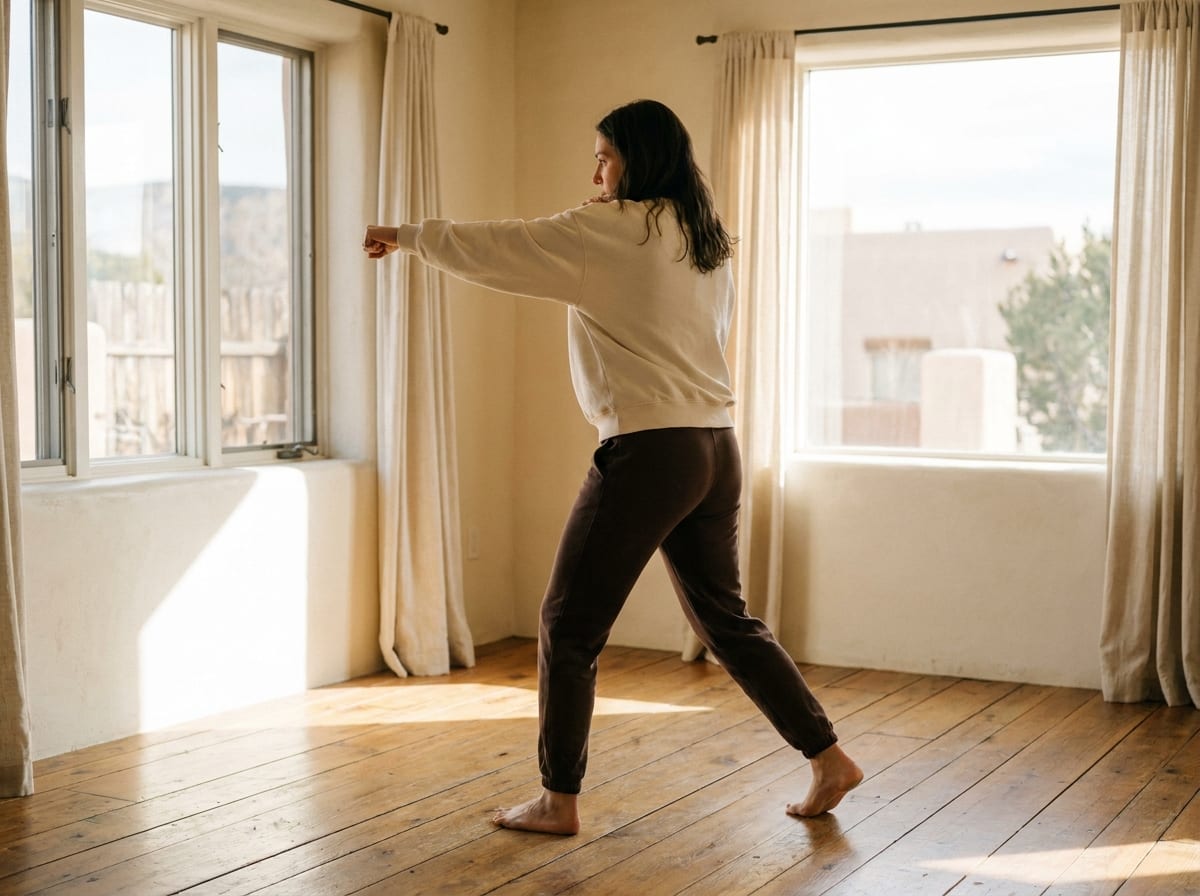
- Stand with your feet a little wider than hip width, one foot half a step ahead of the other, knees soft, hands up near your cheekbones.
- Throw straight punches, extending fully without snapping the elbow, and turn the hip and back foot into each one so the power comes from the ground rather than the arm.
- Keep your feet moving between punches. Small steps, staying light, never crossing your feet.
- Add rotation deliberately: after every few straight punches, throw a hook and let your ribcage turn with it.
- Work for three minutes, rest for one, and repeat. Keep your hands up when you are tired, which is when they drop.
Dose: 3 to 6 rounds of 3 minutes, with 1 minute rest, 2 to 3 times a week. Start at three rounds. Six is earned, not assumed.
⚠ This is educational content for discussion with a clinician, not medical advice or a prescription. Do not lock the elbow at the end of a punch, which is the most common way people hurt themselves doing this. Ease off with shoulder pain or a history of shoulder instability.