White Bean and Chard Minestrone, for the Freezer
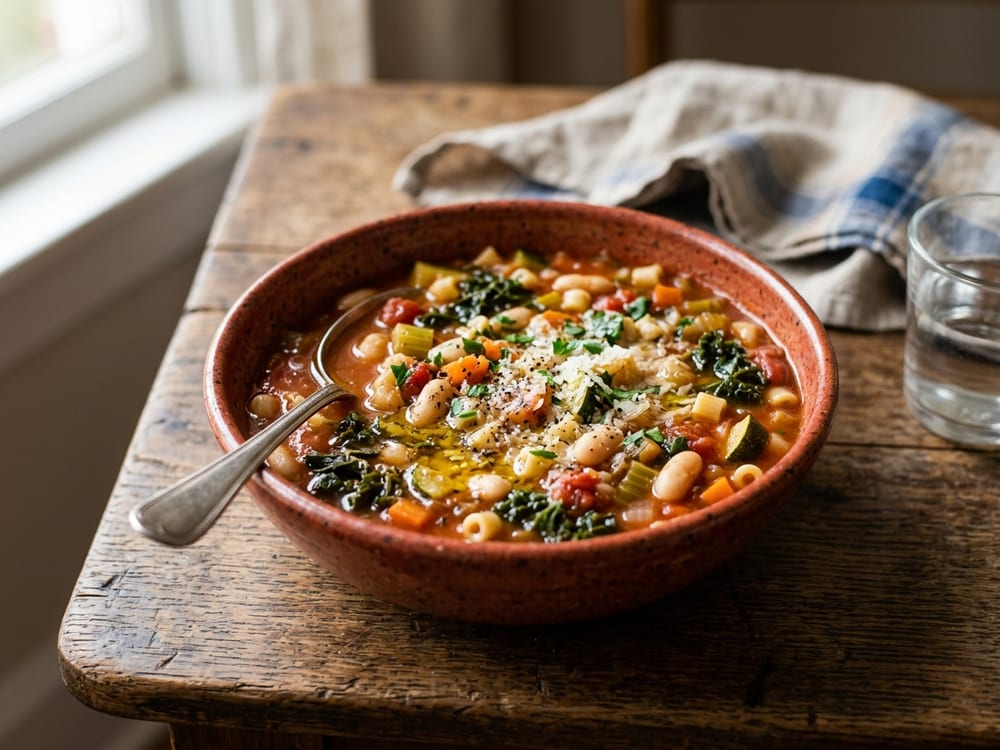
Eight portions of Mediterranean vegetable and bean soup with crushed tomato and chard, built to go straight into the freezer for months of lunches and dinners you don't have to think about.
Why it works
The two beans carry most of the cardiovascular case here. Their soluble fiber binds bile acids in the gut, so the liver has to pull more LDL cholesterol out of the blood to make replacements. That's the main mechanism behind legumes' consistent link to lower cholesterol in trials. The same fiber, plus the resistant starch that survives digestion until it reaches the colon, feeds the bacteria that produce short-chain fatty acids, which is the digestive case for eating beans often rather than occasionally. Crushed tomatoes carry lycopene, a carotenoid your body absorbs better with fat around, which is exactly what the olive oil in the soffritto and the raw drizzle at the end are doing beyond flavor. Chard brings potassium and magnesium that push back against sodium's effect on blood pressure, plus folate, and fiber and minerals like these hold up through freezing far better than vitamin C ever does.
The fiber-cholesterol mechanism has solid trial support, and potassium's effect on blood pressure is well established. The Blue Zone framing for daily bean soups, the kind eaten in Sardinia and Ikaria, is observational. It describes a population pattern, not proof that this exact soup buys you extra years.
Ingredients
- 3 tbsp extra-virgin olive oil, plus more for finishing
- 1 large onion, diced
- 3 carrots, diced
- 3 celery stalks, diced
- 4 garlic cloves, minced
- 2 tbsp tomato paste
- 1 can (28 oz) crushed tomatoes
- 2 cans (15 oz each) cannellini beans, drained and rinsed
- 1 can (15 oz) kidney beans, drained and rinsed
- 2 medium zucchini, diced
- 1 large bunch Swiss chard, stemmed and leaves sliced
- 2 liters low-sodium vegetable broth
- 2 bay leaves and 1 tbsp dried oregano
- Sea salt, black pepper, and a pinch of red pepper flakes
- A handful of fresh basil, torn, to finish
Method
- Warm the olive oil in a large pot over medium heat and cook the onion, carrot, and celery for about 10 minutes, until soft, then stir in the garlic and tomato paste and cook 2 minutes more, until the paste turns a shade darker.
- Add the crushed tomatoes, both beans, the broth, bay leaves, and oregano. Bring to a simmer and cook uncovered for 20 minutes.
- Stir in the zucchini and simmer 8 to 10 minutes more, until just tender, then fold in the chard and let it wilt for 2 to 3 minutes.
- Season with salt, pepper, and chili flakes, and fish out the bay leaves.
- Cool the pot in a sink of cold water before dividing into containers, since a big batch of soup left to cool slowly on the counter spends too long in the range where bacteria multiply. Ladle out what you're eating today and finish it with a thread of olive oil and torn basil.