Thai Peanut Chicken and Rice Noodle Lunch Boxes
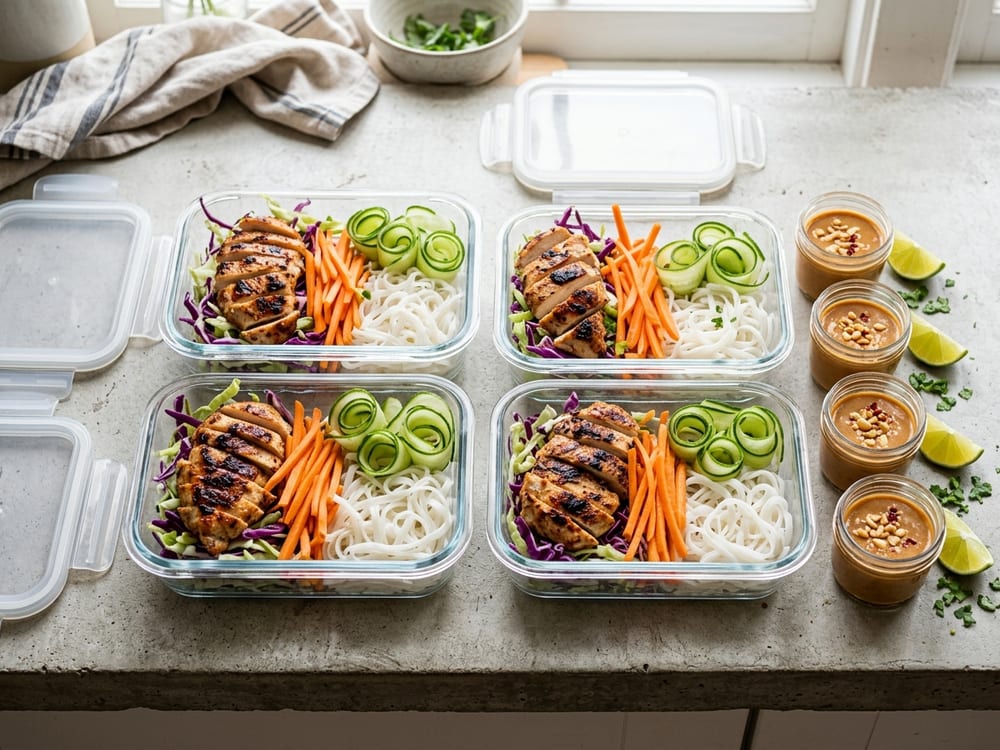
Seared chicken, crunchy vegetables, and rice noodles packed into four lunch boxes, with the peanut sauce held back in its own jar until you're ready to eat.
Why it works
Chicken breast is a concentrated source of complete protein, and protein is the macronutrient most consistently linked to fullness. It slows gastric emptying and prompts your gut to release satiety hormones like CCK and PYY. Each serving carries about 36 grams, close to the range researchers tie to maximizing the muscle-protein-synthesis response from a single meal, which matters if you want to hold onto muscle across a week of desk lunches. The peanut sauce adds fat, and fat digests slowly enough to stretch fullness out past the usual early-afternoon slump. Loading the box with bell pepper, cabbage, carrot, and snap peas adds bulk and a few grams of fiber for almost no energy cost, so the meal is bigger relative to its calories than a bowl of noodles alone would be. Keeping the sauce in its own container until serving is exactly what keeps the noodles from turning gummy in the fridge over four days.
Protein's link to fullness is well established, going back to the satiety index research of the mid-1990s. The per-meal protein amount tied to maximizing muscle protein synthesis comes mostly from trials in people who strength train, so it's a looser fit if you don't lift regularly.
Ingredients
- 450 g (1 lb) boneless, skinless chicken breast, cut into bite-sized pieces
- 1 tbsp neutral oil, such as avocado or vegetable oil
- 200 g dried flat rice noodles or rice vermicelli
- 1 red bell pepper, thinly sliced
- 2 medium carrots, julienned
- 2 cups (about 170 g) shredded red cabbage
- 1 cup (100 g) snap peas, halved on the diagonal
- 4 scallions, sliced, white and green parts kept separate
- 2 cloves garlic, minced
- 1 tbsp fresh ginger, grated
- 20 g roasted peanuts, chopped, for topping
- A small handful of fresh cilantro, for topping
- 1 lime, cut into wedges, for serving
- For the peanut sauce: 65 g (1/4 cup) natural peanut butter, 3 tbsp tamari, 2 tbsp rice vinegar, 2 tbsp fresh lime juice (about 1 lime), 2 tsp honey, and 3 to 4 tbsp warm water to thin, plus chili flakes or a small squeeze of sriracha if you want heat
Method
- Season the chicken with salt and pepper. Heat the oil in a large skillet or wok over medium-high heat, add the chicken in a single layer, and cook for 6 to 8 minutes, stirring occasionally, until browned and cooked through. Transfer to a plate.
- Cook the rice noodles according to the package instructions, then drain and rinse under cold water until completely cool. Toss with a few drops of oil so they don't clump.
- In the same pan, add the garlic, ginger, and the white parts of the scallions, and cook for 30 seconds until fragrant. Add the bell pepper, carrots, and snap peas, and stir-fry for 3 to 4 minutes until just tender-crisp. Return the chicken to the pan and toss to combine.
- Whisk together the peanut sauce ingredients, adding the water a little at a time until the sauce is pourable. Taste and adjust the lime or chili to your liking.
- Divide the noodles among four containers, top with the chicken and vegetables, and scatter with the green scallion tops. Pour the sauce into four small separate containers or jars, and keep the peanuts and cilantro in their own small container until serving.
- To eat, warm the noodles and chicken if you like them hot, or eat them cold. Pour on the peanut sauce and finish with the peanuts, cilantro, and a lime wedge.