Thirty Fast Breaths, Then a Hold
Rounds of deliberate over-breathing followed by an empty-lung hold. The one breathing practice on this site with a randomized trial behind it, and the one with the most ways to go wrong. Respect it accordingly.
Why it works
Most breathwork on this site works by slowing things down. This one does the opposite, and the route it takes is adrenaline, on purpose. Thirty fast full breaths drive carbon dioxide down and blood pH up, and the retention that follows drops your oxygen saturation over a minute or two. Your body reads that combination as a genuine stressor and answers with a sharp rise in plasma epinephrine, bigger than most people can produce on will alone. That epinephrine acts on beta-2 receptors on monocytes and pushes them to release interleukin-10, which is the body's own brake on inflammation, and interleukin-10 in turn suppresses the release of TNF-alpha, interleukin-6 and interleukin-8. That's the chain the Nijmegen group set out to test, and the readouts came back exactly where the mechanism predicted. Two things are worth holding onto here, and neither is optional reading. First: this is an anti-inflammatory effect, not an immune-boosting one, and those are close to opposites. What got measured was a smaller inflammatory response to a challenge, not a bigger defense against a germ. Second: the trials had people doing the breathing while the challenge was already underway. Whether a round done at eight in the morning changes anything by four in the afternoon has not been tested. Nobody knows yet. Don't assume it.
Kox and colleagues (PNAS, 2014) randomised 24 healthy young men, half of them given ten days of training in this breathing along with cold exposure and meditation, then injected all of them with bacterial endotoxin. The trained men, breathing this way through the challenge, produced roughly twice the plasma epinephrine, higher interleukin-10, and lower TNF-alpha, interleukin-6 and interleukin-8, with fewer flu-like symptoms. Zwaag and colleagues (Psychosomatic Medicine, 2022) took the bundle apart in a pilot of 24 healthy men and found the breathing exercise rather than the cold exposure accounted for the epinephrine rise and the blunted cytokine response. Buijze and colleagues (PLOS One, 2019) ran the full programme for eight weeks as an add-on in 24 people with axial spondyloarthritis and reported lower CRP and ESR than controls: unblinded, small, worth knowing about and not worth overselling. Here's what none of this shows. Every mechanistic participant was a healthy young man, twelve per arm, and an injected endotoxin is a laboratory model of inflammation rather than an infection. No trial has looked at whether people who practise this catch fewer colds, have shorter ones, or do better with any illness. Most of the work comes from one research group. The mechanism is real and well measured. The clinical claim does not exist yet, and anyone telling you it does is ahead of the data.
How to practice
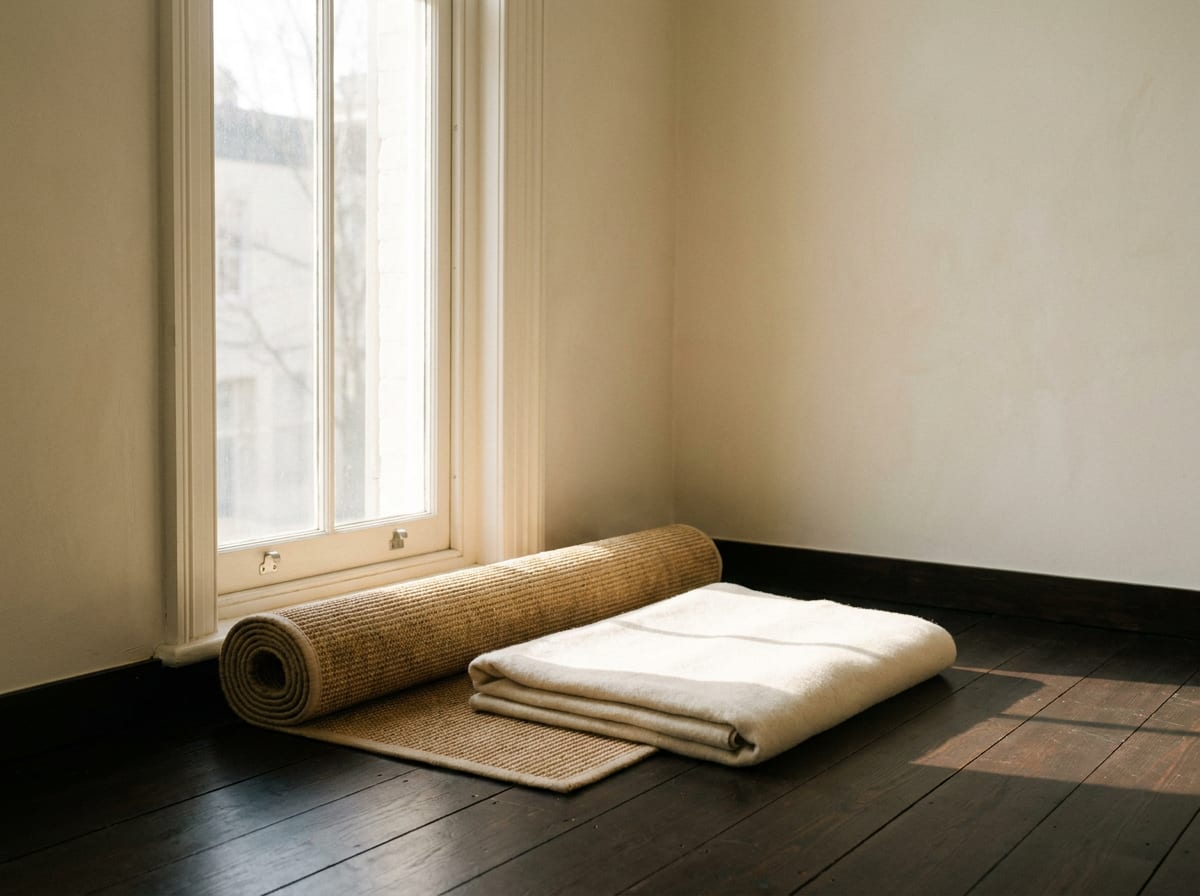
- Lie down on your back on a mat, a rug or a bed, somewhere with nothing hard to fall against. Do this on an empty stomach, and never in a bath, a pool, the sea, or anywhere else you could go under.
- Take thirty full breaths. In through the nose or mouth all the way up into the chest, then let it drop out without pushing. Roughly two seconds in and two out. It should feel like deliberate over-breathing rather than sprinting.
- After the thirtieth breath, let the air go and stop with the lungs empty. Do not hold air in.
- Stay there without breathing until the body insists. Sixty to ninety seconds is common on a first round and it lengthens over weeks. Do not chase a number, and do not use a timer to beat one.
- When the urge to breathe arrives, take one full breath in and hold it for about fifteen seconds, then let it out.
- That is one round. Do three.
- After the last round, stay lying down and breathe normally for two minutes before you get up. Stand slowly.
- Tingling in the hands and around the mouth, sometimes cramping in the fingers: that's carbon dioxide falling. Expected. It passes. It does not mean the practice is working better.
- The empty-lung hold ends when your body asks, not at the number someone else posted online.
- Never in water, never standing, never on a hard chair, never driving. Fainting is a known outcome of this practice. Full stop.
- The trials had people breathing this way while the inflammatory challenge was already happening. A round done at breakfast is a different thing than that, and nobody has measured it.
⚠ This is the one practice on this site that can drop you. Voluntary hyperventilation followed by breath retention causes fainting in some people with no warning, and doing it in or beside water has killed people. Always lying down, always on dry land, never in a bath. Do not do this if you are pregnant, if you have epilepsy or any seizure history, coronary artery disease, uncontrolled high blood pressure, a heart rhythm disorder, a history of fainting or of TIA or stroke, or panic disorder, and not on a day you feel unwell. The fast-breathing phase can bring on panic in people prone to it, and the empty-lung hold is not safe to practise alone if you have ever lost consciousness doing breathwork. Nothing here treats an infection or an inflammatory condition, and it is not a reason to change any medication or to skip a vaccination.