Broad-Spectrum SPF 46 Sunscreen
Broad-spectrum means it's handling two threats at once: UVB, the one that burns you, and UVA, the one quietly aging you and triggering uneven pigment. It works by absorbing that radiation or reflecting it away from your skin, either way, it's not getting in. Block the exposure that breaks down collagen and stirs up uneven melanin today, and you're the one who isn't dealing with the lines, dark spots, and rough texture showing up years from now.
Why it works
Daily broad-spectrum sunscreen is not up for debate. It's among the best-evidenced interventions in all of skincare, backed by randomized controlled trials showing it measurably slows visible photoaging and cuts skin cancer risk. Every other step in your routine is optional by comparison. This one isn't. That's the whole review.
How to use it
- This is the final morning step: after moisturizer, before makeup.
- Use about a quarter-teaspoon for your face, more for your neck. Don't skimp.
- Spread an even coat over all exposed skin, about fifteen minutes before you walk out the door.
- Reapply every two hours you're in the sun, and again after sweating or swimming.
- Long day outdoors? Add shade, a hat, and clothing. Sunscreen alone isn't doing all the work.
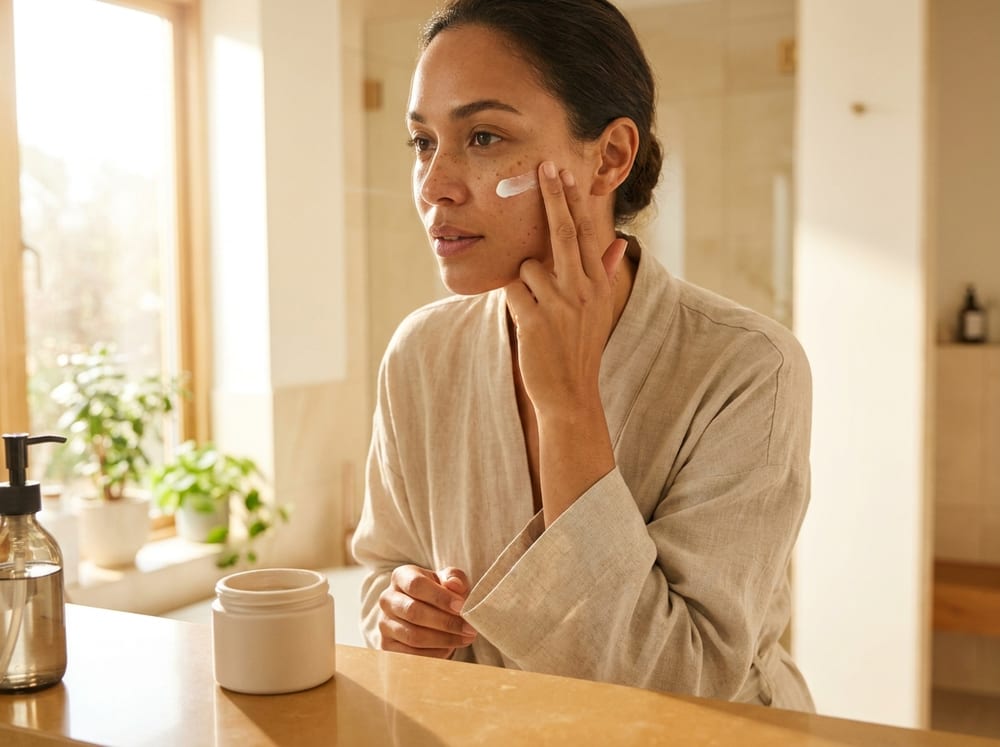
As the final morning step, apply roughly a quarter-teaspoon for the face and more for the neck, spreading an even layer over all exposed skin about fifteen minutes before going outside. It goes on after moisturizer and before makeup. Most people under-apply, so a generous, even coat is what delivers the labeled protection.
For men: This is the single highest-value step in the whole routine, and somehow the one men skip the most. Don't you dare forget a receding hairline, your ears, and the back of your neck. They take the most sun and get zero attention.
⚠ Reapply every two hours during sustained sun exposure and after sweating or swimming, since one morning application does not last all day. No sunscreen blocks one hundred percent of UV, so pair it with shade, clothing, and hats for extended time outdoors. This is educational information for discussion with a clinician, not medical advice.