Self-Tanner (Sunless)
Here's the chemistry behind that glow: DHA, dihydroxyacetone, a simple sugar, reacts with amino acids sitting in your outermost dead skin cells and forms brown pigments called melanoidins. That's it. That's the whole tan. It's a surface color change happening in the stratum corneum, not melanin production, not a UV tan of any kind, which is why it shows up within hours and fades over several days as those dead cells slough off on schedule. Because the color comes from a chemical reaction on cells that are already dead, not from ultraviolet damage to living tissue underneath, you get the look of a tan without the DNA damage, the collagen breakdown, or the pigment disruption that sun or a tanning bed hands you.
Why it works
DHA has been in cosmetics for decades, and it is well established as effective and low-risk for coloring skin. That strong grade is specifically about safety: sunless tanning is unambiguously, no-question safer than UV tanning or a tanning bed, and tanning beds are classified as carcinogenic, full stop, not up for interpretation. Here is the one caveat that is just as well documented and just as non-negotiable: a DHA tan gives you essentially zero real sun protection. Color, yes. Shield, no.
How to use it
- Exfoliate first. Even color needs an even surface. Rough patches grab too much and go dark.
- Moisturize the dry spots, knees, elbows, ankles, knuckles, so they do not soak up extra color.
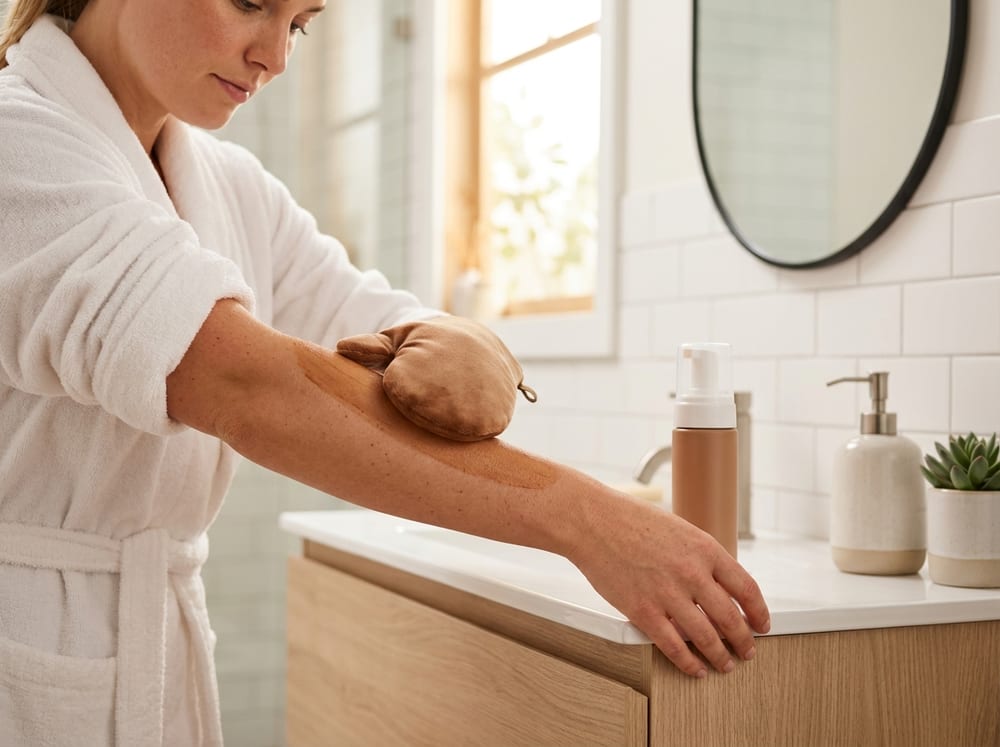
- Apply in sections with a mitt, largest areas first, working down to the smaller ones.
- Wash your hands immediately. Orange palms are not the look.
- Let it develop undisturbed for several hours before you get dressed or climb into bed.
- Sunscreen the next day, always. This tan is not protecting you from anything.
In the evening, on clean, dry, freshly exfoliated skin, apply a mousse, lotion, or a few drops mixed into moisturizer using an application mitt. Work in even sections from the largest areas inward, using a lighter touch over dry, absorbent spots like knees, elbows, ankles, and knuckles where color tends to grab and darken. A little goes a long way, so build gradually rather than overloading; wash your palms immediately after so your hands do not stain.
For men: Go light, go gradual. Oilier, thicker skin, which a lot of men have, develops self-tan color unevenly, so start with a gradual formula, or just a couple of drops mixed into your moisturizer, and build from there slowly. Shave and exfoliate the night before, never right before you apply: fresh razor passes and open follicles grab extra color and leave you speckled along the jaw and neck.
⚠ A DHA tan is color only and offers no meaningful SPF, so you still need broad-spectrum sunscreen every day; the bronzed look can create a false sense of protection it does not provide. Some formulas also raise short-term sun sensitivity right after application. Avoid inhaling spray mist and keep it away from the eyes and lips, and patch test first if your skin is sensitive. This is educational information, not medical advice; discuss with a clinician if you have concerns.