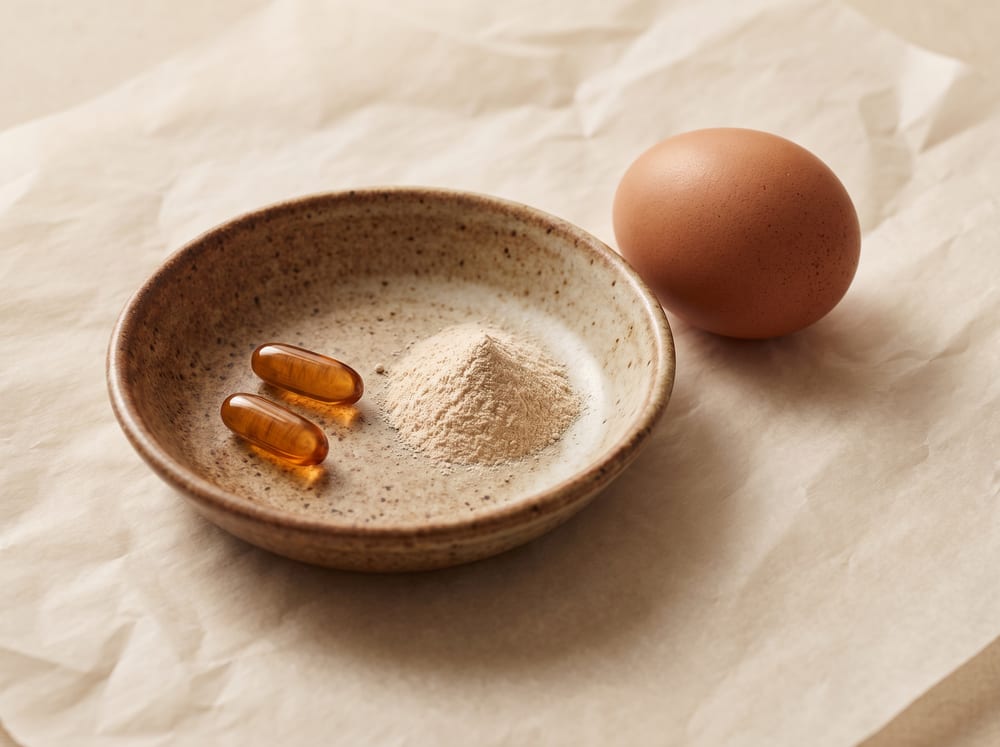
Choline (as bitartrate or citrate)
Choline is essential, not optional, and your body uses it to build three different things: phosphatidylcholine for cell membranes, acetylcholine for neurotransmission, and betaine for methyl-group metabolism, which overlaps with what folate is doing. Fetal demand spikes hard during pregnancy and lactation, and your own stores are what gets drawn down to cover your baby's neural and hepatic development.
Evidence
Moderate, and here's why that's not a knock. Observational data consistently ties higher maternal choline intake to better infant neurodevelopmental markers, and small controlled feeding trials back it up with measurable effects on infant processing speed and attention. What's missing is the big, long-term clinical outcome trial that would push this to strong. And here's the part worth knowing: most prenatal vitamins under-supply choline relative to the Adequate Intake, so the label alone might not be covering you.
Interactions
No major drug interactions are well established at dietary-adequacy doses; very high intakes (grams per day) can cause low blood pressure, sweating, and fishy odor. Choline, folate, and B12 share methylation pathways, so overall intake of all three is worth reviewing together.
Cautions
Confirm the target intake with your OB or midwife, since prenatal needs are individualized and many prenatals contain little choline. Stay within the tolerable upper intake and avoid mega-dosing. This is educational information for discussion with a clinician, not medical advice.
Food sources
Egg yolks, lean beef and poultry, fish, soybeans, cruciferous vegetables, and wheat germ.