Ubiquinol (Reduced CoQ10)
Ubiquinol is CoQ10 in its fully reduced, antioxidant-active form, and it works right inside the mitochondrial electron transport chain, shuttling electrons to keep ATP production running. It also mops up free radicals in lipid membranes while it's at it. Here's why fertility cares: maturing eggs and motile sperm are some of the most energy-hungry, oxidative-stress-exposed cells your body makes. The thinking goes: support the mitochondria, support egg and sperm quality. That matters even more as you age, since tissue CoQ10 naturally declines over time.
Evidence
Emerging, with a real split by sex worth knowing about. Small randomized and observational trials suggest it can improve sperm concentration and motility in men. In women, it shows up on some ovarian-response and oocyte-quality markers. Neither is nothing. But the trials are small, the forms and doses are all over the place, and nobody has established an effect on live birth rates, which is the number that matters most. Good markers. No guarantee.
Interactions
May blunt the effect of warfarin and other vitamin-K-antagonist anticoagulants (CoQ10 is structurally similar to vitamin K); can have modest additive blood-pressure-lowering effects. Statins lower endogenous CoQ10, which is sometimes cited as a reason for repletion.
Cautions
Generally very well tolerated; occasional mild GI upset, headache, or insomnia if taken late. People on warfarin, on blood-pressure medication, or who are pregnant or breastfeeding should confirm use with a clinician, as high-dose safety data in pregnancy are limited.
Food sources
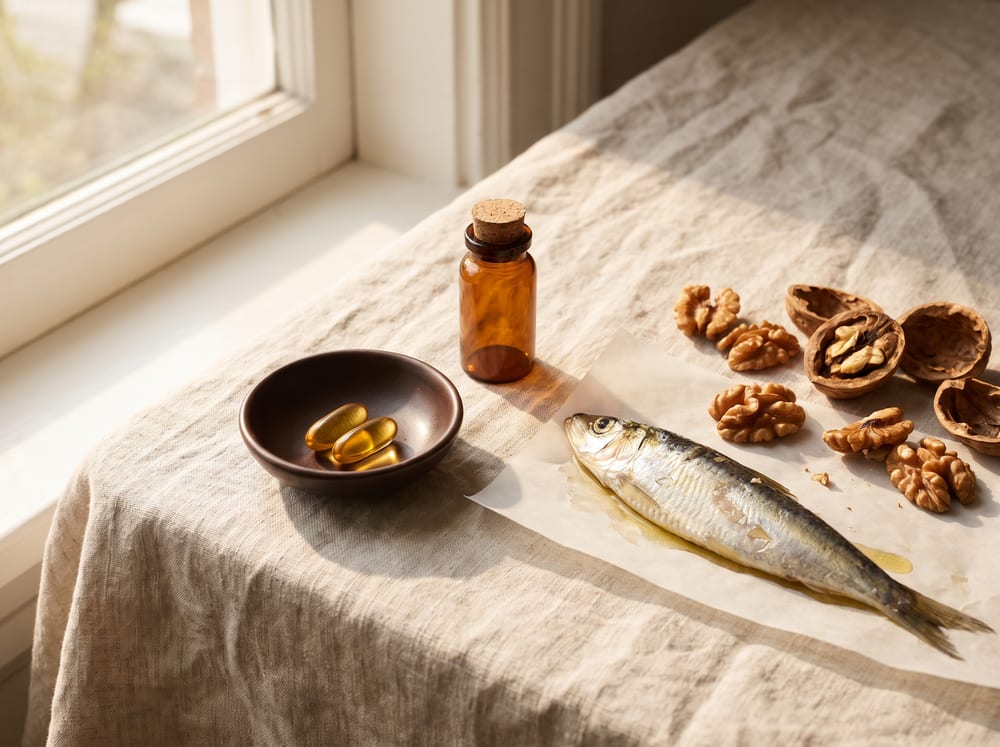
Present in small amounts in organ meats, fatty fish such as sardines and mackerel, and to a lesser degree in nuts and some vegetable oils, but food provides far less than supplement doses.