L-Carnitine (with Acetyl-L-Carnitine)
L-carnitine's job is ferrying long-chain fatty acids into the mitochondria for beta-oxidation, and that job happens to be central to how sperm make energy, since sperm run almost entirely on fatty-acid metabolism to keep moving. It's concentrated heavily in the epididymis, right where sperm mature, and its acetylated cousin, acetyl-L-carnitine, adds antioxidant capacity on top. The pitch: fuel the sperm cell better, cut the oxidative damage during maturation, and let motility and count both climb as a result.
Evidence
Moderate evidence in male fertility, and it holds up best exactly where you'd want it to. Multiple randomized trials and meta-analyses report real improvements in sperm motility, and less consistently in concentration, especially in men who started with abnormal numbers. Where it gets shakier: pregnancy and live-birth rates. Those are less certain, and study quality is all over the place.
Interactions
May enhance the effect of vitamin-K-antagonist anticoagulants such as acenocoumarol and warfarin, potentially increasing bleeding risk; thyroid hormone effects have been noted, so people with thyroid disease should be cautious.
Cautions
Usually well tolerated; higher doses can cause nausea, abdominal cramps, diarrhea, or a fishy body odor. People with seizure disorders, thyroid conditions, kidney impairment, or on anticoagulants should confirm use with a clinician. Not intended as a standalone treatment for infertility without evaluation.
Food sources
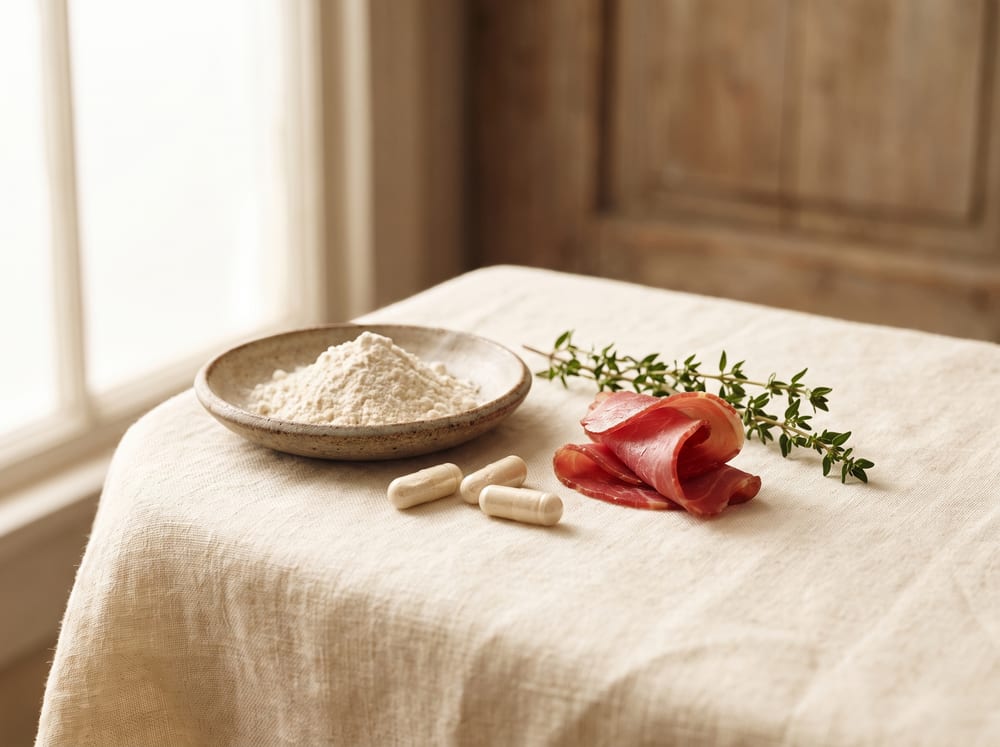
Richest in red meat, especially beef and lamb, with smaller amounts in fish, poultry, and dairy; plant foods contain very little, so dietary intake is low in vegetarians.