Berberine
Berberine flips on AMPK, AMP-activated protein kinase, basically your metabolic master switch. Once that's on, glucose uptake in your muscles goes up, your liver backs off making glucose it doesn't need, and insulin sensitivity improves. It also slows carb absorption in your gut and reshuffles the gut microbiome while it's at it. One plant alkaloid, a whole lot of jobs.
Evidence
Multiple randomized controlled trials and meta-analyses in type 2 diabetes and metabolic syndrome show real, clinically meaningful drops in fasting glucose and HbA1c. In several small head-to-head trials, it went toe-to-toe with metformin. A plant compound holding its own against a prescription drug? That's hot. But the trials backing it up are small, short, and not exactly gold-standard in methodology, which is precisely why this sits at moderate instead of strong.
Interactions
Potent inhibitor of CYP3A4, CYP2D6, and CYP2C9 and of P-glycoprotein, so it can raise levels of many drugs (statins such as simvastatin, cyclosporine, some anticoagulants). Additive hypoglycemia with metformin, sulfonylureas, or insulin. Displaces bilirubin from albumin (avoid in neonates/pregnancy).
Cautions
Common GI side effects (diarrhea, cramping, constipation). Contraindicated in pregnancy and breastfeeding and in neonates (kernicterus risk). Monitor glucose when combined with other glucose-lowering agents; stop before surgery.
Food sources
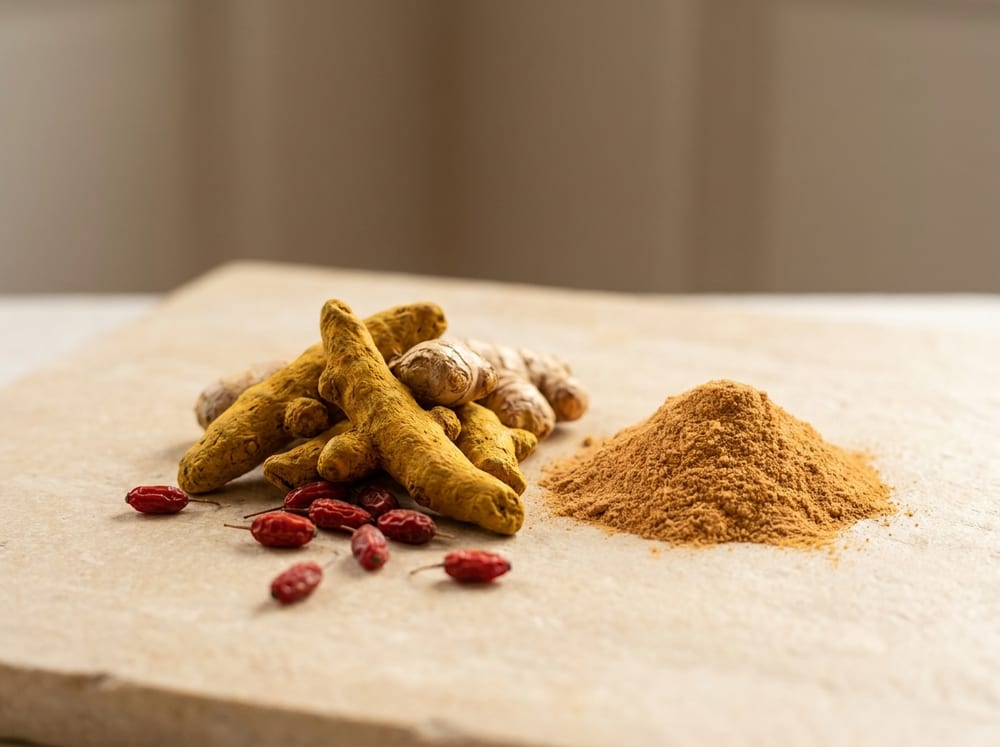
Not a dietary nutrient in any normal sense. It's an alkaloid found in plants like goldenseal, barberry, Oregon grape, and Coptis (Chinese goldthread), and you get it only as herbal extracts, never as food.