Psyllium Husk
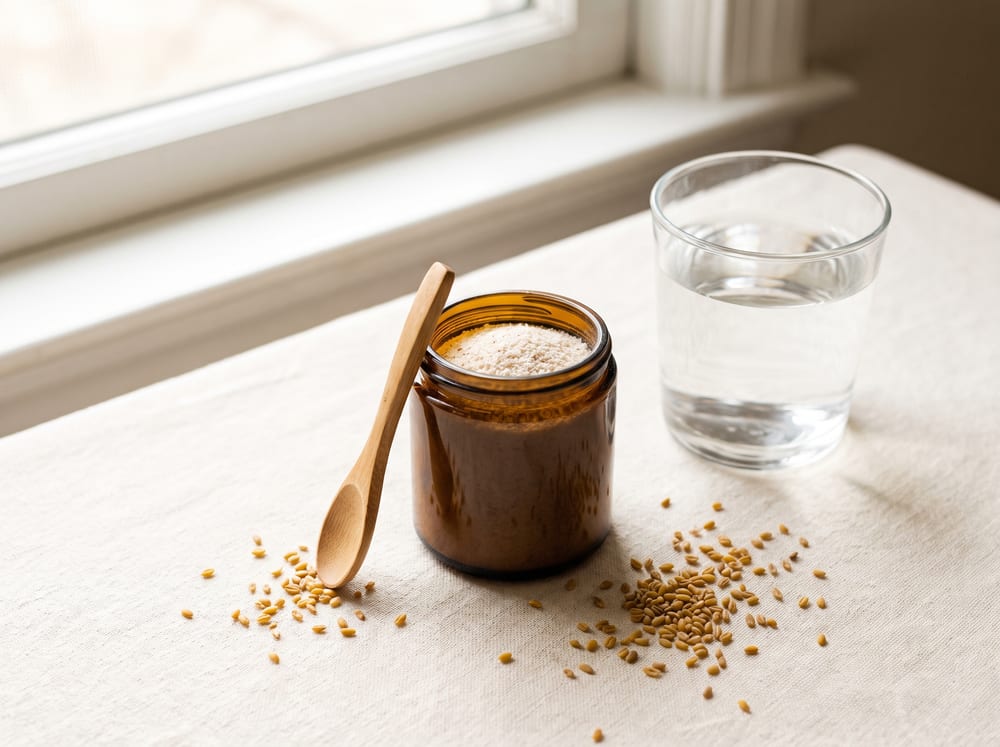
Psyllium comes from Plantago ovata seed husks, and it's a serious gel former. Give it water and it swells into a viscous gel that bulks up and softens stool. That normalizes transit whether it's constipation or loose stool. The same gel slows gastric emptying and glucose absorption, and it grabs bile acids on the way through. Your liver notices the bile acids are missing and pulls more cholesterol out of your blood to make replacements. One fiber, three separate wins.
Evidence
Strong is strong. Stool consistency and chronic constipation relief are well-established here, no asterisks needed. Randomized trials also consistently back modest reductions in LDL cholesterol, plus a real blunting effect on post-meal blood glucose spikes. That's evidence stacked three separate ways. Not much left to argue about.
Interactions
The gel can slow or reduce absorption of oral medications, so separate other drugs by at least 2 to 4 hours. Because it lowers post-meal glucose, people on insulin or sulfonylureas should watch for additive effects.
Cautions
Never take without ample fluid, as it can swell and cause choking or esophageal or bowel obstruction; avoid in anyone with swallowing difficulty, strictures, or suspected bowel obstruction. Introduce slowly to reduce gas. Discuss with a clinician before use, especially if you take regular medications.
Food sources
Whole psyllium is the concentrated source; related soluble fibers occur in oats, barley, legumes, apples, and citrus, though at much lower viscous-fiber doses.