Glute Bridge with March
A floor-based move that builds your glutes and hamstrings while quietly teaching your deep trunk muscles to resist rotation, the exact hip strength that keeps your low back out of trouble.
Why it works
Your gluteus maximus is the single largest, most powerful muscle in your body, and it still goes weak and, the clinical word for it, dormant, in anyone who sits for hours on end. When it checks out, your low back and hamstrings get stuck compensating, which is a real driver of chronic back pain. Bridging loads the glutes and hamstrings directly in hip extension, the same action powering every time you walk, climb a stair, or stand up out of a chair. Add the march and it becomes an anti-rotation core exercise: the instant one foot lifts, your deep abdominal wall and pelvic stabilizers have to fire just to keep the pelvis level. That transverse-plane control is exactly what fails the moment you trip or misstep, so training it here, on purpose, directly cuts your fall and injury risk as you get older.
How to do it
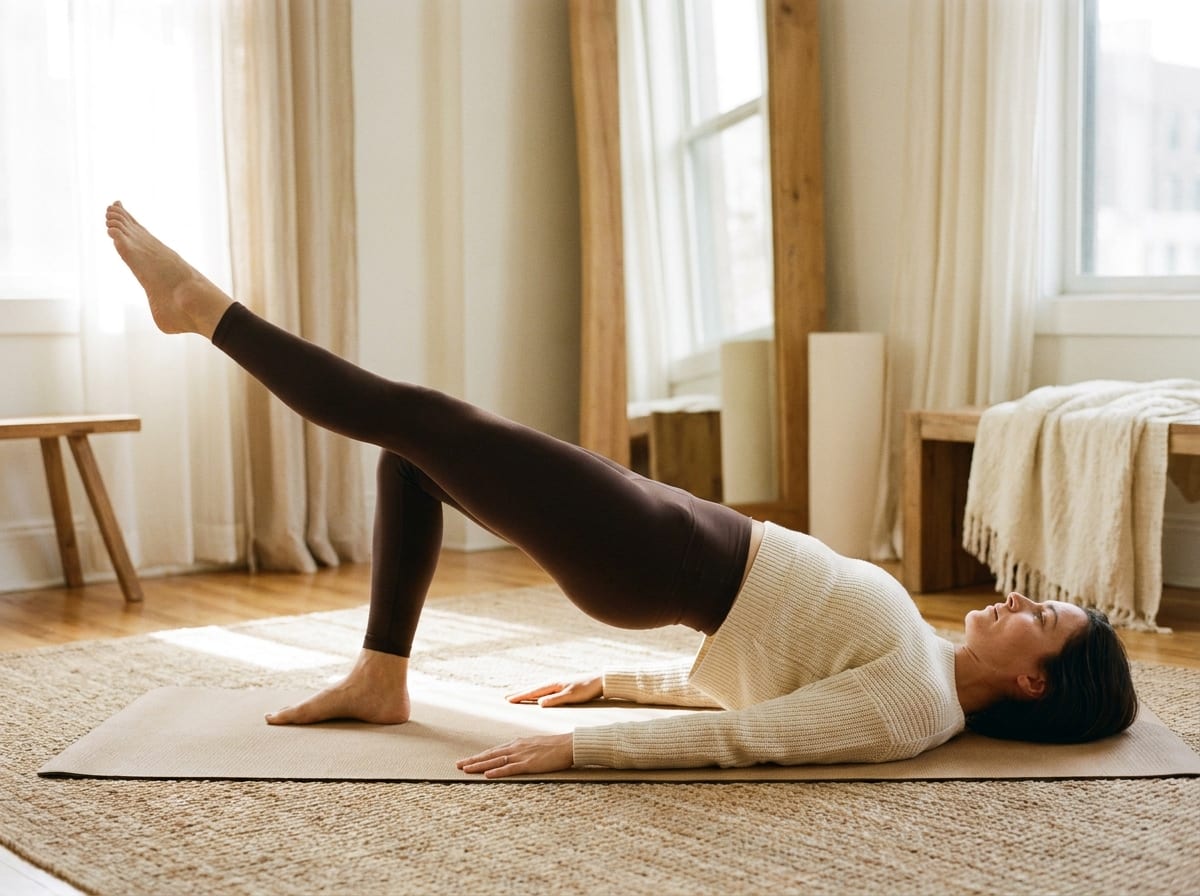
- Lie on your back with knees bent, feet flat and hip-width apart, arms resting at your sides.
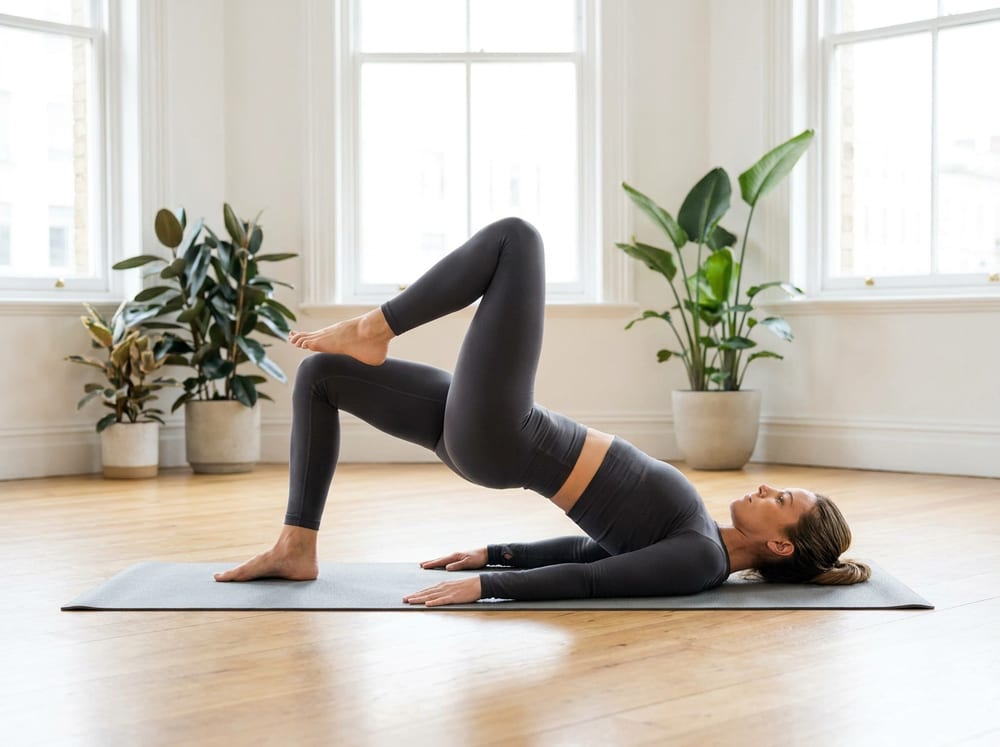
- Press through your heels and squeeze your glutes to lift your hips until your body forms a straight line from knees to shoulders.
- Without letting your hips drop or tilt, slowly lift one foot a few inches off the floor, driving that knee toward your chest.
- Lower the foot with control and repeat on the other side; that is one rep.
- Keep your ribs down and belly braced the entire time so the pelvis stays perfectly level.
Dose: 3 sets of 8 marches per side, 3-4x a week. Progress by holding the bridge higher and pausing 2 seconds per lift, not by rushing the reps.
⚠ If you feel this in your low back or hamstrings cramping instead of your glutes, lower the bridge height and focus on the glute squeeze. Keep the movement slow so the hips never rock side to side.