Single-Leg Glute Bridge
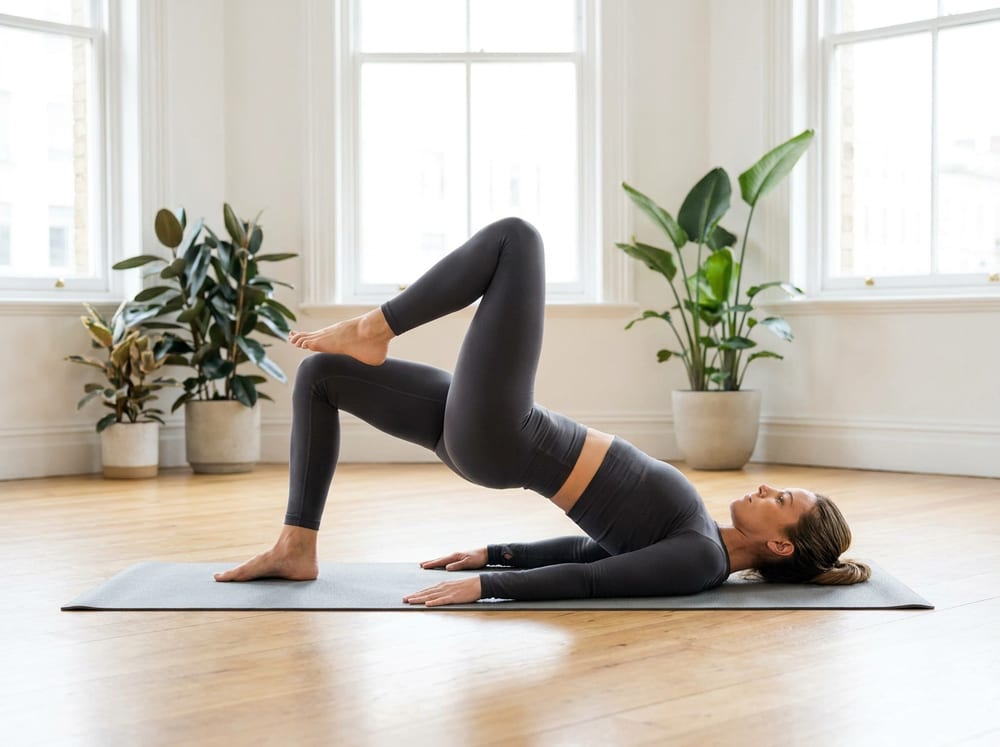
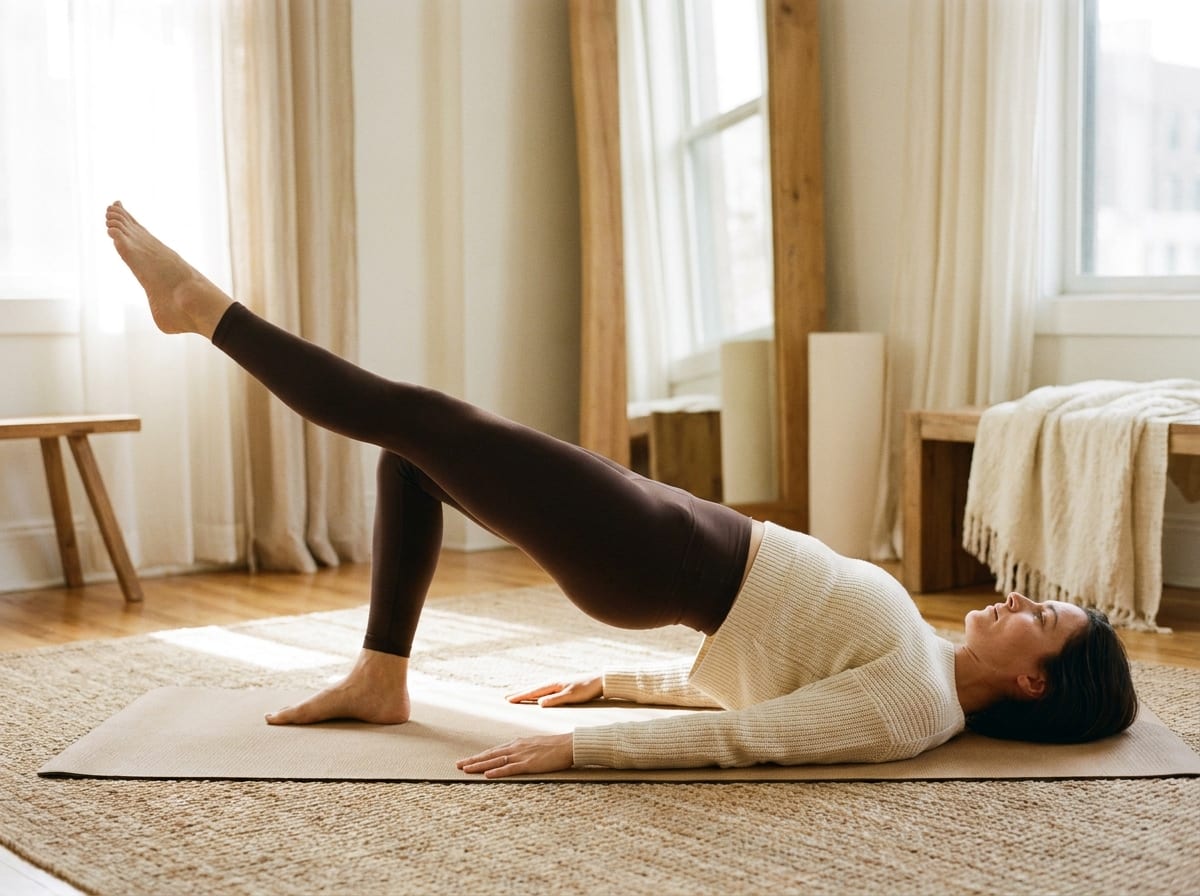
A hip bridge driven by one leg while the other hangs in the air, which doubles the load on the working side and rats out any difference between your two hips.
Why it works
Your glutes are the largest muscle group in your entire body, and they're also among the least used by anyone who sits for a living, spending the whole day lengthened and switched off while your hip flexors shorten right along with them. Bridging on two legs fixes part of that, and then gets too easy fast. Take one leg away and you double the load on the working side. More usefully, you remove the strong side's ability to quietly do more than its fair share, which is the single most common reason a hip problem sticks around long after it should have resolved on its own. Your gluteus medius on the standing side also has to work hard just to stop the pelvis from dropping, and that specific muscle is the one most directly responsible for keeping your hip stable every time you walk.
How to do it
- Lie on your back with knees bent and feet flat, heels about a hand span from your buttocks.
- Straighten one leg or hold that knee toward your chest, whichever lets you keep your pelvis level.
- Press through the heel of the working foot and lift your hips until your body makes a straight line from knee to shoulder.
- Check that your pelvis has stayed level rather than dropping on the free-leg side. That drop is the thing this exercise exists to correct.
- Lower under control over two to three seconds without letting your hips touch down between repetitions, then finish the set and switch sides.
Dose: 3 sets of 8 to 15 repetitions per side, 2 to 3 times a week. Level pelvis or it doesn't count as a rep.
⚠ This is educational content for discussion with a clinician, not medical advice or a prescription. Lower the height if you feel this in your low back rather than your glutes, and check you are not arching to reach the top. Ease off with hamstring cramping by bringing the working heel closer.