Low-Impact Standing Cardio Circuit
Four standing moves, thirty seconds each, zero jumping, so your heart rate goes up without your joints, or the people living below you, filing a complaint.
Why it works
Most home cardio assumes you can jump, and a lot of people genuinely cannot: sore knees, a downstairs neighbor, a pelvic floor with strong opinions, or just a starting point where jumping is asking too much too soon. Keep one foot on the floor and you drop the impact while still raising your heart rate, because the work here comes from moving large muscle groups continuously, not from landing forces slamming through your joints. Adding your arms matters more than it looks like it should: get your hands above your heart and your heart rate climbs at the exact same leg effort, which is how a low-impact circuit gets to call itself genuinely aerobic. This format also happens to carry the best evidence for regular moderate exercise supporting immune function, where moderate is the protective dose and going to extremes simply is not.
How to do it
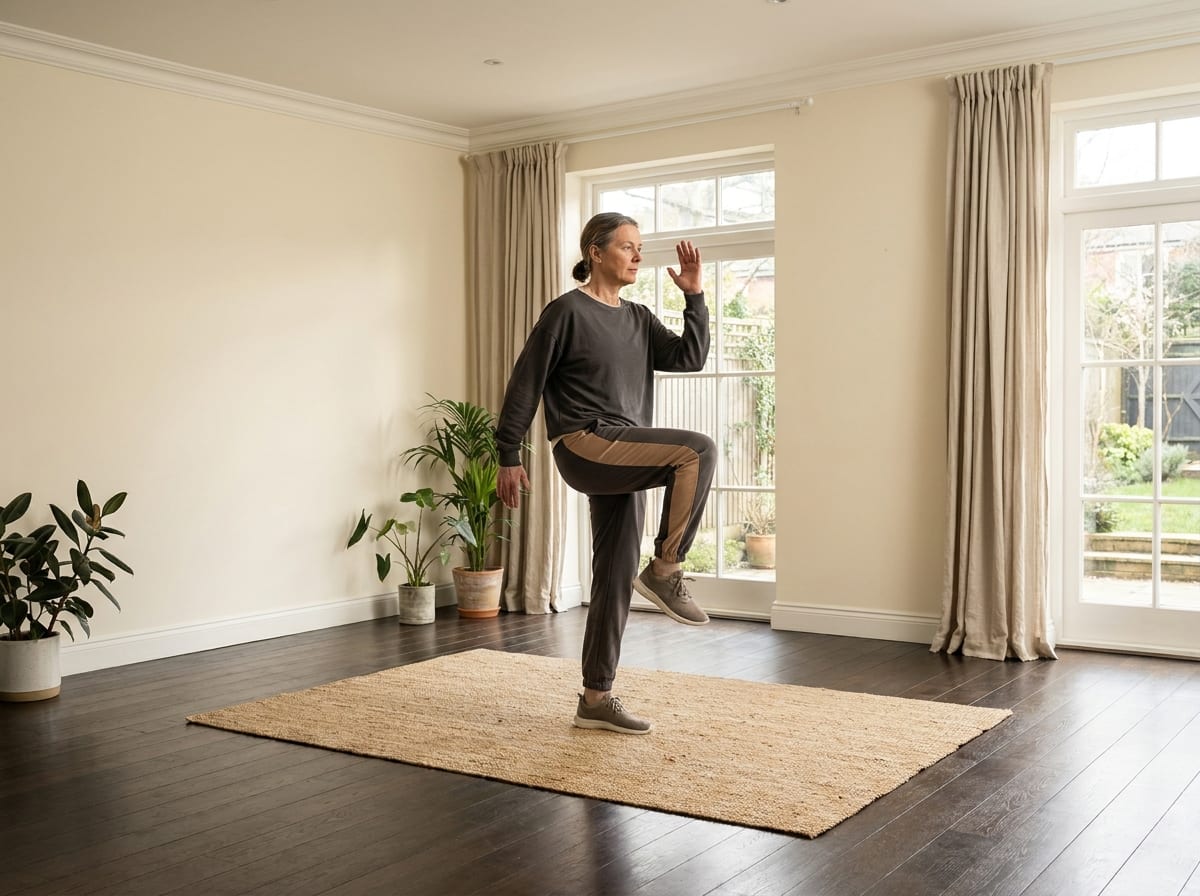
- March in place for thirty seconds, lifting each knee to hip height and swinging the opposite arm.
- Step side to side for thirty seconds, reaching both arms overhead as you step out and bringing them down as you step in.
- Do slow, controlled step-backs for thirty seconds, stepping one foot back into a shallow lunge and returning, alternating sides.
- Do standing punches for thirty seconds, rotating through the ribcage rather than only from the shoulders.
- Rest for thirty seconds, then repeat the whole circuit. Build up to four or five rounds.
Dose: 3 to 5 rounds of the four movements, 3 to 4 times a week. Build the rounds up. Nobody starts at five.
⚠ This is educational content for discussion with a clinician, not medical advice or a prescription. Hold the back of a sturdy chair during the step-backs if balance is a concern. Reduce the range rather than stopping if a joint complains.