Floor-Seated Thoracic Rotation
A seated rotation drill that gets twisting range back into your mid-back, one of the first movements age quietly takes and one that stretching alone will not give back to you.
Why it works
Your thoracic spine is built to rotate. Rib stiffness, disc dehydration, and the slow slump of postural kyphosis progressively steal that rotational range as you age, whether you notice it happening or not. When your mid-back stops rotating, the demand does not disappear, it gets handed off to your lumbar spine, which is built for stability, not twisting, and to your shoulders, which is exactly how you end up with low-back strain and shoulder overuse from something as ordinary as checking your blind spot while driving. Actively rotating from a fixed lower body isolates the thoracic segments and the intercostal and oblique tissue between your ribs, restoring the small segmental glide of the costovertebral joints that stiffness took from you. Get this range back and reaching, dressing yourself, backing out of a driveway, and taking a genuinely full breath all get easier, and they stay functionally critical for decades, not just now.
How to do it
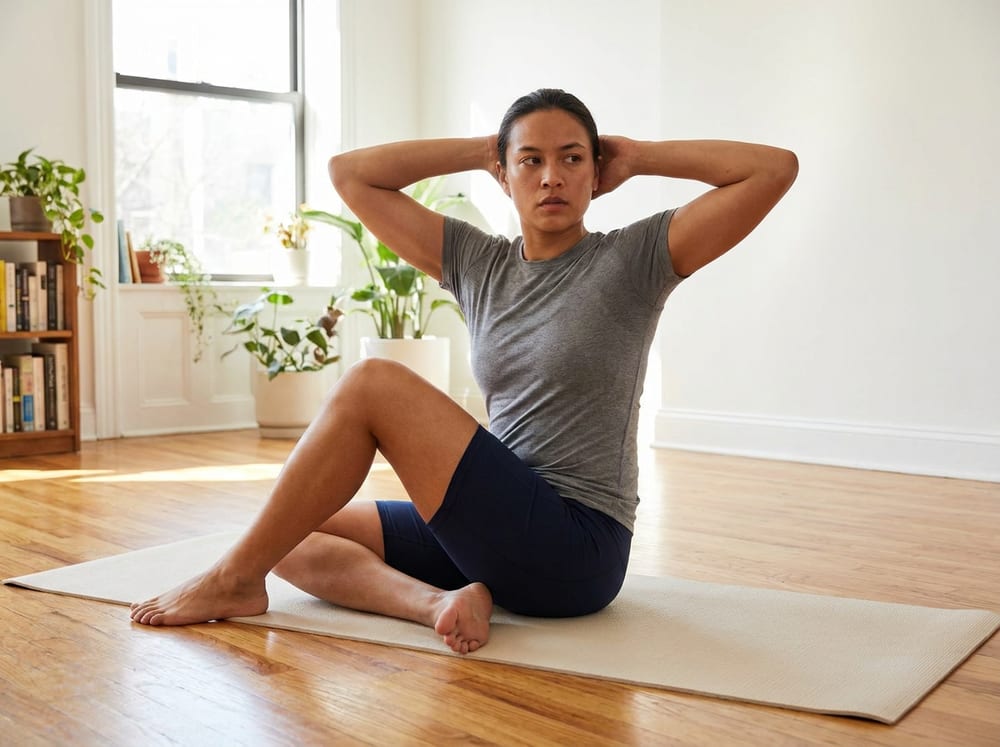
- Sit on the floor in a 90-90 position: one leg bent in front, the other bent out to the side, both knees at about 90 degrees, so the pelvis is anchored.
- Sit tall, lengthening the spine as if a string lifts the crown of your head.
- Place your hands behind your head or cross them over your chest to keep the arms out of the movement.
- Exhale and rotate your ribcage and head slowly toward the front leg, turning from the mid-back, not the neck or low back.
- Return to center on an inhale and repeat, keeping the pelvis and hips still throughout so the twist stays in the thoracic spine.
Dose: 2 sets of 8-10 controlled rotations per side, holding the end range 2 seconds, 4-5x a week. Control the whole way, don't just swing into it.
⚠ Rotate only to a comfortable end range, never force the twist. If you feel it pinch in the low back, you are rotating from the lumbar spine, reset your posture taller and rotate less far.