Stair Interval Climbs
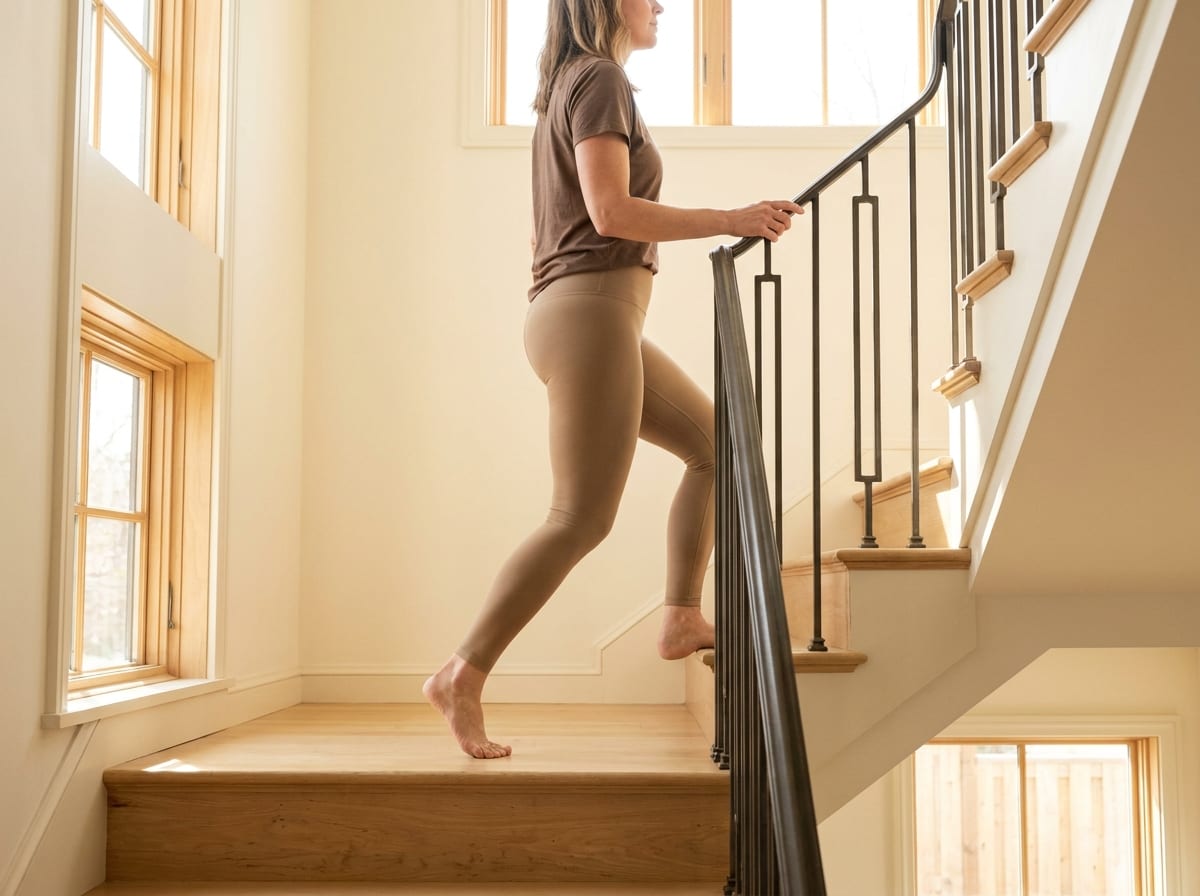
Repeated hard climbs up a flight of stairs, a walk back down as your only rest, six to ten times through.
Why it works
Stair climbing is unusually efficient because it loads your legs and your aerobic system at the exact same time, and because almost everyone on earth has access to a flight of stairs. Short, hard climbing intervals raise your VO2 max faster than the same time spent walking, and studies on brief stair-climbing protocols, some as short as three sprints of twenty seconds, have shown measurable fitness gains in sedentary adults in just six weeks. The walk back down is not wasted time, either. Descending is eccentric work for your quadriceps, the lowering-under-load contraction that builds the most strength and, if you're not used to it, causes the most soreness by a wide margin. Take the first few sessions easy on the way down. Your legs will thank you in two days.
How to do it
- Warm up with two to three easy climbs and descents until your breathing has lifted and your legs feel awake.
- Climb one flight briskly, driving through the whole foot on each step and using the handrail for balance rather than for pulling.
- Walk back down at a controlled pace. This is your recovery, and it should feel easy.
- Repeat. Aim to arrive at the top breathing hard but able to keep your form, not staggering.
- Finish with two or three easy climbs and a few minutes of walking on the flat.
Dose: 6 to 10 climbs, 2 to 3 times a week, with a full day between sessions. Start at six. The soreness will explain why.
⚠ This is educational content for discussion with a clinician, not medical advice or a prescription. Skip this with knee pain on stairs, poor balance, or dizziness. Always use the handrail on the way down. The descent causes most of the soreness, so build the number of climbs up over several weeks.