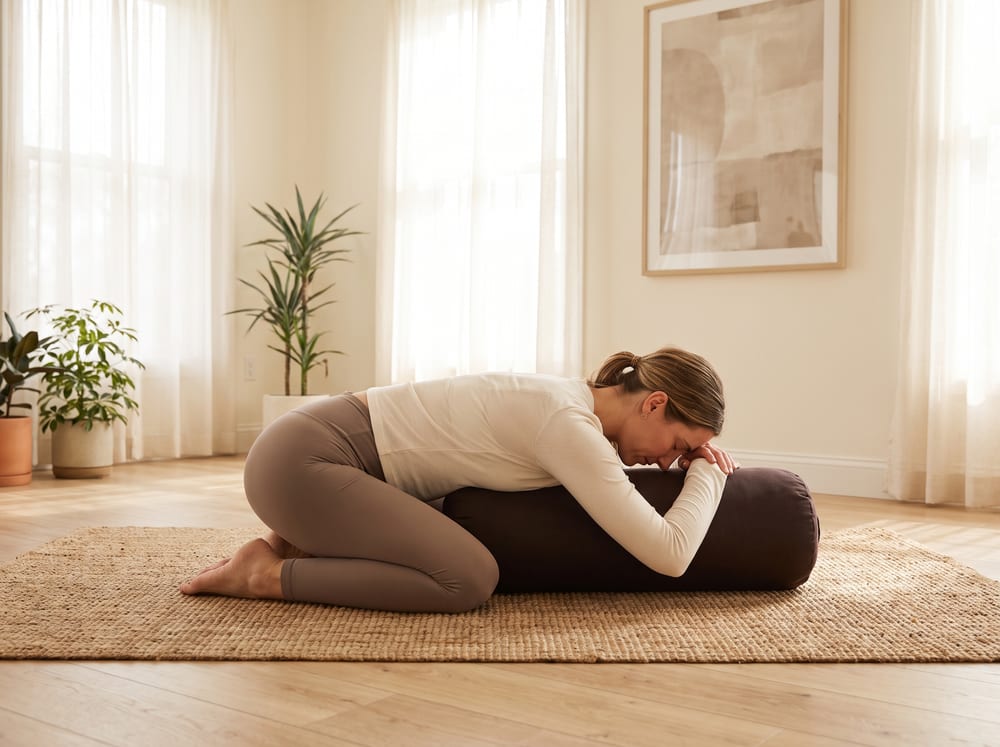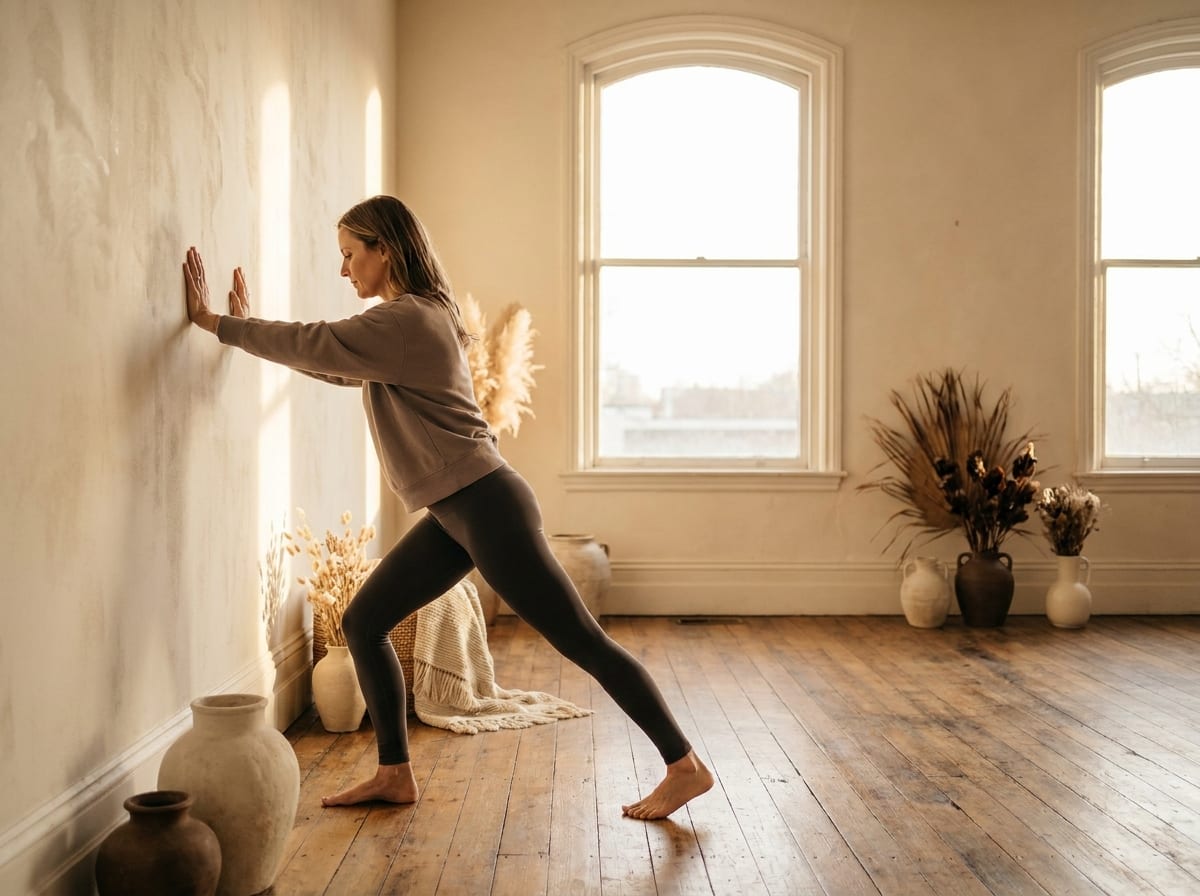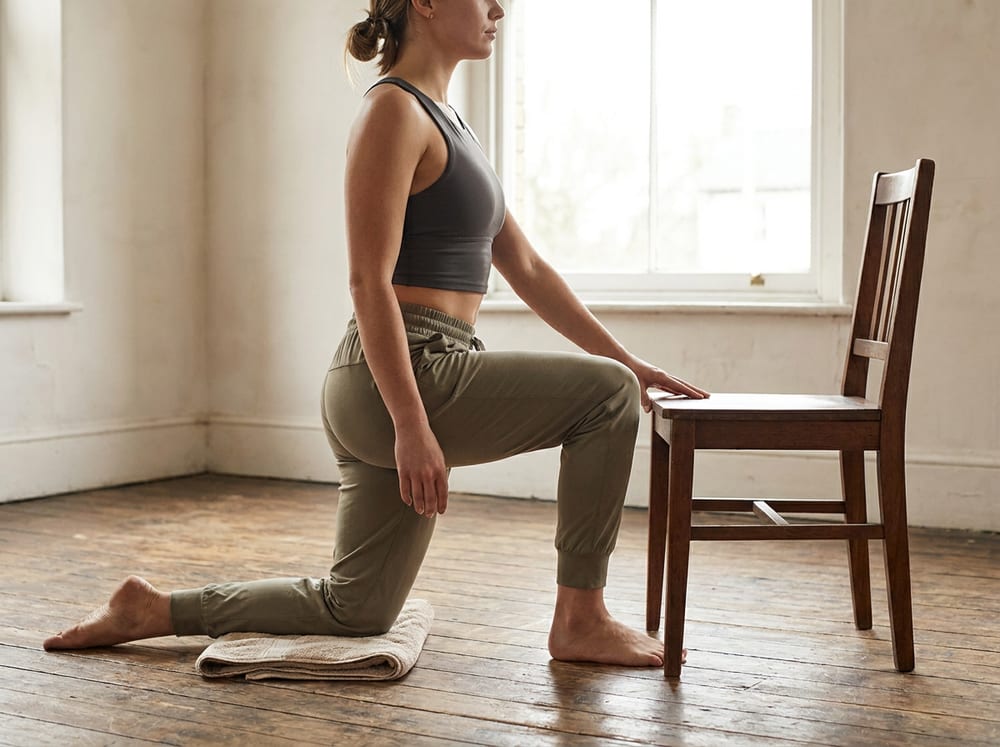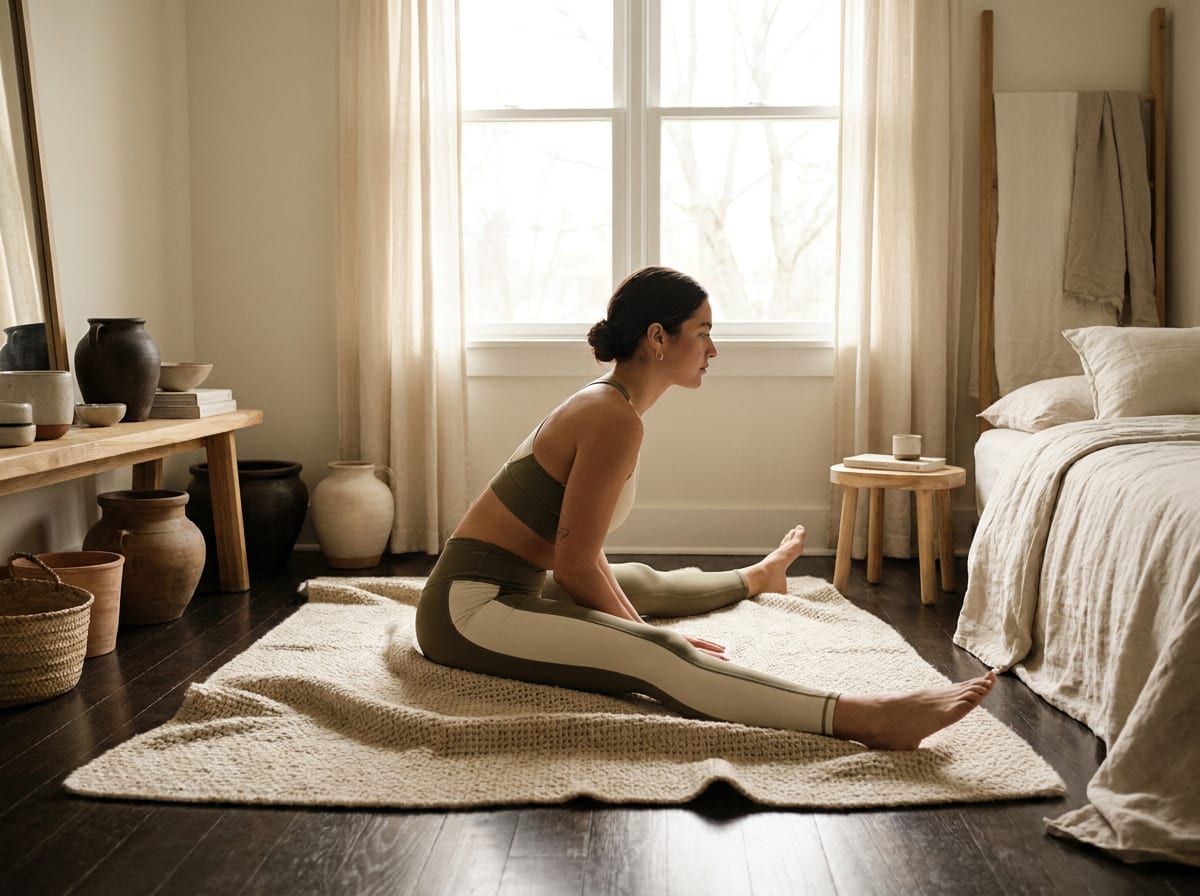
Seated Straddle Progression
Sit with your legs wide and hinge forward from the hips, not the spine, holding each position for a minute or more.
Why it works
Your adductors, the muscles running down your inner thigh, are among the least stretched muscles in the average body and among the more common sources of groin trouble in anyone who changes direction quickly. The straddle reaches them in a way nothing else quite manages. Here's the detail that decides whether this works: sitting on something. Most adults cannot get their pelvis upright on flat floor because their hamstrings yank it into a backward tilt, so they round the low back to reach forward instead, which stretches the spine rather than the target and shoves the lumbar discs into a position they do not want to be under load. Sit on a folded blanket and you raise your hips above your knees, restore that forward tilt, and finally let the hinge happen exactly where it's supposed to.
How to do it
- Sit on the edge of a folded blanket or cushion so your hips are higher than your knees, and open your legs comfortably wide.
- Point your toes and kneecaps toward the ceiling rather than letting the legs roll inward.
- Sit tall first. Feel your weight on the front of your sitting bones rather than rolling back onto your tailbone.
- Keeping the spine long, hinge forward from the hips only, walking your hands out in front of you and stopping the moment your low back starts to round.
- Hold for sixty to ninety seconds, breathing slowly. Then hold gently over each leg in turn for the same time.
Dose: 2 to 3 holds of 60 to 90 seconds in each position, 3 to 5 times a week. Sit higher before you sit longer.
⚠ This is educational content for discussion with a clinician, not medical advice or a prescription. Narrow the legs and sit higher rather than forcing the range. Ease off with a groin strain, and with hip impingement where the wide position pinches at the front of the joint. Avoid deep straddle work in late pregnancy without clinical advice.