Twelve Weeks of Hatha Yoga, Two Evenings a Week
Ninety minutes of slow hatha yoga, twice a week, for three months. It is the dose that was trialled, and the trial measured inflammation in the blood rather than how anyone said they felt.
Why it works
Start with the trial, because it is why this entry exists. In 2014, Janice Kiecolt-Glaser and colleagues at Ohio State published a randomized trial in the Journal of Clinical Oncology. Two hundred women who had finished treatment for breast cancer, average age fifty-one, were assigned either to ninety minutes of hatha yoga twice a week for twelve weeks or to a wait-list that carried on with ordinary life. Blood came out at the end of the twelve weeks and again three months after that. At the three-month draw the yoga group's IL-6 sat about thirteen percent lower than the control group's, TNF-alpha about twenty percent lower, and IL-1 beta about five percent lower, adjusted for the things that push those numbers around. Fatigue was lower and vitality higher in the same group, and the women who practised most often showed the biggest differences. Those three markers are how chronic low-grade inflammation gets read, so a movement library with an inflammation shelf and no yoga on it was missing the one practice with a trial like that behind it. The mechanism the authors argue for is the ordinary one. Sympathetic arousal and broken sleep both drive those cytokines up. A slow breath-led practice held for an hour and a half lowers arousal and improves sleep. The cytokines drift down. That chain is plausible and it was only partly measured, so it is an argument rather than a finding. Now the part that matters more than the percentages. Everyone in that trial was a woman who had been through breast cancer treatment, which means nothing here has been shown in men, in anyone currently ill, or in a healthy thirty-year-old. The comparison group was a wait-list, so the yoga group got twenty-four evenings of a teacher, a room and other people in it while the control group got nothing, and some unknown share of the difference belongs to that rather than to the postures. The blood difference showed up more clearly three months after the classes ended than on the day they finished, and nobody has a settled account of the delay. And the outcome was a set of markers, not an illness anybody did or did not get. A lower IL-6 is a number. It is not a diagnosis avoided, and no trial of yoga has ever been run long enough or large enough to say otherwise. The wider literature is thinner than that one trial makes it sound. Djalilova and colleagues reviewed fifteen studies of yoga and inflammatory markers in Biological Research for Nursing in 2019 and found IL-6 the marker that moved most consistently, with CRP and TNF-alpha going one way in one study and the other way in the next, across studies that were mostly small and mostly short. The same Ohio State group had published a cross-sectional comparison in Psychosomatic Medicine in 2010 finding lower IL-6 in long-term practitioners than in novices, which is the weakest evidence in this entry: people who have kept a yoga habit for years differ from beginners in a dozen ways nobody controlled for, and sleep and body weight are two of them.
How to do it
- Sit for five minutes before anything moves. Cross-legged on a block, spine tall, breathing through the nose and letting the exhale run longer than the inhale. This is the part beginners skip and it is doing as much as the postures.
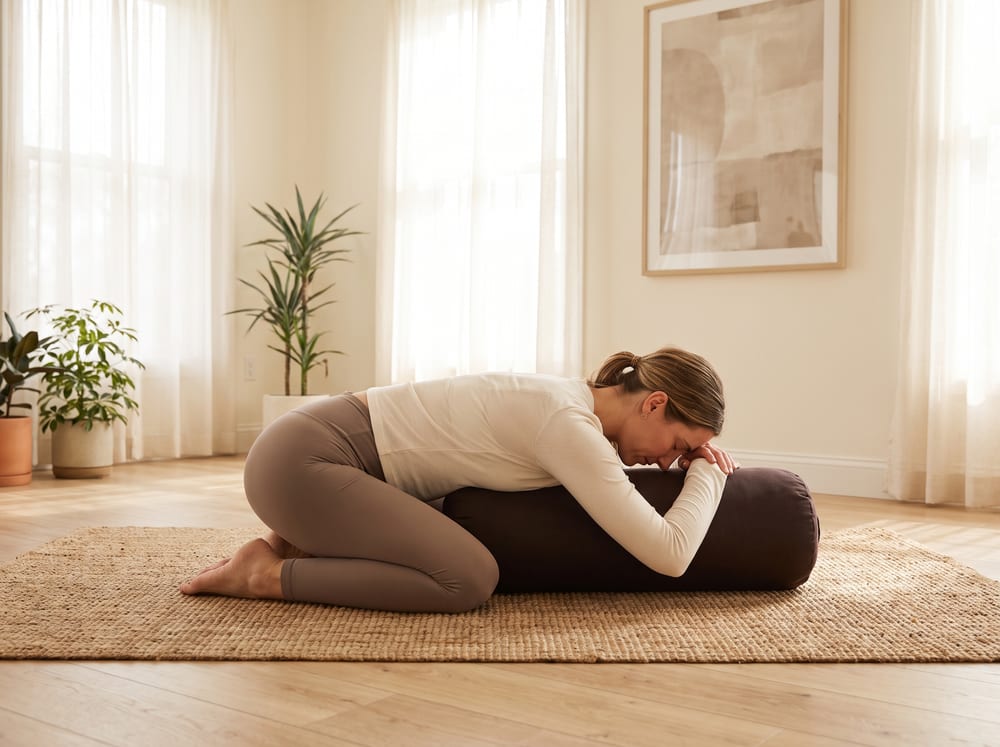
- Warm the spine for ten minutes. Cat and cow on all fours, twenty slow rounds, then child's pose, then a low lunge on each side held for five breaths.
- Move through standing postures for twenty-five minutes, five breaths in each and no rushing between them. Mountain, warrior two, extended side angle, triangle with a block under the low hand, and a wide-legged forward fold. Both sides of everything.
- Take one balance posture. Tree, with a hand on a wall for as long as you want it there, thirty seconds a side.
- Come to the floor for twenty minutes. Seated forward fold with a strap around the feet, bound angle, a supine twist to each side, and bridge lifted three times and held for five breaths on the third.
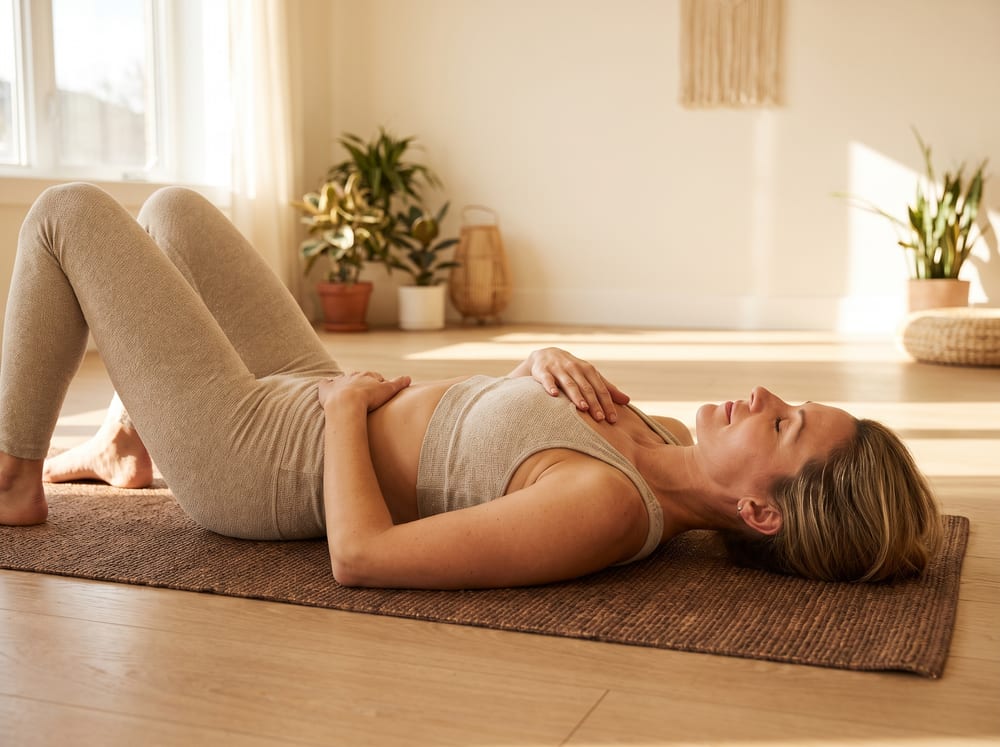
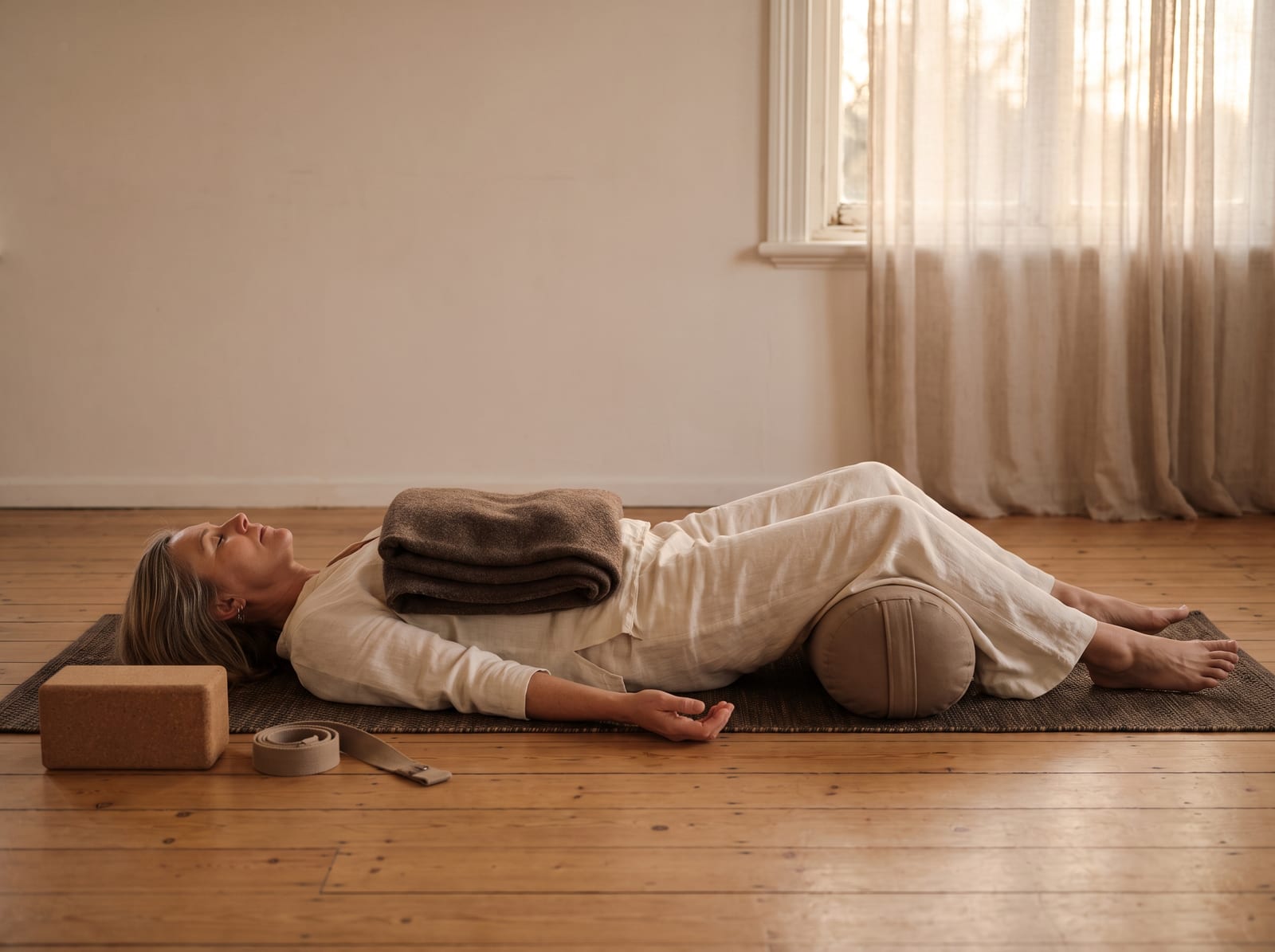
- Set up one restorative shape and stay in it for eight minutes. Legs up the wall or a supported bridge with the bolster under the pelvis. Nothing to do here but breathe and let the floor take your weight.
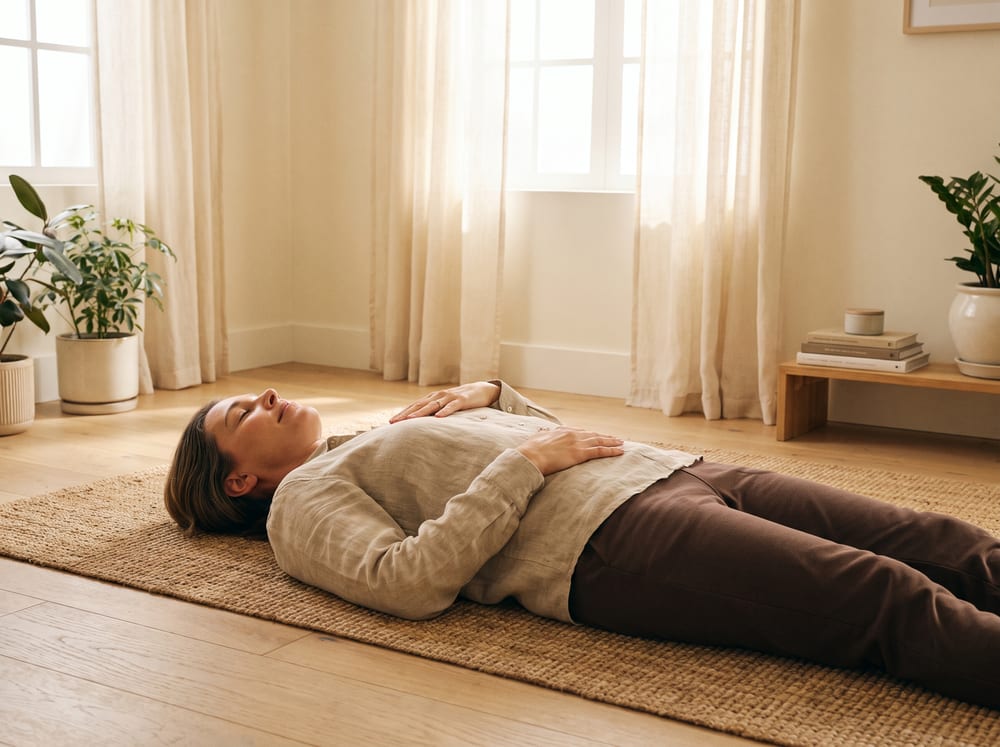
- Finish flat on your back for ten minutes, blanket over you, eyes closed. Savasana is not the cooldown. It is where the arousal drop the trial was chasing has time to happen.
- On the days between classes, ten to fifteen minutes at home: the warm-up, one standing posture, one restorative shape. The trial asked for home practice and the women who did more of it got more out of it.
Dose: Ninety minutes, twice a week, for twelve weeks, plus short home practice on the days between. Twelve weeks is the tested block, and the blood difference in the trial was clearest three months after that block ended, so give this a season rather than a fortnight.
⚠ This is educational content for discussion with a clinician, not medical advice. It is not a treatment for any inflammatory condition and it is not a reason to change or stop a prescribed medication. Tell your teacher before the first class about any joint replacement, disc problem, glaucoma or uncontrolled blood pressure, all of which change which postures are appropriate, and about pregnancy, where twists and deep back-bending come out. If you have had lymph nodes removed or have lymphoedema, ask your oncology team before starting and avoid loading the arm in weight-bearing postures until they say otherwise. Heated or hot yoga is a different practice from the one trialled here and carries its own risks; nothing in this entry applies to it. Stop for sharp joint pain, numbness down an arm or leg, chest pain or dizziness, and come out of any posture that hurts rather than breathing through it.