Quick-Pickled Carrot, Radish and Red Onion
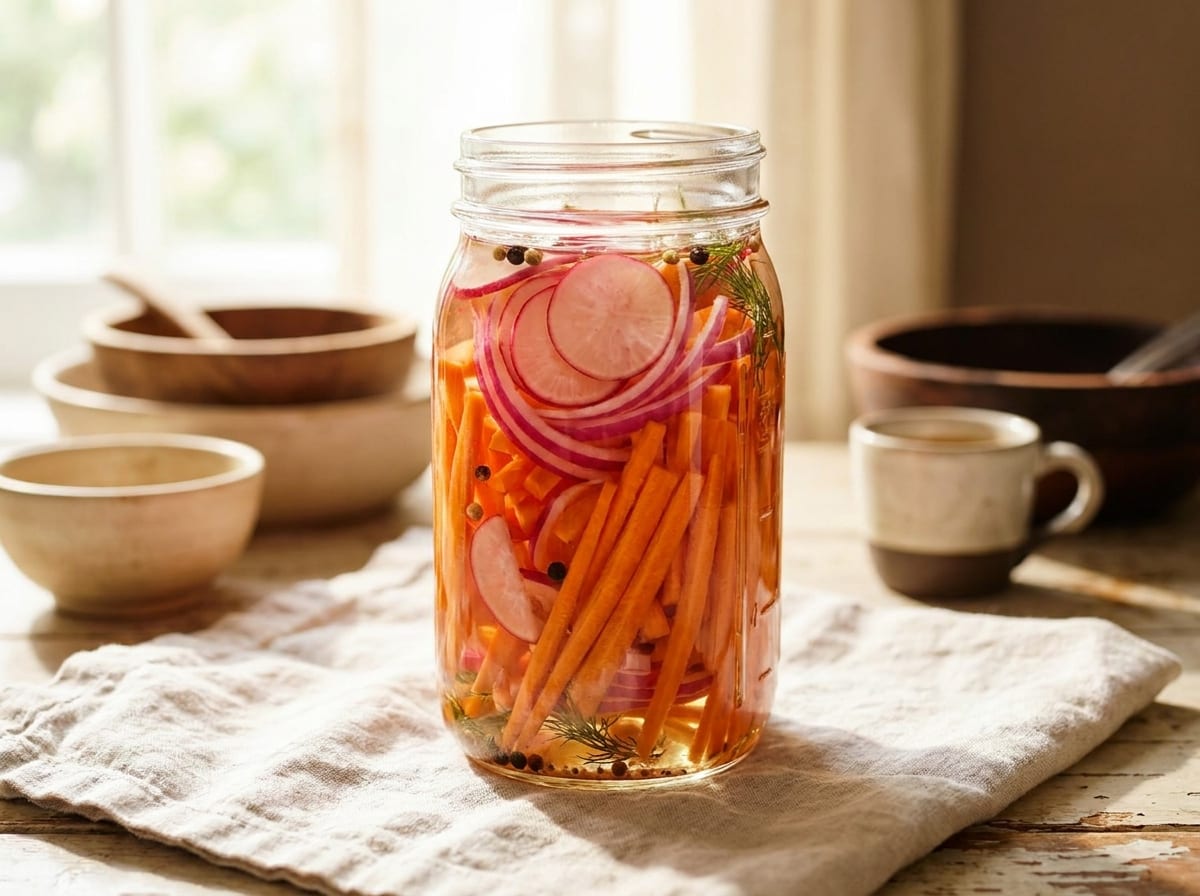
A jar of sharp, crunchy pickles, ready in an hour, good for three weeks: acid on standby for anything that's been sitting in the fridge too long.
Why it works
This is the component that rescues meal prep, which is exactly why it belongs in a recipe library and not a footnote. Food loses its brightness in storage: aromatics fade, salt tastes flatter, everything reads a little dull by Wednesday. Acid is the fix. A spoonful of sharp pickle does more to make a stored bowl taste freshly made than any amount of reheating. These are quick pickles rather than fermented, so treat them as a flavor-and-texture tool, not a probiotic one, though red onion and radish still bring their own compounds: the anthocyanins that color them, and in radish, the glucosinolates shared with other brassicas. Three weeks in the fridge, better after the first day.
Quick pickles sit in vinegar rather than ferment, so they carry no live cultures. Brassica vegetables like radish contribute glucosinolates.
Ingredients
- 3 carrots, julienned
- 1 bunch radishes, thinly sliced
- 1 red onion, thinly sliced
- 250 ml rice vinegar
- 250 ml water
- 2 tbsp sugar
- 1 tbsp fine salt
- 1 tsp black peppercorns and 2 bay leaves
Method
- Pack the vegetables tightly into a large clean jar. They shrink, so fit in more than looks sensible.
- Warm the vinegar, water, sugar, salt, peppercorns, and bay until the sugar and salt dissolve. Do not boil it.
- Pour the warm brine over the vegetables until they are submerged, pressing them down.
- Cool to room temperature, seal, and refrigerate. Edible in an hour and properly good after a day.
- Use a clean fork every time. Anything introduced into the jar decides how long it lasts.