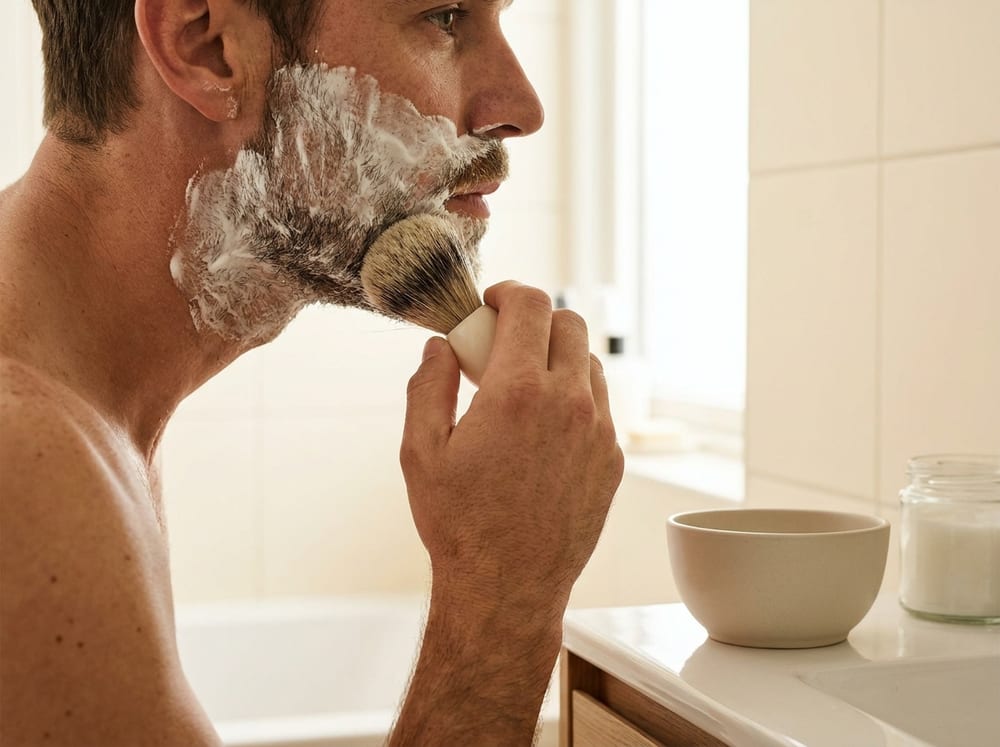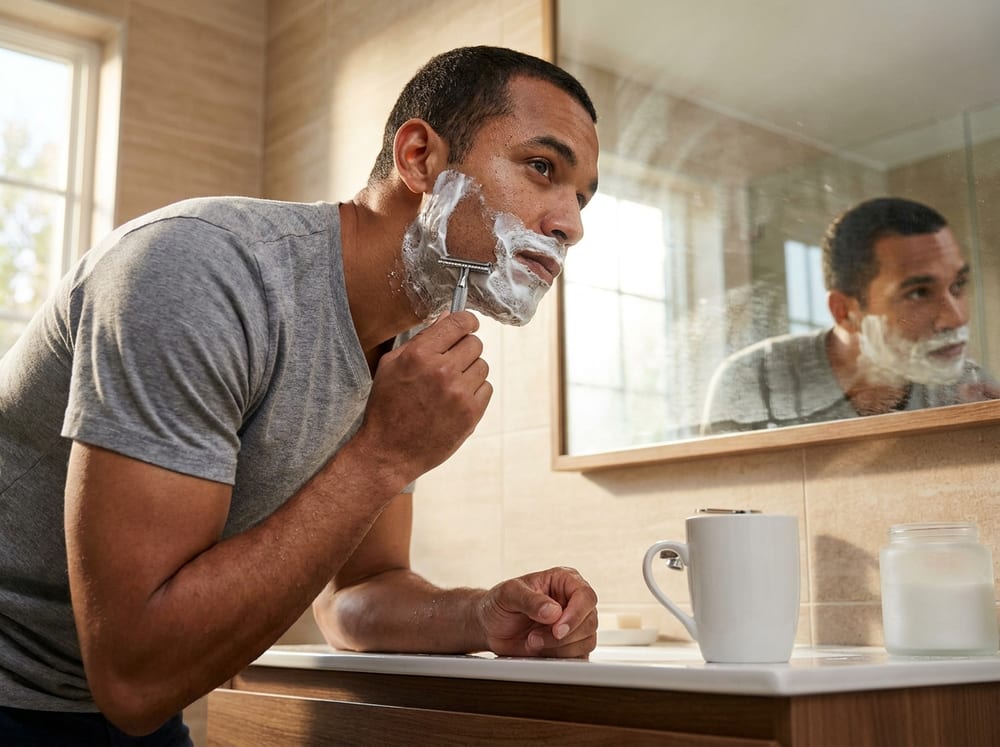
Razor (Safety or Cartridge)
A shave is just a fine edge cutting hair at or just above the surface, and how much force that takes comes down entirely to how sharp the edge is. A clean, sharp blade takes each hair in one light stroke and barely touches the skin doing it. A dull or clogged one drags. It forces repeat passes and extra pressure, and that's what abrades the surface, inflames the follicles, and cuts hair at the exact angle that lets it curl back in as an ingrown. Warm water softens the hair and swells the follicle first, so every stroke after that needs less force. A single-blade safety razor cuts each hair once. A multi-blade cartridge lifts the hair before it cuts, that lift-and-cut sequence. That's exactly why a cartridge shave leaves the tip sitting below the skin instead of flush with it. For a lot of men, that difference is what keeps a single blade the better bet against ingrowns.
Why it works
Blade sharpness, light pressure, and warm water before a shave cutting down on irritation and ingrowns: that's not a theory, that's established dermatology guidance on shaving technique. Single-blade or fewer-pass shaving gets a consistent recommendation for pseudofolliculitis barbae, the medical name for razor bumps. The direction here is strong and it does not waver. What it rests on is clinical consensus and technique studies, not a stack of head-to-head razor trials. The guidance stands anyway.
How to use it
- Shave after a warm shower, or press a warm damp towel to your face for a minute. Soft beard, open follicles, that's the whole goal.
- Work in a slick lather or shave cream and give it a minute to sit before the first stroke.
- Short strokes, with the grain, light pressure. Let the sharp blade do the work, not your hand.
- Rinse the blade clear after every single stroke. Save any against-the-grain pass for the truly stubborn spots only.
- Rinse with cool water, pat dry, and follow up with a moisturizer or barrier step.
- Change the blade or cartridge often, before it feels dull, before it starts to tug. Don't wait for the complaint.
In the morning, after a warm shower has softened the beard, over a lathered face and neck. Hold the razor at a shallow angle and let the weight of the tool do the cutting with almost no downward pressure, shaving in short strokes with the grain first and reserving any against-the-grain pass for stubborn spots only. Rinse the blade clear after every stroke so hair and cream do not clog the edge, and change the blade or cartridge often, well before it feels dull. Rinse with cool water and follow with a moisturizer or barrier step.
For men: Razor bumps along the neck and jaw? Direction fixes it, not a fancier product. Shave with the grain, skip the against-the-grain pass on those spots entirely, and let a fresh single blade do the cutting. Keeping a beard? Same rules apply to your cheek and neck lines, the only places you're still shaving.
⚠ Dull or dirty blades are the main driver of irritation and ingrowns, so replace them well before they drag and never share a blade. Shave after a warm shower rather than on dry skin, use light pressure, and avoid re-passing the same patch repeatedly. If you are prone to razor bumps, favor a single-blade safety razor and shave with the grain. This is educational information for discussion with a clinician, not medical advice; see a professional for persistent bumps, infection, or ingrown hairs that do not clear.