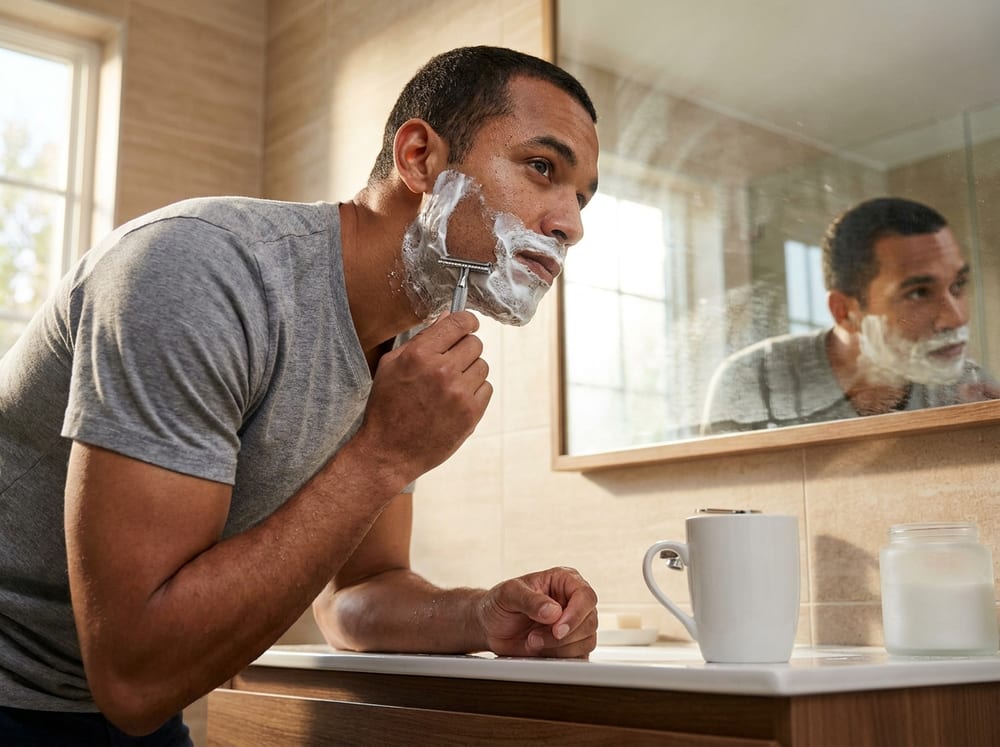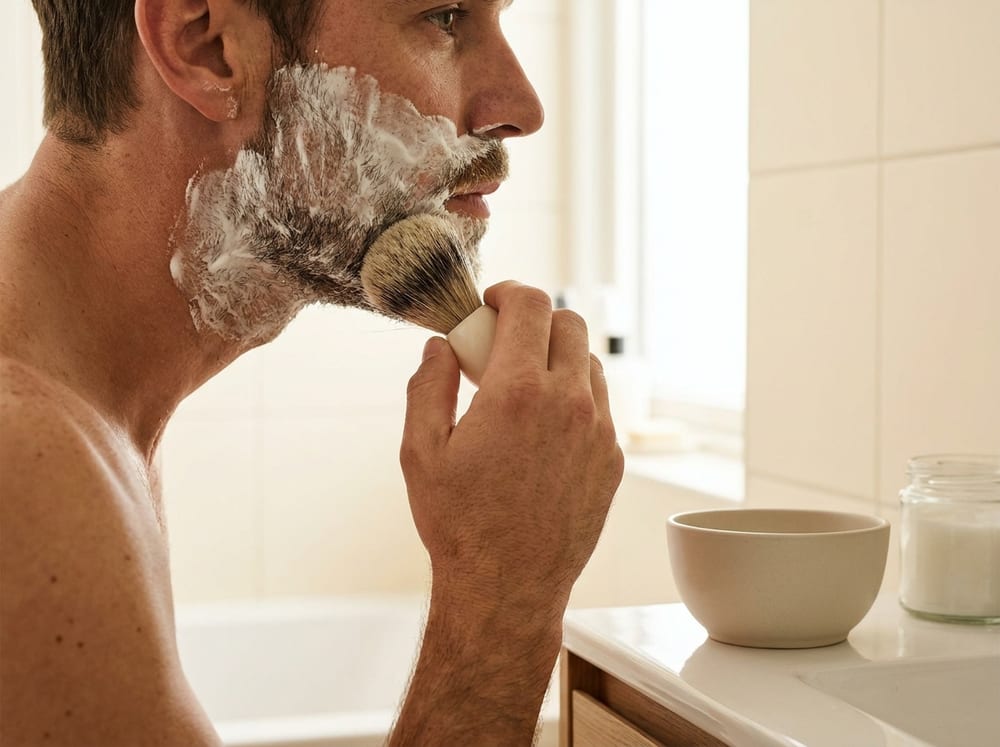
Shave Cream / Gel
A good shave cream or gel hydrates the hair shaft until it swells, and a swollen hair cuts easier, plain and simple. The slip layer it leaves behind is what lets the blade glide instead of drag. That cushion is doing real work: less friction, fewer repeat passes, which is exactly what causes razor burn in the first place. Cut cleaner, cut once, and the hair is far less likely to curl back into your skin as an ingrown.
Why it works
The basics are well established, full stop: soften the beard with warm water, add a lubricating layer, shave with the grain using light pressure. That is standard dermatologic guidance for preventing razor burn and ingrown hairs, not a suggestion from a bottle label. Here is the limit, stated plainly: formula matters less than technique, and no cream on the market fully prevents ingrowns in very coarse or curly hair. For that hair type, spacing out shaves or trimming instead often does more than any product will.
How to use it
- Soften the beard first, warm water or a warm shower for a minute or two, no shortcuts.
- Work a thin, even layer of shave cream or gel into a slick cushion across the whole area.
- Shave with the grain, short strokes, light pressure. Let the blade glide, do not force it.
- Rinse the blade after every few strokes, and reapply cream to any spot that dries out.
- Rinse with cool water, pat dry, and finish with a soothing moisturizer.
After softening the beard with warm water, apply a thin, even layer over the area to be shaved, using a brush or fingertips to work it into a slick cushion right down to the skin. Use just enough to keep the surface fully lubricated through each pass, reapplying to any spot that dries out rather than dragging the razor over bare skin.
For men: For a full beard-area shave: grain first, always. A second light pass across the grain is for stubborn spots only, not the whole face. Chasing that baby-smooth finish by going against the grain is the fastest route to razor burn and ingrowns along your neck and jaw. Not worth it.
⚠ Shave on freshly softened skin and never over broken, sunburned, or actively irritated areas. Rinse the blade often, replace it before it dulls, and stop if you develop persistent bumps or ingrowns, which may call for adjusting your routine or seeing a clinician. This is educational information for discussion with a clinician, not medical advice.