Mineral Sunscreen SPF 50 (Sensitive)
Zinc oxide and titanium dioxide sit right on top of your skin and go to work reflecting and absorbing UVA and UVB, the radiation responsible for your sunburn, your collagen breakdown, and every extra bit of pigment production you didn't ask for. They're mineral filters, so they're protecting you the second they're on, no waiting around, and reactive skin tends to tolerate them just fine.
Why it works
Is daily broad-spectrum sunscreen one of the best-supported moves in dermatology? It is, no contest. Controlled studies show it measurably slows photoaging and cuts hyperpigmentation. And mineral formulas still hit reliable SPF 30 to 50-plus, so you're not trading real protection for the gentler formula. Not a close argument.
How to use it
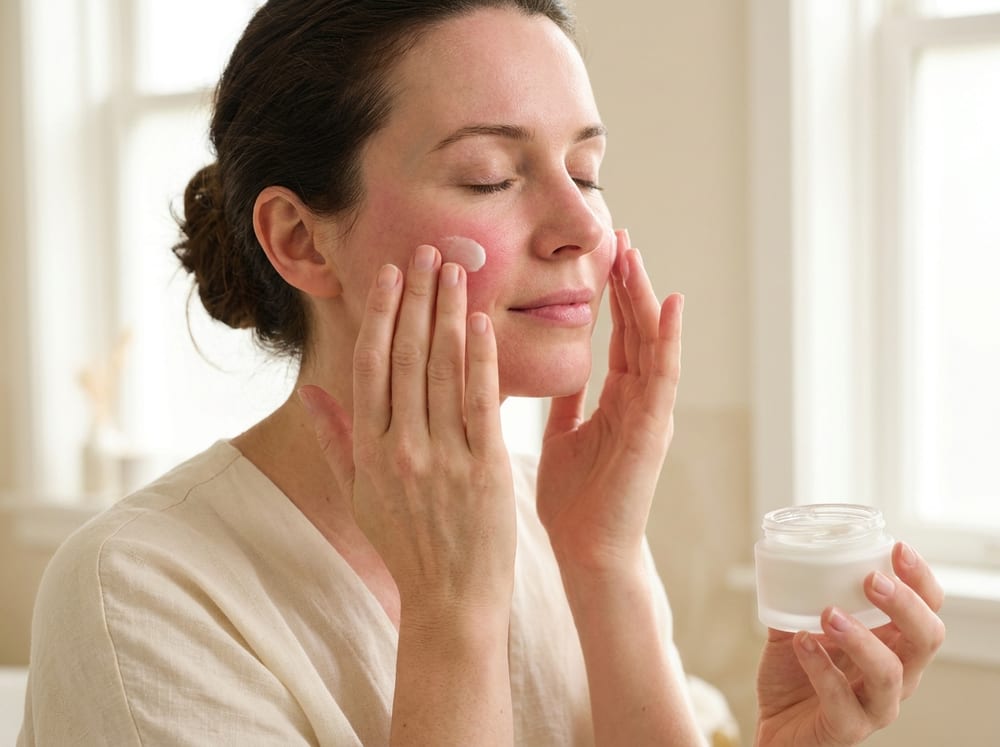
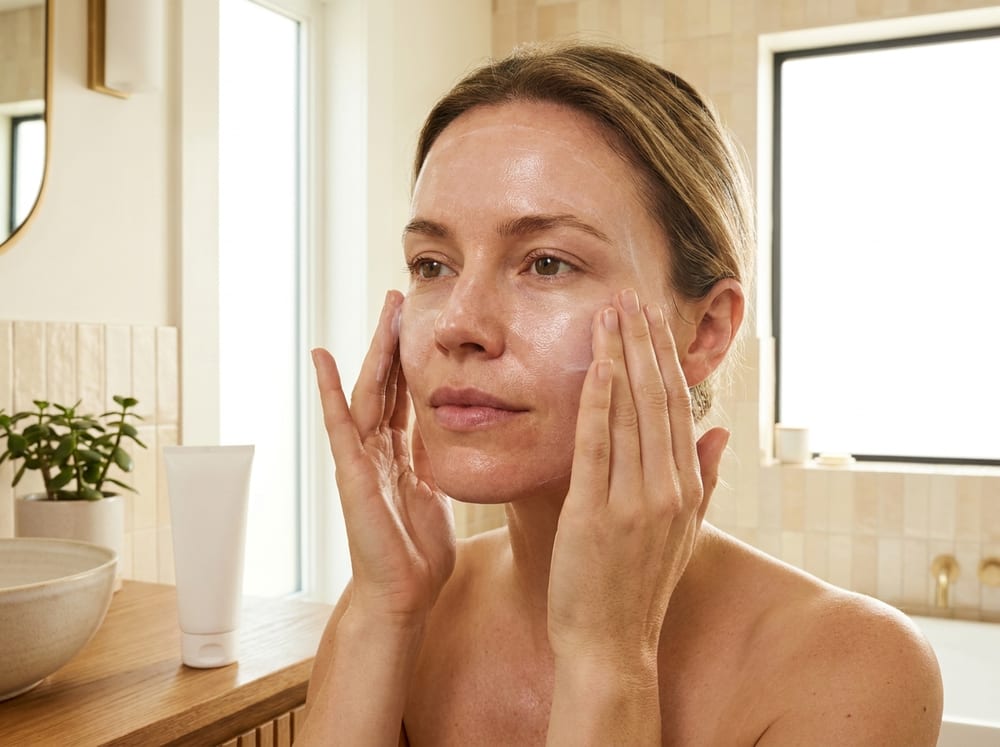
- Last step, morning routine. After serum or moisturizer, before makeup, no exceptions.
- About a quarter-teaspoon for the whole face, roughly two finger-lengths.
- Spread it all the way to the hairline, ears, and neck. Those count too.
- Reapply every two hours outdoors, and again after water or heavy sweat.
- Rub it in completely so you're not left with a half-blended cast.
The last step of your morning routine, applied over any serum or moisturizer and before makeup. Use roughly a quarter-teaspoon for the face alone (about two finger-lengths), spread evenly to the hairline, ears, and neck; a thin swipe is not enough to reach the labeled SPF.
For men: This is your pick if your skin is sensitive, easily irritated, or fresh off a shave: it protects on contact and skips the chemical filters entirely. Just spend the extra ten seconds working the white cast in along your jaw and neck. Skip that step and everyone can tell.
⚠ Reapply every two hours outdoors and after water or heavy sweat, since one morning application does not last all day. Mineral formulas can leave a faint cast on deeper skin tones. This is educational information, not medical advice; discuss photoprotection needs with a clinician.