Oil-Free Gel Moisturizer
A gel moisturizer skips the heavy occlusive oils entirely and hydrates with humectants, glycerin, hyaluronic acid, and other lightweight water-binding agents instead. Translation: your oily or combination skin gets real hydration without the grease, without that heavy pore-clogging feel weighing it down. Your barrier stays supported. Your finish stays matte. Both, not one or the other.
Why it works
Moisturizing to keep your barrier healthy: well supported, not up for debate. Non-comedogenic gel formulas specifically? Shown to hydrate oily skin without waking up your breakouts. The benefit is real. What's not guaranteed is the finish and how long it lasts on your face. That part rides entirely on the formula you pick.
How to use it
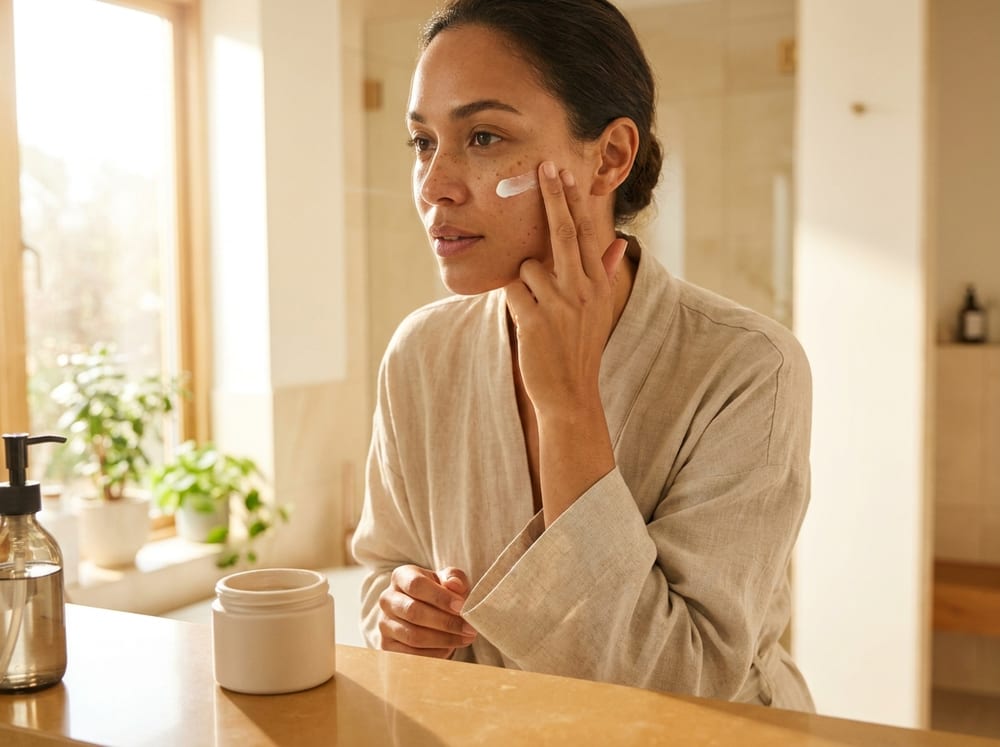
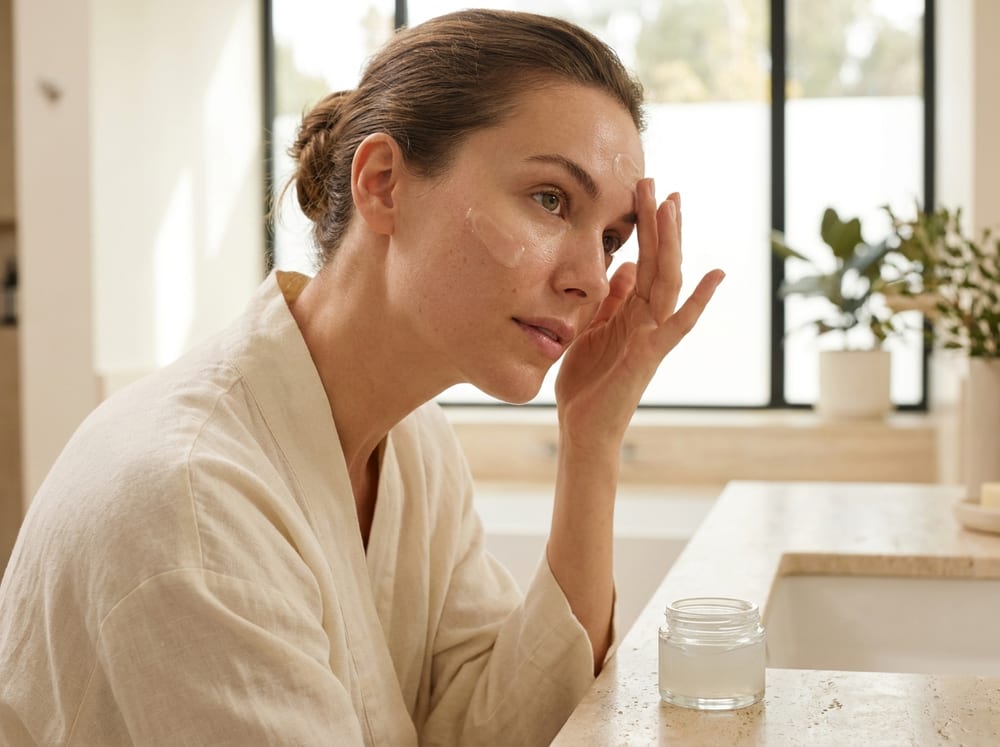
- Smooth on a pea to nickel-sized amount over clean skin, after your serums.
- Morning and evening. Both, every day.
- Keep the layer thin. Go heavier only where skin feels tight.
- Mornings: let it set first, then sunscreen goes on top.
- Acne-prone? Patch test any new formula before it meets your whole face.
Smooth a pea to nickel-sized amount over clean skin after any serums, morning and evening. In the morning it sits under sunscreen. Because it is light, oily and combination skin usually needs only a thin layer, concentrated on any areas that feel tight.
For men: If you've been skipping moisturizer because every one you tried felt greasy, this is your fix. Oily skin needs moisture too, and skip it and your skin just makes more oil to compensate, not less. A thin gel layer is the compromise that sticks.
⚠ Look for a non-comedogenic, oil-free label if breakouts are a concern, and patch test new formulas on acne-prone skin. Even oily skin needs moisture, so skipping this step can paradoxically drive more oil production. This is educational information for discussion with a clinician, not medical advice.