Ashwagandha (KSM-66)
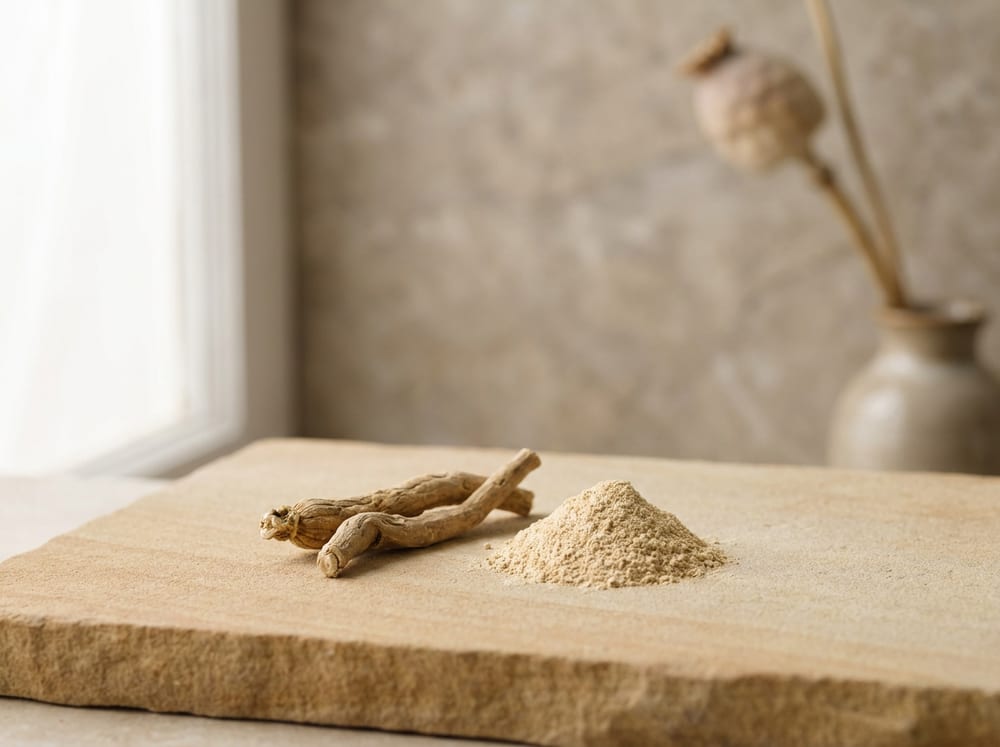
Withania somnifera root extract, standardized to withanolides, and that's the part doing the work. It appears to work your HPA axis, the command center for your stress hormones, and turns the cortisol response down before it spirals. It's also got GABAergic activity, which is the calming part you feel. Those same withanolides show antioxidant activity in neural tissue too, so it's not a one-trick root.
Evidence
Strong, and for a botanical that's saying something. Multiple double-blind, placebo-controlled trials plus a 2025 systematic review and meta-analysis all point the same way: real reductions in Perceived Stress Scale scores, Hamilton Anxiety scores, and serum cortisol by around 8 weeks. The landmark Chandrasekhar trial clocked a ~28% cortisol drop against ~8% for placebo. Not a coin flip. The sweet spot is 600 mg a day for at least 8 weeks. Long-term safety data past 12 weeks, though, nobody has it yet, so pace yourself on the promises.
Interactions
May be additive with sedatives, benzodiazepines, and other CNS depressants (increased drowsiness). Can lower blood sugar (caution with antidiabetic drugs) and blood pressure (caution with antihypertensives). May raise thyroid hormone levels, so caution with thyroid medication. Being immunomodulatory, it may interact with immunosuppressants.
Cautions
Avoid in pregnancy and breastfeeding (traditionally considered an abortifacient). Rare reports of liver injury exist, so avoid with active liver disease and discontinue if jaundice or dark urine occur. Because it may stimulate the thyroid and immune activity, use caution with hyperthyroidism and autoimmune conditions (e.g., Hashimoto's, lupus, rheumatoid arthritis). Discuss with a clinician before surgery. This is not a treatment for a diagnosed anxiety or mood disorder.
Food sources
None practically. The bioactive withanolides come from the root of the plant and are not obtained from ordinary diet.