L-Theanine
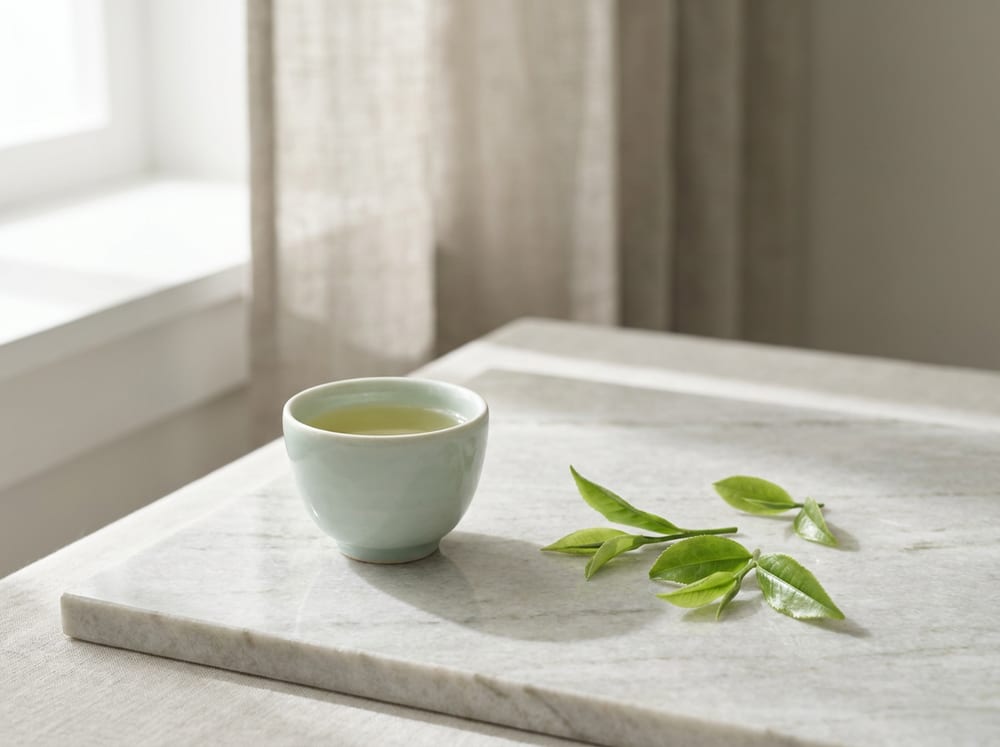
L-theanine is an amino acid straight out of tea leaves, and it doesn't mess around getting to work. It crosses the blood-brain barrier and turns up alpha brain-wave activity, the relaxed-but-alert state. It nudges GABA, serotonin, and dopamine upward, modestly, and takes the edge off glutamatergic overexcitation. That combination is exactly why you get calm without getting sleepy, and why it files the sharp edges off caffeine instead of canceling it out.
Evidence
Moderate, and consistent every time it's tested. Multiple small-to-mid-sized RCTs and crossover studies show real, acute drops in subjective stress and in the blood-pressure and salivary-cortisol spikes that come with it, plus a bump in alpha-wave activity, usually at 200 mg. Here's the limit: the trials are short and small. Consistent is not the same as definitive, and for chronic anxiety specifically, theanine hasn't crossed that line yet.
Interactions
May lower blood pressure, so it can be additive with antihypertensive medication. Mild additive calming effect possible with sedatives. It attenuates caffeine's blood-pressure rise, which is generally favorable. No significant interaction with SSRIs is established, but combine cautiously and with clinician awareness.
Cautions
Very well tolerated with a strong safety record; side effects are rare and mild (occasional headache). Data in pregnancy and breastfeeding are limited, so caution is advised there. It is a calming aid, not a treatment for a diagnosed anxiety disorder.
Food sources
Green, black, and white tea (Camellia sinensis); green tea provides roughly 8-30 mg per cup. Also present in small amounts in certain mushrooms. Supplemental doses far exceed typical dietary intake.