Saffron (Crocus sativus)
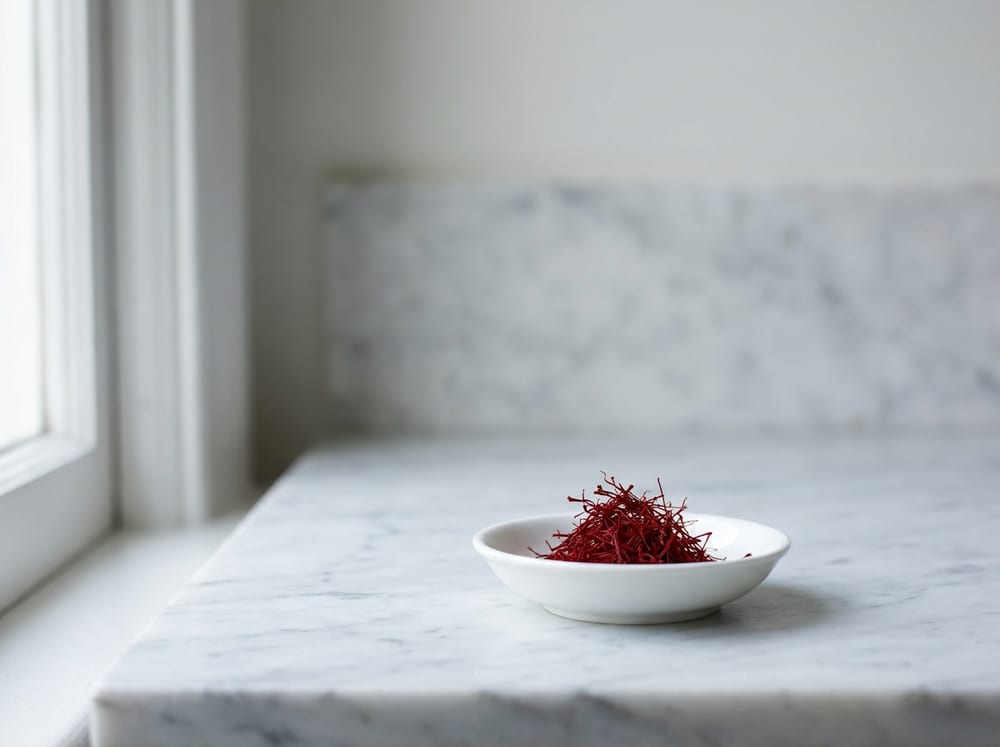
Saffron is the stigma of the crocus flower, and the workers are crocin, crocetin, and safranal. The theory is they inhibit reuptake of serotonin, dopamine, and norepinephrine, and they bring antioxidant and anti-inflammatory activity to the brain on top of that. Net result: better mood, less of that flat, joyless anhedonic fog. That's a lot of range for a spice rack staple.
Evidence
Moderate overall, but the mood data is the strong part here. Multiple RCTs and meta-analyses show 30 mg/day improves mild-to-moderate depression and anxiety symptoms. Then it gets bold: several head-to-head trials put it up against low-dose fluoxetine and citalopram over 6-8 weeks, and saffron held its own, non-inferior, with fewer side effects. That's a spice going toe-to-toe with an SSRI. Standardized extracts also help low mood in people who aren't even clinically depressed. The catch: most trials are short and on the smaller side. Bigger, longer trials would make this an even stronger case.
Interactions
Because it has serotonergic activity, combining with SSRIs, SNRIs, or MAOIs raises a theoretical risk of additive serotonergic effects and should be done only with clinician oversight. May have mild antiplatelet activity, so use caution with anticoagulants and antiplatelet drugs (e.g., warfarin, aspirin, clopidogrel). May lower blood pressure and blood sugar.
Cautions
Safe at culinary and standard supplemental doses; high doses (approaching 1.5 g or more per day) can be toxic, and very high amounts are dangerous. Avoid in pregnancy, where high doses may stimulate the uterus. Not a replacement for professional care of diagnosed depression or an anxiety disorder; seek help for significant or persistent mood symptoms.
Food sources
The culinary spice saffron, used in dishes such as paella, risotto, and biryani. Culinary pinches provide far less of the standardized actives than studied extract doses.