Astaxanthin
Astaxanthin is a red xanthophyll carotenoid, mainly pulled from the microalga Haematococcus pluvialis, and its molecular structure is the whole trick: it sits directly across your cell membranes and quenches singlet oxygen and free radicals better than most other carotenoids manage. In skin, the theory is that it dampens UV- and inflammation-driven activity of matrix-metalloproteinases, specifically MMP-1, the enzyme that chews through your collagen. Less MMP-1 activity, more collagen left standing. That's internal photoprotection and antioxidant support, working from the inside out.
Evidence
Emerging is the grade, and here's what that buys you. Several small randomized, placebo-controlled trials, running 6 to 12 weeks, report modest gains in wrinkle appearance, elasticity, moisture, and UV-induced water loss, sometimes alongside a topical routine. Here's the catch: those trials are small, short, and often funded by the companies selling the astaxanthin. That doesn't erase the results. It just means the grade holds at emerging until bigger, longer, independently funded trials show up.
Interactions
May have mild additive blood-pressure-lowering and antiplatelet effects, so worth flagging alongside antihypertensives or blood thinners. As a carotenoid it can theoretically compete with others (such as beta-carotene) for absorption.
Cautions
Generally well tolerated; high intake can cause a harmless reddish tint to the skin and, rarely, mild GI upset or hormonal effects at very high doses. Safety in pregnancy and breastfeeding is not established, so it is best avoided then. It is not a substitute for sunscreen.
Food sources
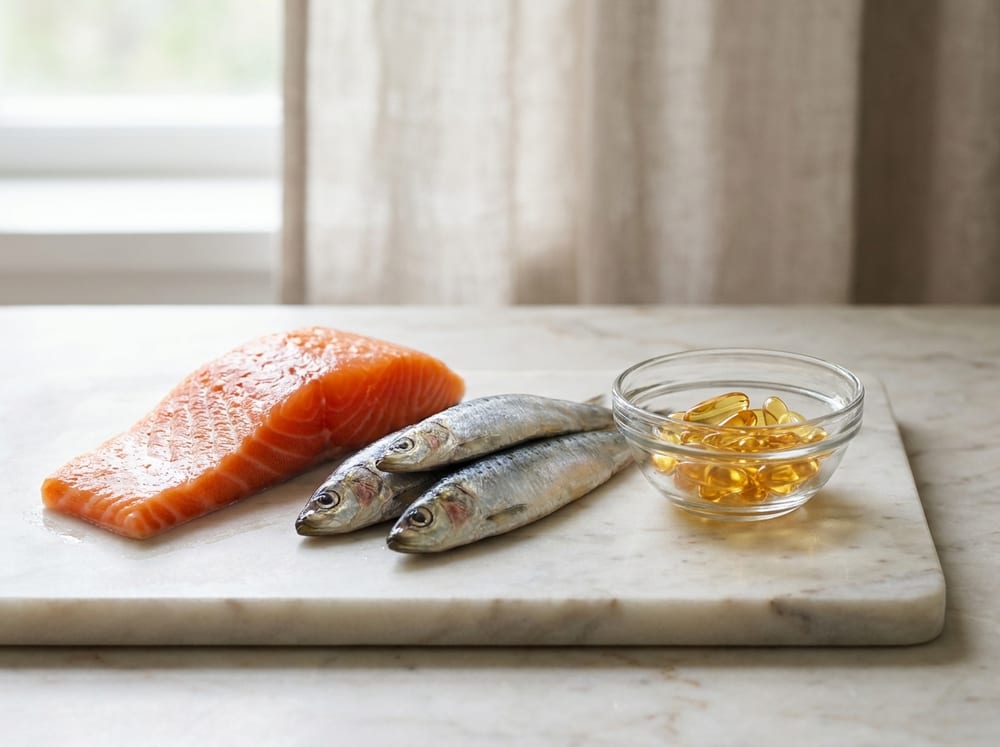
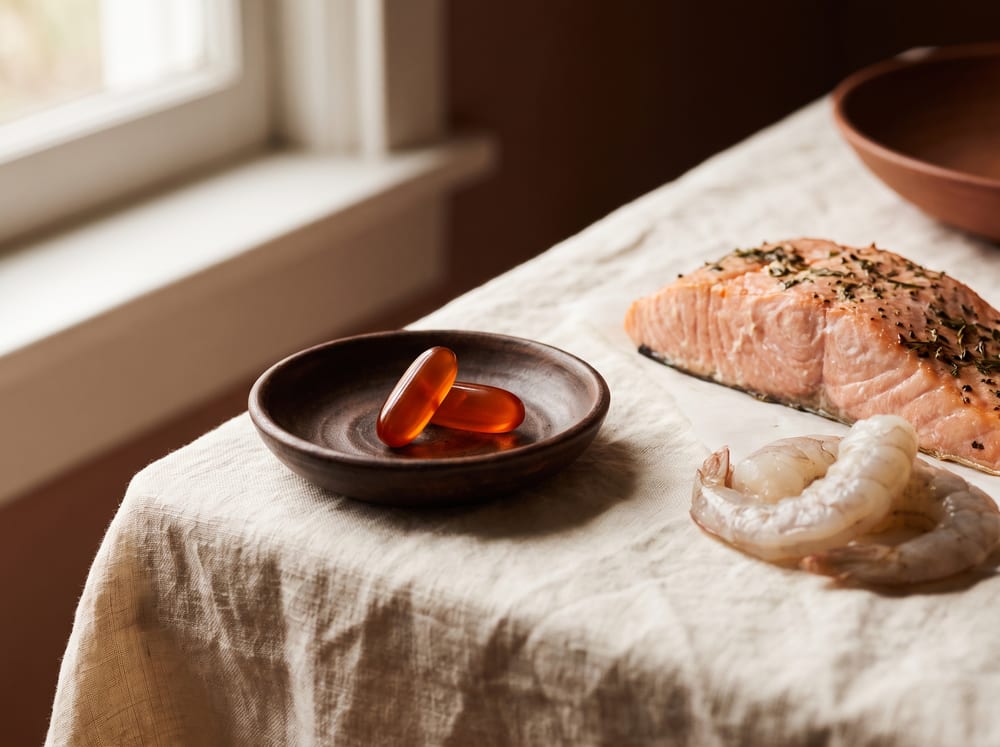
Wild salmon, trout, shrimp, krill, and other seafood that feed on astaxanthin-producing algae. It's what gives salmon and shrimp their pink-red color, though dietary amounts fall well below supplemental doses.