Vitamin C (Ascorbic Acid)
Vitamin C is the cofactor your prolyl and lysyl hydroxylase enzymes need to stabilize and cross-link collagen. No vitamin C, no functional collagen synthesis, full stop. That's exactly why scurvy, vitamin C deficiency, shows up as fragile skin and wounds that won't heal. It's also a water-soluble antioxidant that regenerates vitamin E and buffers the oxidative stress your skin takes from UV and pollution. Unglamorous nutrient, non-negotiable job.
Evidence
Mixed, and here's exactly where the line falls. The biology itself isn't in question: vitamin C is required for collagen formation, and fixing a real deficiency visibly restores skin integrity. Nobody's arguing that. But you're probably not deficient. And once your plasma and skin levels are already saturated, taking more vitamin C by mouth does very little extra for how your skin looks. If you want the cosmetic effect, topical vitamin C has the stronger clinical receipts. That's why oral gets filed under mixed.
Interactions
Enhances absorption of non-heme (plant) iron, which is undesirable in iron-overload conditions such as hemochromatosis. High doses can interfere with certain blood-glucose meter readings and some lab assays. May reduce the effect of some chemotherapy agents in theory, warranting oncology input.
Cautions
Very safe at normal intakes. Doses above about 1,000 mg/day can cause diarrhea, nausea, and, in predisposed people, may increase oxalate kidney-stone risk. People with kidney disease or a stone history should be conservative and involve a clinician.
Food sources
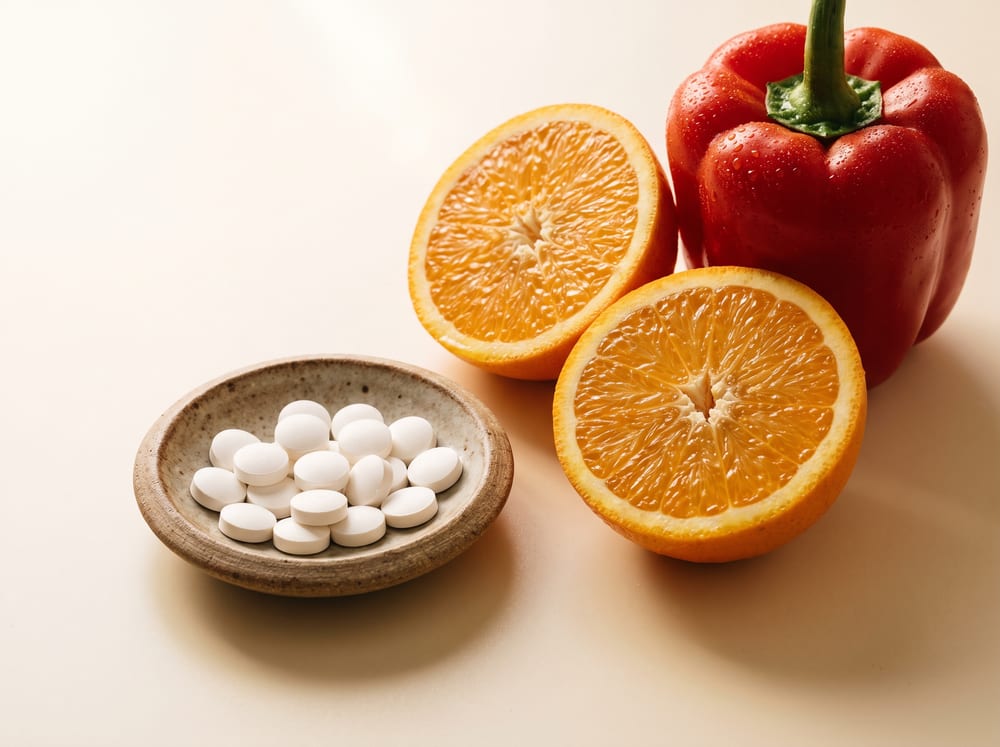
Bell peppers, citrus fruit, kiwi, strawberries, broccoli, and dark leafy greens; a couple of servings of fruit and vegetables daily typically meet requirements without a supplement.